
Related videos:
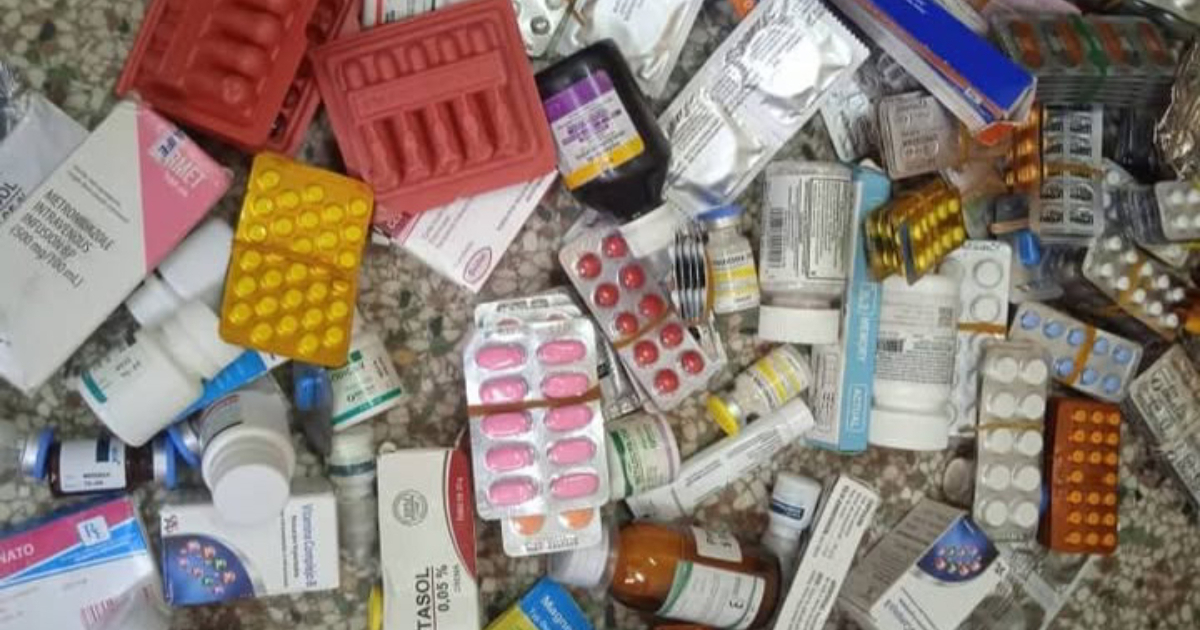
The crisis of medications in Cuba has reached alarming levels. A country that for decades prided itself on producing enough drugs to supply its healthcare system now faces empty pharmacies, desperate patients, and an informal market where prices soar to become unaffordable for most.
While the shelves remain empty in the state network, the same medications are appearing in the hands of resellers at exorbitant prices, in a scenario marked by corruption, institutional neglect, and a healthcare system that many consider already collapsed.
On the social network Facebook, the user Cesario Navas publicly denounced this reality with a powerful message: “The abnormal that becomes normal in the land of Liborio: corruption, the controlled theft of medications, complicity, negligence... are they caused by the infamous blockade or are they products of a government that survives on life support?”
Medications almost given away in the system... nonexistent in pharmacies
Navas cited two cardiovascular medications produced in Cuba as examples:
Isosorbide Dinitrate-10 (pack of 20 tablets), with an official price of 0.40 cents
Amlodipine 10 mg (10 tablets), with a state price of 4 CUP
However, according to his complaint, both are absent from pharmacies, but reappear on the black market in central Havana, specifically at the corners of Águila and Reina, where they are sold at exorbitant prices:
Dinitrate: 500 CUP per strip
Amlodipine: 300 CUP for a pack of 10 tablets
"The official price of Dinitrate is 0.40 cents... and these unscrupulous resellers sell it for 500," he wrote indignantly.
Impunity and official silence
The whistleblower questioned the inaction of the authorities in the face of a phenomenon that occurs in broad daylight.
"What are the state inspectors and the PNR doing to reverse this distressing and painful reality? What are they focused on?" he asked.
It also pointed out the contradiction of a state that deploys constant political surveillance and repression, yet does not act against networks of corruption that directly impact the lives of citizens.
"These violations occur daily in a central area... why aren’t the DTI, the G-2, and the watchful informants taking action?" he added.
A healthcare system that hit rock bottom
The situation reflects a structural problem: the Cuban healthcare system, once showcased as an achievement of the Revolution, seems unable to guarantee even basic medications to its population.
In the meantime, the regime continues to send doctors and nurses abroad as part of its international missions, a lucrative source of income for the State, although these resources do not lead to visible improvements within the country.
The result is a community plunged into misery, forced to buy medicines on the black market, even risking sanctions and imprisonment, in a cruel paradox: the medicines exist, but not where they should be.
Filed under: