
Related videos:
A post from the official broadcaster Radio Guantánamo on Facebook has sparked a wave of criticism on social media after presenting the return of charcoal to households as an “ecological alternative” amid the energy crisis currently facing Cuba.
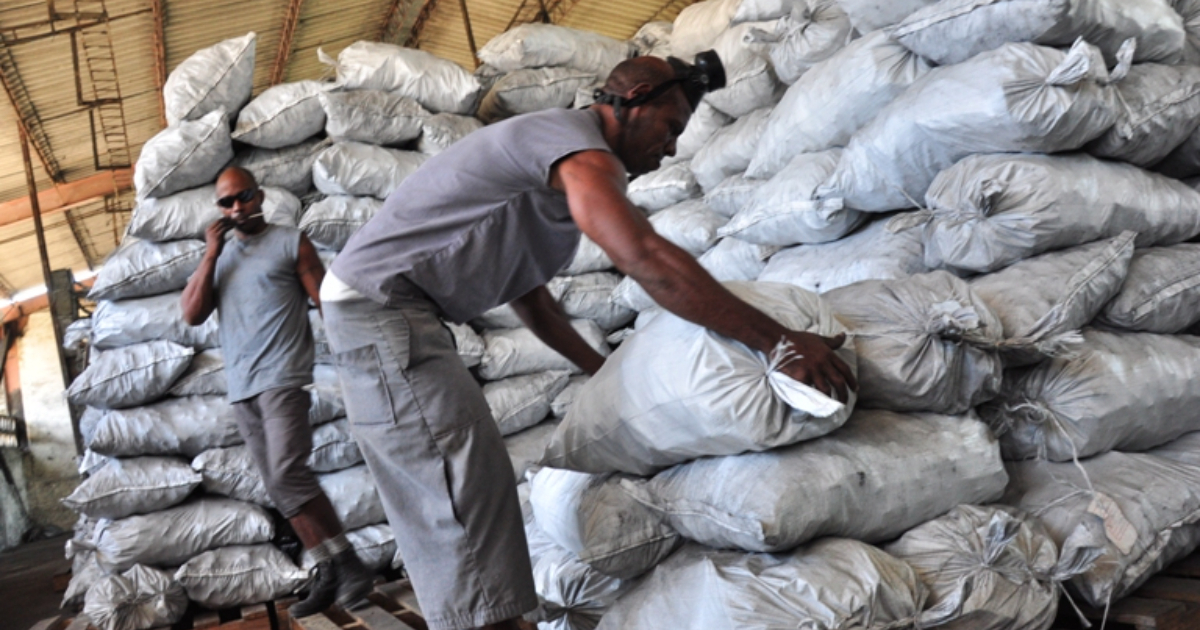
"In Guantánamo, charcoal is making a comeback in kitchens... An eco-friendly alternative. Cooking with our own, supporting local," the media outlet wrote alongside an image of bags of charcoal ready for sale.
Users' reactions were swift. Dozens of comments questioned the label of "eco-friendly" and rejected the idea that what many see as a direct consequence of the lack of electricity and gas should be presented as an achievement.
"Nothing ecological about it; it's just regression and more regression," wrote a user. Another commented: "It may be an alternative, but it's not an achievement; on the contrary, we're going backward like a crab." It was also read: "It's not an alternative when it's mandatory for eating," and "It's out of necessity, there's no other option; there hasn't been electricity due to prolonged outages since 2021, and now there's no gas either."
Several internet users also warned about the environmental and health impact of the massive use of charcoal. "The widespread use of charcoal as it is being done now implies irreparable ecological damage," stated one comment. Another directly questioned the official narrative: "Now they call 'ecological' this misery?"
Critics also pointed to the prices. Some users mentioned figures ranging from 1,200 to 5,000 Cuban pesos (CUP) per bag, in a context where the average monthly salary barely covers a fraction of basic expenses. "The bag is around 5k CUP," wrote one internet user, while another claimed that it is "ridiculously expensive for this bag."
The debate takes place in a context marked by prolonged blackouts and a shortage of liquefied gas. In recent months, charcoal has emerged as one of the most sought-after products in both the informal and state markets, in an economy where electricity is unstable and access to domestic fuels is limited.
Recent reports have shown how, in rural areas, men work amidst ovens and smoke to produce charcoal as a means of survival due to the halt of other economic activities. In a post titled "The Business of Today," journalist Raúl Navarro González described on Facebook that "Agriculture can no longer sustain us, and the country is paralyzed by endless blackouts, so charcoal has become the only trade that pays quickly in an economy where almost nothing is moving."
In that same report, it is stated that in the city “families spend up to 3,000 pesos a month just to boil milk or make coffee, while gas is notably absent and electricity is available only for a few hours.” A more in-depth analysis of this phenomenon and the rise of coal as a business amid the energy crisis can be read in the article “Coal: The Business of the Moment in Cuba, Born from Darkness”.
The rise of coal is not only due to domestic demand. In recent months, there has been a reported increase in exports of this product, raising concerns about its availability for national consumption amid the energy crisis.
The controversy surrounding the publication of Radio Guantánamo reflects the accumulated discontent in a population that, faced with the lack of stable energy alternatives, increasingly relies on traditional solutions for cooking. While some view it as a viable option in extreme circumstances, many reject the notion of presenting it as an "ecological alternative," describing it instead as a forced response to scarcity.
Filed under: