
Related videos:
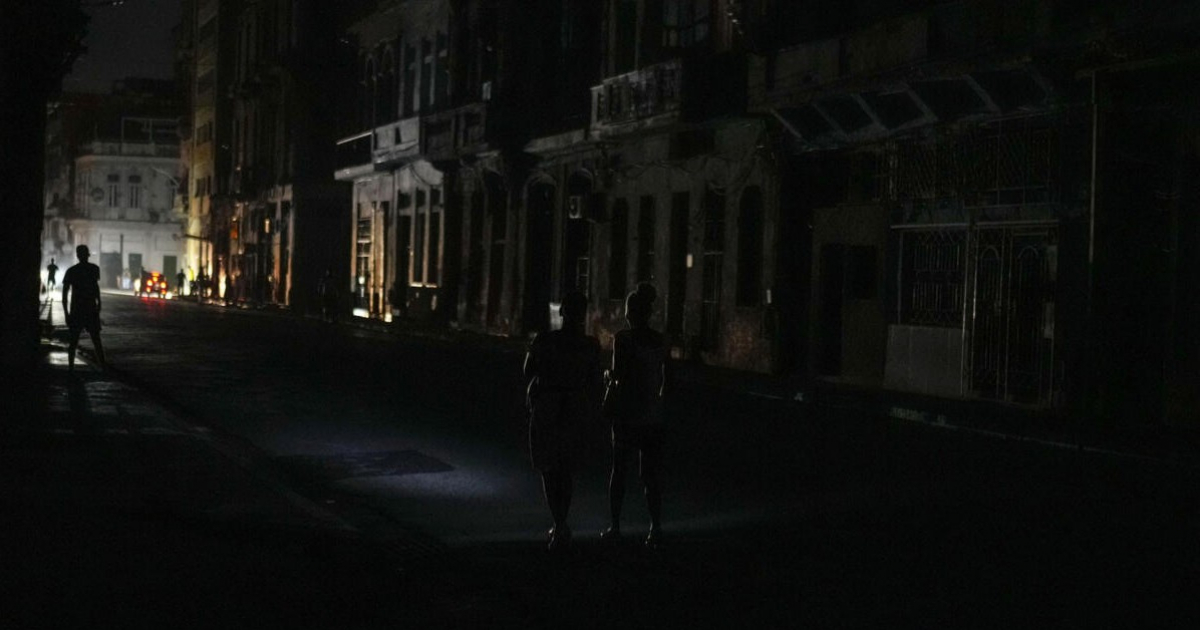
Cuba experienced another critical day marked by prolonged blackouts and a generation deficit that approached 1,800 megawatts (MW), amid an energy crisis that has worsened over the years without the authorities managing to provide a structural solution.
La Unión Eléctrica (UNE), in its report for this Wednesday, February 18, reported that during the previous day, the service was affected by a capacity deficit for 24 hours, with a maximum impact of 1,793 MW recorded at 7:10 pm.
The situation remained unchanged in the early morning.
At 6:00 am this Wednesday, the availability of the National Electric System was just 1,280 MW against a demand of 2,170 MW, resulting in an impact of 915 MW at that time. For the noon hour, the company estimated an impact of 900 MW.
The deterioration of the system is not the result of an isolated event.
According to UNE itself, the situation includes breakdowns in four generating units at the Santa Cruz, Felton, and Antonio Maceo thermoelectric plants.
This is complemented by maintenance work on three other key units at the CTE Mariel, Nuevitas, and Carlos Manuel de Céspedes.
Additionally, there are limitations in thermal generation that keep 466 MW offline.
For peak hours, the UNE forecasts the entry of the Mariel fuel site with 112 MW, five engines at the Regla Patana with 45 MW, and six engines at the Moa fuel site with 85 MW.
Even with these anticipated additions, the projected availability would be 1,437 MW compared to an estimated peak demand of 3,170 MW, resulting in a deficit of 1,733 MW.
If the expected conditions persist, the impact could reach 1,763 MW during that time.
The company also reported that the 51 new photovoltaic solar parks produced 3,968 MWh, with a maximum power output of 760 MW during the peak hours.
However, these figures do not manage to offset the enormous imbalance between supply and demand that keeps the country mired in daily blackouts.
In Havana, the situation was equally severe.
The Electric Company of the capital reported that the service was affected for 21 hours and 58 minutes.
The maximum sufficiency was 352 MW at 6:10 PM, while in terms of emergency, it was 70 MW.
The restoration was achieved at 3:33 AM this Wednesday, but by the time the report was closed, three blocks representing 116 MW were still affected, with a forecast for restoration in the morning.
The company itself warned that, "if the availability conditions of the National Electricity System do not improve," it is anticipated that blocks and circuits will be affected by energy contingencies without a scheduled time, leaving open the possibility of new outages without clear planning.
The situation reflects a structural crisis that did not arise overnight.
For years, the lack of investment, the deterioration of thermoelectric plants, and dependence on fuels have been weakening the system to the point where the country is facing almost continuous blackouts.
The accumulated inefficiency and the absence of sustainable solutions have made power outages a part of the national routine.
While demand greatly exceeds generation capacity and multiple units remain out of service due to faults or maintenance, millions of Cubans continue to face entire days without electricity, in a situation where the recovery of the system shows no clear signs of stability.
Filed under: