
Related videos:
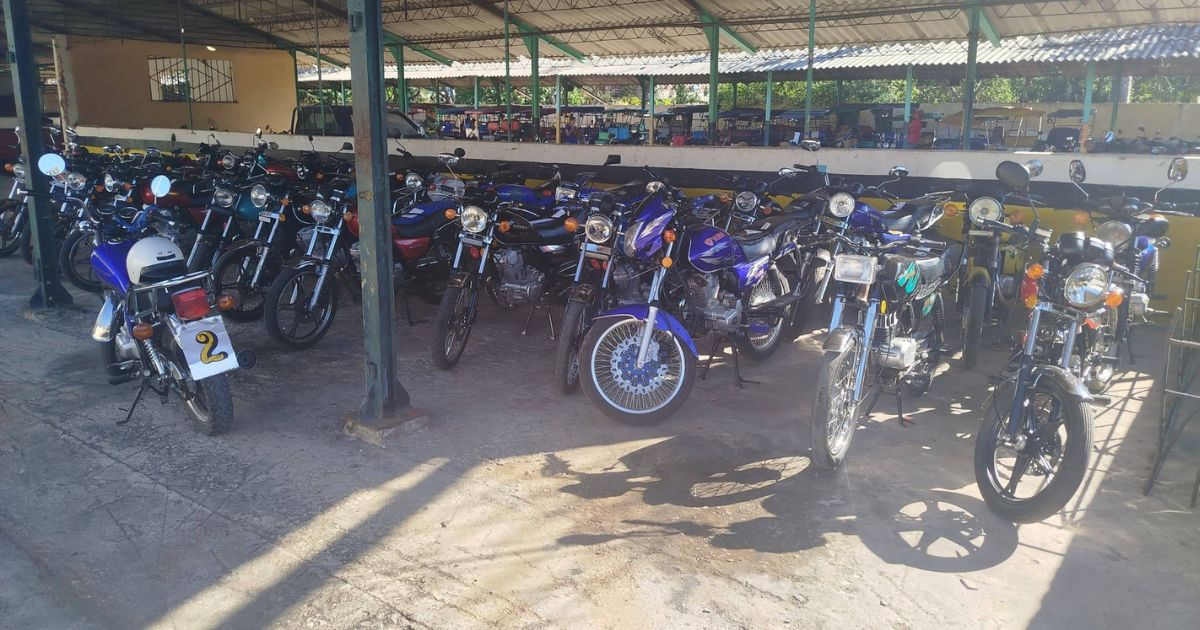
A total of 181 vehicles, including motorcycles, electric tricycles, and tricycles, were impounded at the Provincial Deposit Center of Santiago de Cuba for alleged violations of Law 109 of the Road Safety Code.
The official broadcaster CMKC reported that the confiscations are mainly due to improper parking, driving without a license, poor technical condition, and modification of exhaust pipes with resonators.
"It includes motorcycles, electric tricycles, and tricycle motorcycles," the note emphasized, which also reported that they are located "in the Provincial Deposit Center of Santiago de Cuba," a place that, according to many, is known for being a site of theft for vehicle parts.
"These media outlets have been retained for violating the provisions of Law 109 of the Traffic Safety Code," the official source added.
The announcement triggered numerous reactions on social media. Adri Diva questioned the timing chosen to enforce the regulation so strictly: “Seriously, with the situation we are living in? […] now that transportation is so bad, they decide to be so radical and take away the little that is moving the population around? This is madness.”
Wik pointed out that, with the current fuel crisis, imposing certain requirements worsens the situation.
"They have picked the worst time for that law," he wrote, also referring to the alleged request for gasoline purchase receipts.
Raul Oscar summed up his discontent with a phrase: “Retention, prohibition, fine, confiscation—these are the methods and favorite words of the government.”
Vita Jiménez González deemed the measure “an arbitrariness” and questioned the immobilization of alternative means when state transportation is insufficient.
In the same vein, Maria Maribel Agramonte asked whether the decision does not amount to “an invitation to protests.”
Other users pointed out alleged additional demands. Machiparis Anton Hernandez stated that agents were requesting the "receipt chip for gasoline purchased in dollars" and warned that if it was not presented, they could confiscate the motorcycle.
Fernando Londres Domínguez, for his part, stated that "the law must be followed," but he expressed the view that immobilizing means of transport "during these times of crisis is not very good."
The reactions reflect the discontent in a city where blackouts, fuel shortages, and a reduction in state routes have made motorcycles and tricycles key alternatives for daily mobility.
In that context, the strict enforcement of traffic regulations has sparked a new debate about priorities and proportionality.
On the contrary, the authorities in Holguín will begin issuing temporary special permits for electric tricycles and motorbikes, aiming to support the transportation of goods and passengers amid the exceptional situation facing the province and the country.
The measure was announced by René Rodríguez Morales, the minister of Transport's delegate in Holguín, who explained on Facebook that an official survey and registration of authorized vehicles will be conducted, including information on the owner, registration number or invoice, driver's license, and current technical inspection.
Filed under: