
Related videos:
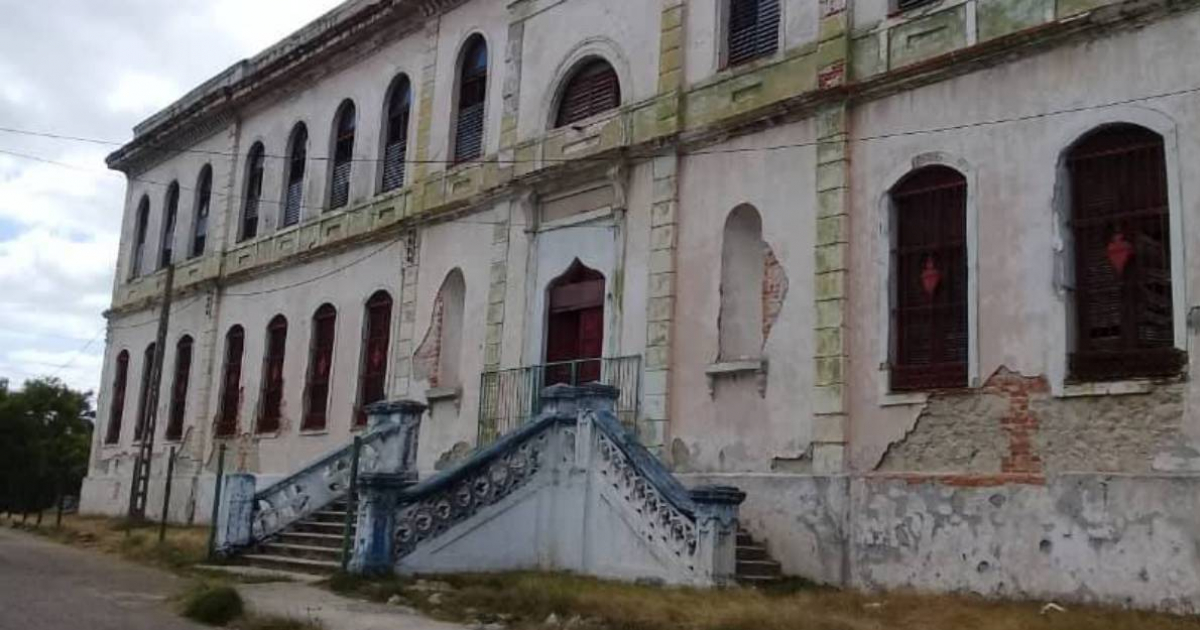
The former "Corazón de Jesús" Convent served for decades as an educational center for primary and secondary education in Havana, but its current state of deterioration is causing concern and nostalgia on social media.
Recent images of the building were shared by user Flor M. González Aguilera in the Facebook Photos of Havana group, and they received numerous comments highlighting the history of this local architectural landmark.
The property is located in the Cerro municipality. It is notable for its neoclassical colonial architecture and its bell tower, which still dominates the urban landscape of the area.
For decades, it housed the "Braulio Coroneaux" Primary School and the "Álvaro Barba" Basic Secondary School. Generations of Havana residents passed through its classrooms and remember its spacious halls, marble staircases, and stained glass that stood out for their beauty.
Recent photographs show cracks in the walls, detached plaster, propped-up areas, and zones visibly affected by moisture and neglect. The structure exhibits considerable damage, forcing the regime to relocate students to other facilities for safety reasons.
Like many buildings of this type in Cuba, the property originally had a connection with Catholic religious orders, which constructed numerous convents and schools with solid architectural quality in the 19th and early 20th centuries.
In the 1960s, following the process of confiscations and nationalizations, many of these properties were transferred to the hands of the Cuban state and were designated for educational or administrative purposes.
However, the passage of time, the lack of systematic maintenance, and the scarcity of resources led to the progressive deterioration of heritage buildings in Havana and other provinces.
Conservation specialists have repeatedly warned that many of these buildings could be saved with timely interventions, but prolonged neglect accelerates their loss.
The "Corazón de Jesús" Convent is part of the historical framework of Cerro, one of the municipalities with the richest architectural heritage in the capital, but it faces an imminent loss of its urban legacy.
The current state of the property reignites the debate on the preservation of built heritage and the institutional responsibility for its protection. For those who studied within its walls, the building is not just a crumbling structure, but a space filled with memories.
The hope that it can be restored contrasts with the fear that it will end up demolished or become another irreplaceable loss within the Havana urban landscape.
Filed under: