
Related videos:
An armed confrontation between Cuban security forces and a group of men who left Florida for Cuba could have sparked a larger crisis at the worst moment for bilateral relations in decades.
However, "for now, calm prevails": that is how Bloomberg described the way Cuba and the United States are handling the case, which is marked by four deaths and arrests, while Washington says it will investigate before taking action, and Havana asserts that the U.S. has shown a willingness to cooperate to clarify what happened.
Bloomberg recalled that the Cuban Deputy Minister of Foreign Relations, Carlos Fernández de Cossío, stated on Thursday that U.S. authorities had "shown their willingness to cooperate in clarifying the facts," a stance that contrasts with years of tension and hostile messages between the two governments.
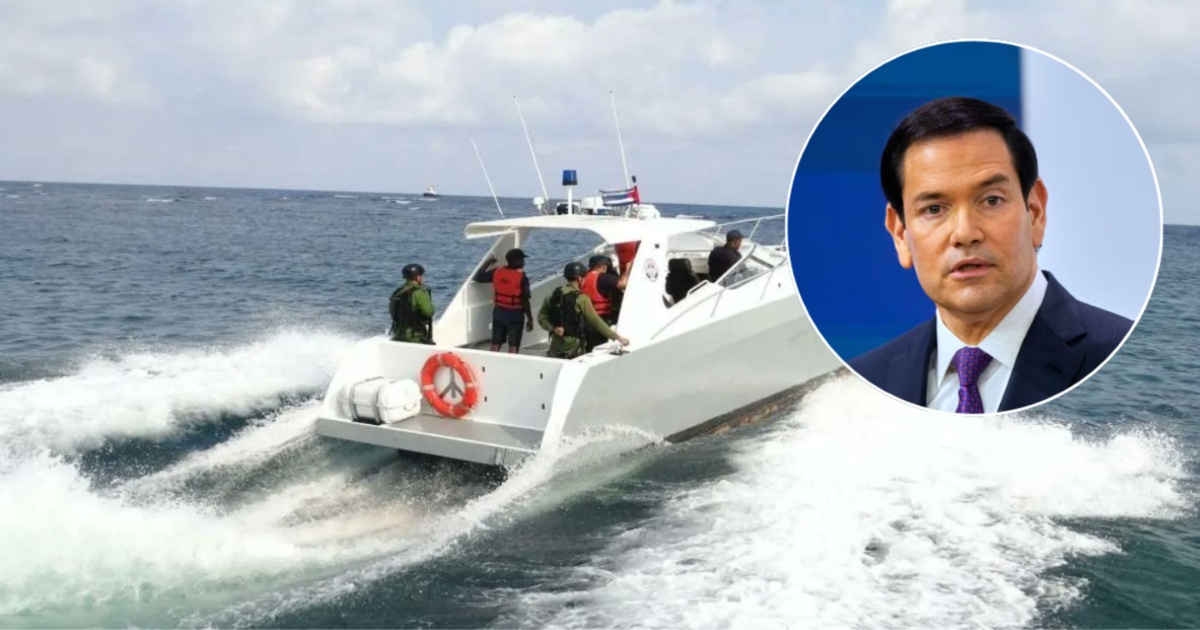
On the U.S. side, Secretary of State Marco Rubio stated that the United States will investigate the incident and that the facts will be clarified before deciding on any response.
It is still unclear what motivated the group to travel 145 kilometers from Florida to Cuba on a 7.3-meter single-engine fishing boat, which was reported stolen in the Florida Keys.
The Monroe County sheriff identified as a suspect in the robbery a man whom Cuba would have indicated as deceased in the shooting.
Cuba, for its part, claimed that the men were "terrorists" who had planned and trained for an attack against the country from the United States.
Weapons, injured individuals, and detainees: the Cuban version
Cuban authorities maintain that the men were carrying sniper rifles, night vision goggles, bulletproof vests, Molotov cocktails, and combat rations, intending to overthrow the government. They stated that when the Cuban border patrol approached the vessel, the occupants opened fire, wounding a Cuban military commander.
The Ministry of the Interior of Cuba stated that four of the alleged attackers died and that the rest, including an eleventh individual who had previously traveled to Cuba to meet with the group, were detained.
According to a U.S. official, at least two of the men —including one of the deceased— would be U.S. citizens.
The official also added that a third person had a K-1 fiancé visa and that some of the others might be permanent residents in the U.S.
Amid the chaos, there was confusion regarding the identification of some individuals involved: a man whom Cuba initially presented as detained was later found to be free in South Florida, a mistake that Fernández de Cossío acknowledged.
"It is not an isolated incident": the historical context that reveals Havana
In his assessment, Fernández de Cossío emphasized that Cuba has been a victim of attacks and terrorist acts for over 60 years, many of which—he stated—were organized from U.S. territory.
Relations between Washington and Havana are at their most delicate point in decades, and the Trump administration is said to have imposed a "nearly total blockade" on the island and cut off fuel shipments to the Cuban government amid its economic crisis.
In that context, Trump himself said this Friday that "maybe we will have a friendly takeover of Cuba."
Despite the "calm" narrative described by Bloomberg, the case raises key questions: how a small vessel was able to enter Cuban waters undetected; what motivated the operation; and what evidence supports—or contradicts—the claims regarding the alleged plan, the weaponry, and the immigration or citizenship status of those involved.
Filed under: