
Related videos:
“It’s very unfair”, with this phrase, Ailén García encapsulated the distress she claims to have experienced since August 2025, when she paid thousands of dollars to send a car to Cuba, and months later, neither has the vehicle arrived at its destination nor has she received a refund.
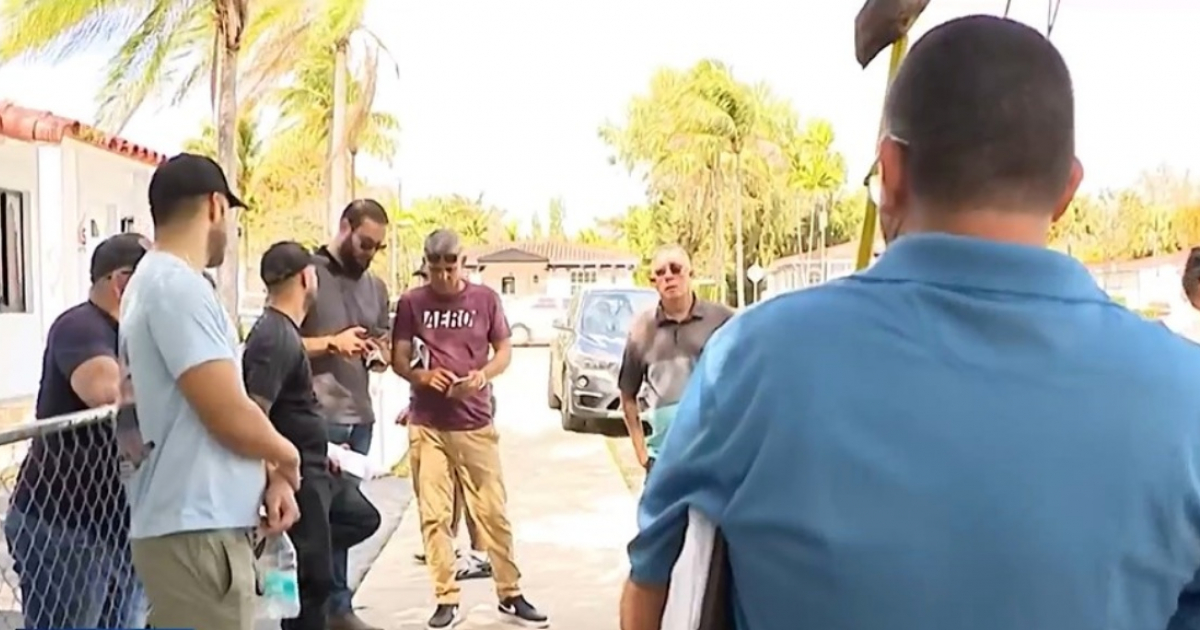
García was one of several people who gathered this week around a shipping agency in southwest Miami-Dade to demand answers.
According to reports to Telemundo 51, they were promised that the cars would be delivered at the Port of Havana within approximately two months. However, time passed without the delivery being fulfilled.
“I paid for my car in August. It has been many months of uncertainty and frustration,” García stated.
The scene repeats itself among other customers who claim to have paid high fees for the transportation of their vehicles and today face not only the absence of the promised service but also unexpected additional costs.
Invoices, intermediaries, and storage fees
The invoices shown to the aforementioned medium indicate that payments may have been made to Lucero Service, a travel agency based in Miami.
Its owner, Yaumara Morales, explained over the phone that her business acted as an intermediary between the clients and a second company, OK’s Charter, registered under the name of Kenny Chávez.
"We demanded answers from her, and she sent us here, to this other agency, which is why we decided to come in search of a response," García explained.
While customers look for someone to hold accountable, some vehicles - as reported - remain in the Port of Miami, incurring additional charges. “I went to the port, and to retrieve my car, I have to pay,” recounted one of the affected individuals.
Documents shown to Telemundo 51 reflect storage fees that, in some cases, would exceed 11 thousand dollars, an amount that multiplies the economic burden for families that had already invested in the shipment.
The response from the indicated company
In a statement, Kenny Chávez, owner of OK's Charter, assured that the company has not ceased operations nor has it intended to neglect its responsibilities.
According to the released document: "Some vehicles intended for export have experienced logistical delays, both at the departure port and at the destination. In certain cases, storage charges were incurred that were not timely communicated to the company."
"Our legal advisors are currently assessing this situation with the parties involved to determine responsibilities and seek a solution in accordance with the applicable legal framework," the document adds.
The owner indicated that the company recently underwent a banking review process that -as explained- temporarily affected the availability of funds and reimbursements, which would be analyzed on a case-by-case basis.
However, customers claim that the lack of clear communication and the absence of concrete solutions keeps them in a state of uncertainty that is bordering on desperation.
“They should take responsibility, and they should give us our cars, our money. It is our sacrifice,” García emphasized.
A context marked by new restrictions from Cuba
The complaints arise at a particularly complex time for the shipment of vehicles to the island.
On February 19, the Ministry of Foreign Trade and Foreign Investment of Cuba ordered the temporary halt of contracts and new shipments of combustion vehicles to the country, amid the severe fuel crisis.
The notification - signed by First Deputy Minister Carlos Luis Jorge Méndez - states that the measure covers both new operations and contracts that have already been signed and are pending shipment, including shipments associated with consignment contracts.
Only certain cases related to diplomatic personnel, cooperants, and contracted crews are exempted.
The document specifies that, while the suspension is in place, the sale of combustion vehicles already in customs warehouses may continue.
The recipient entities must communicate the decision to suppliers and clients and carry out the necessary actions to comply with the provision.
The measure is being adopted in a context of prolonged blackouts, partial transportation standstill, and severe energy restrictions that are affecting various sectors of the Cuban economy.
In recent months, in addition, there has been a significant increase in reports of vehicles being held in ports such as Mariel and at Transimport facilities, exposed to deterioration from salt, rain, and sun, without clear official explanations.
The state-owned company Aerovaradero also faced criticism after images emerged showing the condition of dozens of motorcycles stored at Santiago de Cuba International Airport.
For Cubans who paid to ship their cars from Miami, the situation on the island does not alleviate their doubts about what happened to their vehicles or the fate of their money.
While the companies involved speak of "logistical delays" and bank reviews, those affected insist that they need a clear and concrete solution.
Filed under: