
Related videos:
A total lunar eclipse will be observable in Cuba during the early morning of Tuesday, March 3, as long as cloud conditions allow, reported the Institute of Meteorology.
According to the information released by the organization and the meteorologist R. Galardy, the phenomenon will be visible throughout the country.
The event will occur near dawn, so it can only be appreciated until the Moon sets below the western horizon, without witnessing the final phases of the eclipse.
The penumbral eclipse will begin at 3:42 a.m., when the Moon will start to darken slightly, although the change will be difficult to notice with the naked eye.
At 4:49 a.m., the partial phase will begin, when the Earth's darkest shadow starts to visibly cover the lunar disc.
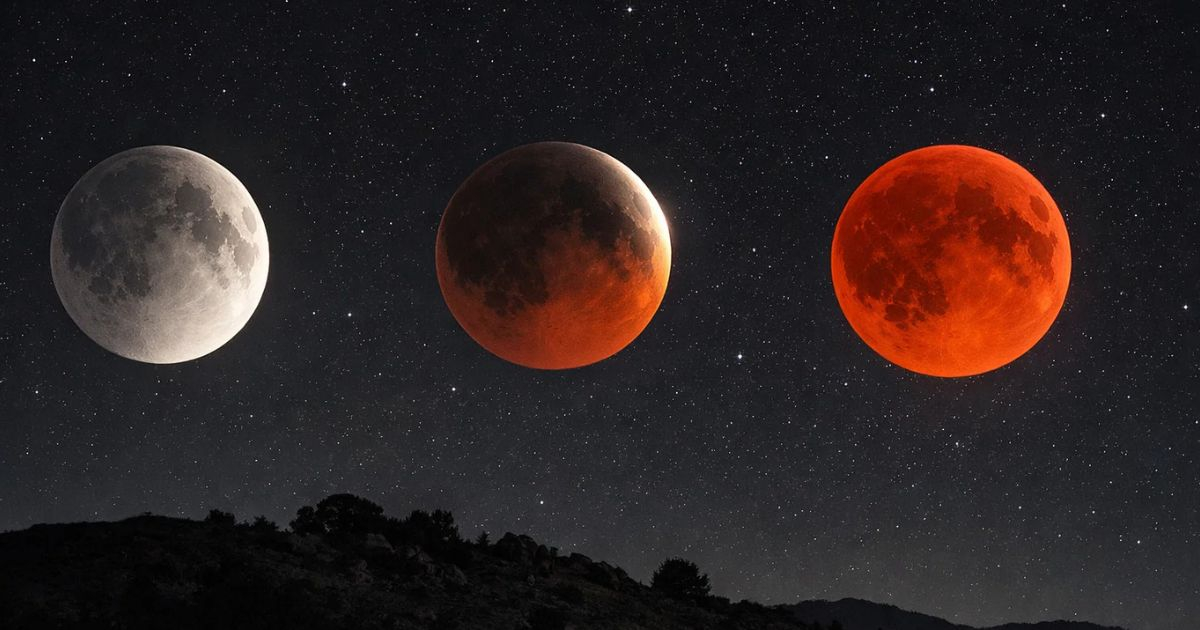
The totality will begin at 6:03 a.m., when the Moon is entirely within the Earth's shadow and takes on the characteristic reddish hue that gives rise to the popular name Blood Moon.
The peak of the eclipse is expected to occur at 6:33 a.m., and the satellite's setting will happen at 6:51 a.m., marking the end of the phenomenon visible from the island.
The total phase will last approximately 48 minutes.
The color red is produced because the Earth is positioned between the Sun and the Moon, and as sunlight passes through the Earth's atmosphere, it filters out the blue tones and primarily allows reddish and orange colors to reach the lunar surface.
The Meteorology Institute noted that the eclipse is safe to observe with the naked eye, unlike solar eclipses. It also recommended finding a location with a clear horizon to the west and, if possible, away from light pollution.
The use of binoculars can help to better appreciate the details and color variations during the total phase.
During the entirety, the decrease in lunar brightness will allow for a clearer observation of some nearby stars. At that moment, the Moon will be positioned in the constellation of Leo.
Filed under: