
Related videos:
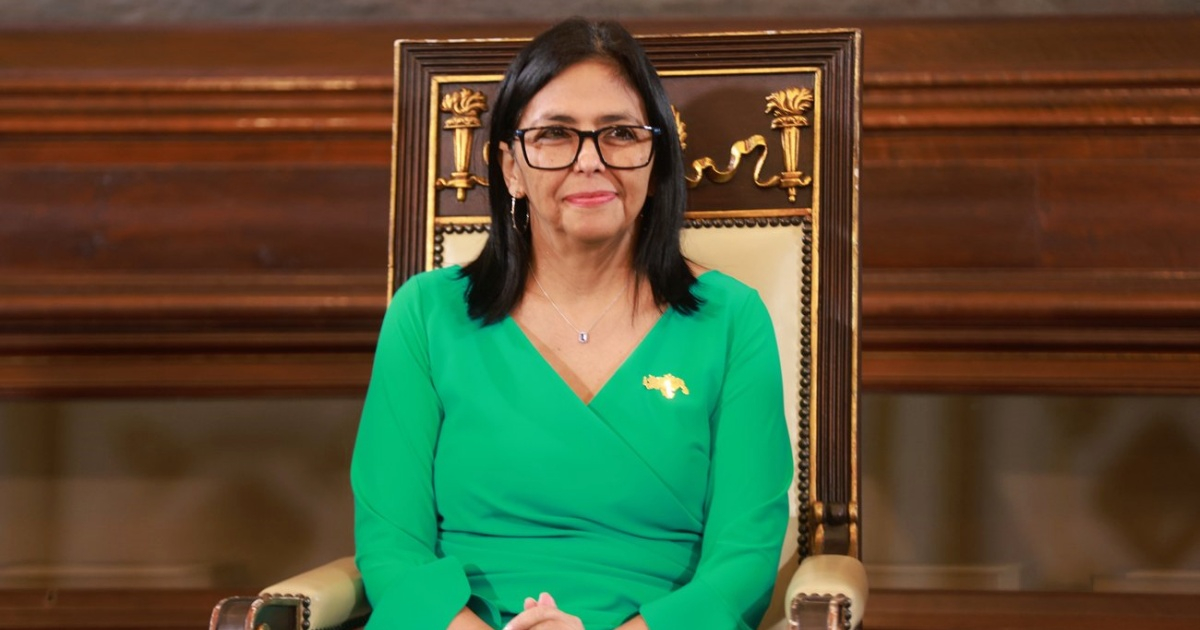
The international agency Reuters reaffirmed the accuracy of its investigation regarding an alleged criminal charge that the U.S. Department of Justice is reportedly preparing against the interim president of Venezuela, Delcy Rodríguez, and provided further details about the case.
The agency defended its work after U.S. Deputy Assistant Attorney General Todd Blanche labeled the report as "completely false," sparking a public controversy between the U.S. government and one of the most influential news services in the world.
“We stand by our report that the Department of Justice is preparing an indictment against Delcy Rodríguez, the new president of Venezuela”, stated Reuters in a statement released following the controversy.
The draft indictment being prepared by the Miami Prosecutor's Office
According to Reuters' investigation, federal prosecutors in the United States have been drafting a criminal indictment against Rodríguez as part of a broader strategy of political pressure on the Venezuelan government.
According to four people familiar with the process, the potential charges would be related to corruption and money laundering.
The agency explained that the federal prosecutor's office in Miami would be responsible for preparing the document, which has been in development for the past two months and has not yet been formally submitted to a court.
Reuters clarified that it has not had direct access to the draft text, but confirmed its existence through sources familiar with the process.
The investigations would focus on Rodríguez's alleged involvement in money laundering operations linked to the state-owned Petróleos de Venezuela (PDVSA).
According to the sources cited by the agency, the file would cover activities allegedly occurred between 2021 and 2025.
Rodríguez would have been warned about the possible process
One of the most sensitive elements of the report is that, according to Reuters, Delcy Rodríguez herself would have been verbally informed of the risk of being prosecuted.
Sources indicated that U.S. officials would have communicated to him that he could face charges if he does not continue to comply with certain demands from Washington, given the new political landscape in Venezuela.
That accusation draft would be, according to Reuters, "one of several tools" that the United States would be using to increase its pressure on Caracas.
The preparation of an indictment, however, does not necessarily mean that the case will be presented before a grand jury, the body that, in the American judicial system, decides whether there is sufficient evidence to formally initiate a criminal proceeding.
Reuters reported that it could not determine whether the prosecutors have begun presenting evidence to a grand jury, a procedure that is conducted in secrecy.
The Department of Justice declined to officially comment on the information.
The reaction of the Department of Justice
The controversy arose after a summary of the report was shared on the podcast Reuters World News.
After that post, the deputy attorney general Todd Blanche publicly reacted on the social network X.
"Completely FALSE from @reuters. I'm not sure how fake news like this gets published," wrote the official.
Despite that denial, the agency stood by its version and defended the reliability of its sources.
Neither the White House nor the State Department responded to questions sent by Reuters on the matter.
Arrests and extraditions demanded by Washington
The investigation also reveals that, parallel to the draft indictment, U.S. officials reportedly provided Rodríguez with a list of at least seven figures from chavismo that Washington wants to see detained or in custody for possible extradition.
According to Reuters, the request was conveyed by Laura Dogu, the new U.S. envoy to Venezuela.
Many of the individuals on that list are already facing charges in U.S. courts for drug trafficking, money laundering, or other crimes.
The case of Alex Saab and other figures under scrutiny
Among the names mentioned in the conversations between Washington and Caracas, Alex Saab stands out, having been regarded for years as one of the key financial operators of chavismo.
Saab was arrested in 2020 in Cabo Verde following an Interpol notice requested by the United States and subsequently extradited, where he faced charges of bribery and money laundering related to a $350 million corruption scheme linked to PDVSA.
In 2023, he was released by the administration of Joe Biden as part of a prisoner exchange, but Reuters reported that he was reportedly detained again in February by the Venezuelan intelligence service SEBIN.
According to two sources cited by the agency, the United States also has a new sealed indictment against Saab for money laundering.
Another relevant name is Raúl Gorrín, Venezuelan media magnate and owner of Globovisión, who faces multiple federal charges in the United States related to bribery, corruption, and money laundering associated with PDVSA.
The political context: The capture of Maduro
All of this is happening during a time of deep political transformation in Venezuela.
On January 3, 2026, U.S. special forces captured then-ruler Nicolás Maduro and his wife Cilia Flores, who were taken to New York to face federal charges.
Maduro is accused of narco-terrorism and cocaine trafficking, charges of which he has pleaded not guilty.
After her capture, Delcy Rodríguez took on the interim presidency, amidst a delicate process of political transition.
In public, U.S. President Donald Trump praised the cooperation of the new Venezuelan leadership, even describing the country as “our new friend and partner” during his State of the Union address.
However, according to Reuters, the possible criminal charge being prepared would be an additional tool of pressure within Washington's strategy to influence the political direction of the new Venezuelan government.
An uncertain process
For now, there are no formal charges filed in a federal court against Delcy Rodríguez, and the Venezuelan government's Ministry of Communication did not respond to the questions sent by Reuters on the matter.
The dispute between the Department of Justice and the international agency raises multiple questions about the true scope of the investigation and the role it could play within the complex negotiations between Washington and the new Venezuelan leadership following Maduro's downfall.
Filed under: