
Related videos:
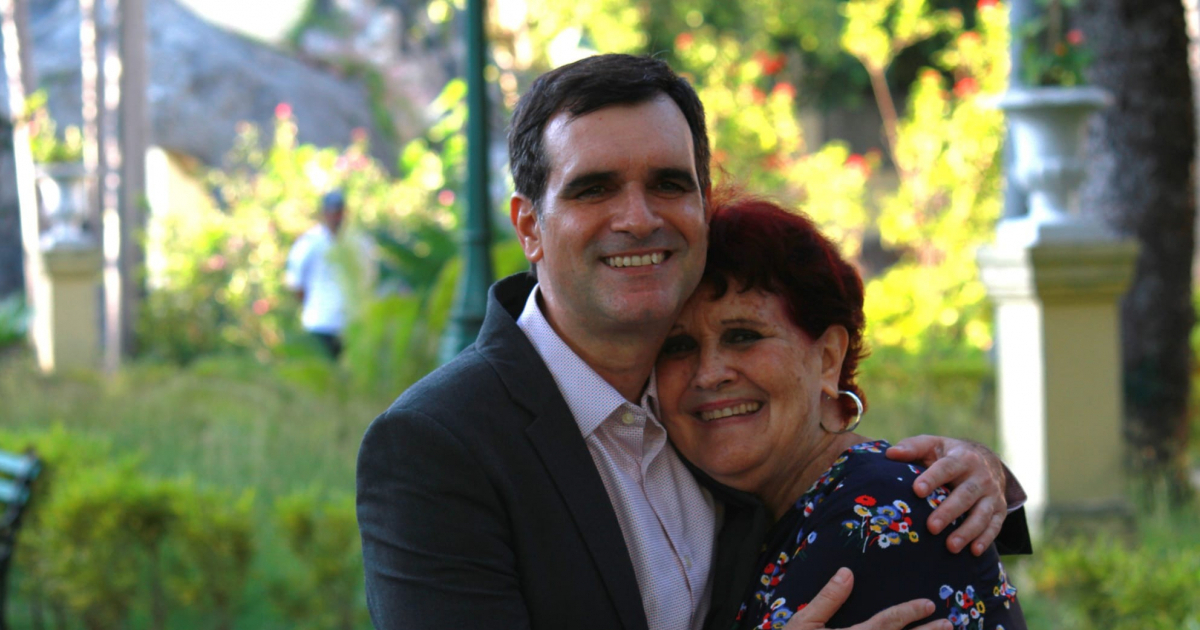
Carolina de la Torre, mother of the architect and university professor Abel Tablada de la Torre, publicly expressed her support for her son, who was expelled from the Faculty of Architecture at the Technological University of Havana (CUJAE), where he was teaching.
In a post published on Facebook, the woman expressed feeling "proud of my son Abel Tablada and of all those who have publicly supported him with the same courage and civility, and with the moral and ethical high ground that he has always demonstrated."
The statement comes after it was revealed that the professor was removed from the institution after posting critical reflections on his social media regarding the country's situation and the university system.
The information was shared by the activist Magdiel Jorge Castro, who claimed to have received a screenshot of a WhatsApp message in which the teacher was saying goodbye to his students.
In that text, as reported, Abel Tablada explained that some reflections shared on his wall "had not been to the liking of the university's administration."
The alleged sanction is said to have created "heated sentiments" among Architecture students, according to information from Jorge Castro.
The highlighted publications include an analysis of Etecsa's funding in 2025 and a more recent text titled "The University and Resilience," dated February 2.
In that document, the academic described the conditions under which Cuban universities operate, characterized by frequent blackouts, transportation issues, material shortages, and teacher salaries that he estimated to be between 10 and 15 dollars a month. He also warned about the decline in the preparation of new students and the loss of equity in access to and retention in higher education.
"Excessive resilience can lead to accepting as normal conditions that should not be prolonged for so long," wrote Tablada, who also emphasized the need for a sincere national debate, with a diversity of opinions and genuine citizen participation to define the country's future. "The worst solution is to pretend that nothing is happening," he noted in another excerpt.
So far, there is no official confirmation regarding a formal expulsion or the extent of the measures taken.
In a phone conversation with journalist Mario Pentón from Martí Noticias, the professor declined to provide details and assured that the matter is being handled through internal channels.
"We are addressing this issue internally, so I cannot provide information on that matter. I appreciate your concern," he replied. He also neither confirmed nor denied the authorship of the message circulating on social media.
According to reports circulated on digital platforms, the university administration allegedly prevented the instructor from continuing to teach following critical publications. It is also stated that the professor expressed his willingness to continue working without compensation, an option that was also denied to him.
The case has generated numerous comments on social media and has once again brought the issue of freedom of expression within Cuban universities to the forefront of the debate.
The possibility that a tenured professor could lose their teaching position for publicly questioning the state of the country highlights the narrow margin for critical thinking in state institutions.
In an environment where employment, especially in the academic sector, directly depends on official structures, expressing uncomfortable opinions can result in professional sanctions that affect not only one’s career but also personal stability.
The controversy gains greater visibility due to the academic's family connection: he is the brother of Johana Tablada, an official of the Ministry of Foreign Affairs and the second-in-command at the Cuban Embassy in Mexico.
For years, the diplomat has denied the existence of political repression on the Island. The apparent sanction against a close relative of hers has been interpreted by some as a sign that disciplinary measures can even extend to individuals connected to the official apparatus when their views diverge from the dominant narrative.
Abel Tablada de la Torre is an architect and tenured professor with many years of experience in teaching and research. He has worked on projects related to bioclimatic design and the restoration of the historic center of Havana, in addition to engaging in academic residencies at foreign universities and participating in specialized events.
Her mother, Carolina de la Torre, a graduate in Psychology, university professor, researcher, as well as a writer and documentarian, is publicly known for her long career in the university field and in the study of social and cultural issues.
Her statement not only represents a mother's support for her son, but also adds a voice from the academic realm to the debate on the limits of critical thinking in Cuba.
The episode underscores the tensions between official discourse and individual opinion in the country. In a system where universities are state institutions and where the space for dissent is limited, cases like this reinforce the belief that publicly questioning the national reality can lead to serious professional repercussions.
Carolina de la Torre's reaction, expressing pride and explicit support, adds to a broader discussion about the right to express opinions and the repercussions this can have in present-day Cuba.
Filed under: