
Related videos:
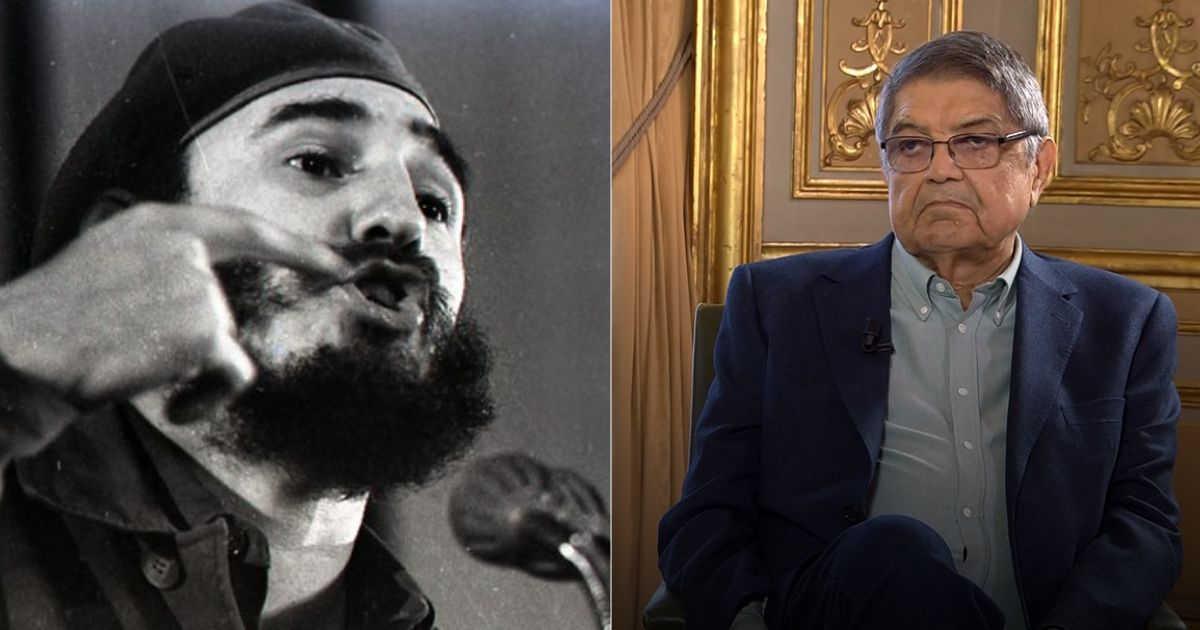
The writer and former Nicaraguan Sandinista combatant Sergio Ramírez described the current situation in Cuba as “a scene in rags,” where the memory of Fidel Castro has shifted from the myth of the hero to the tragedy of the tyrant.
In an article titled “Cuba, a Tattered Stage”, published on March 2nd by El País, the Cervantes Prize winner shares a critical perspective on daily life in the Island and the evolution of the political image of the Cuban revolution from the second half of the 20th century to the present.
Ramírez argues that the country is experiencing a deterioration marked by material shortages and a deep structural crisis: “without fuel, without drinking water, without electricity, lacking food and medicine,” “a scenario in which the backdrop is falling apart.”
The novelist indicates that the revolutionary project is now seen as "a worn-out script" featuring "actors dressed in old olive green," whose speeches no longer hold meaning for a large part of the audience.
As he recalls, for many young Latin Americans of his time, the insurgency led by Fidel Castro represented a symbol of rebellion and political hope against the military dictatorships of the continent. In stark contrast to that past, the author asserts that the perception has changed dramatically. "Today 'Castro' has triumphed over 'Fidel' in collective memory," and the former revolutionary leader has become "transformed in history into a dictator who passed power to his brother."
The text also draws a parallel between the trajectory of the Cuban revolution and that of the Sandinista process in Nicaragua, which emerged "under that light that was both ideological and sentimental" radiated by the rebellion led by the bearded ones. "The scenario in Cuba is illuminated by dim lights; Nicaragua has remained in darkness, noise and fury that no longer mean anything."
After being a protagonist of the Sandinista Revolution that overthrew the Somoza tyranny, Ramírez was forced into exile and stripped of his nationality by his former comrade-in-arms turned dictator, Daniel Ortega.
Towards the end of the column, the writer notes that the international community observes the situation in Cuba from a distance and that most governments have remained silent in the face of the crisis in the Pearl of the Antilles.
"Viewers seem to expect the curtain to fall once and for all. Russia and China want to leave the theater before the tragedy ends. And the left, which used to chant 'Homeland or death, we will overcome!', is also silent as the drapes fall to shreds," wrote the essayist.
"The dictatorships of twenty-first century socialism will not be eternal," Ramírez had stated in a previous column in the Spanish newspaper: "Repression, fraud, and corruption remain lethal and will mark their end. They will fall either by implosion or explosion, but they will fall. Sooner rather than later."
Also a lawyer and journalist, Sergio Ramírez was the first Central American to receive the Cervantes Prize and has won other prestigious awards such as the Alfaguara Prize for his novel. He served as the Vice President of Nicaragua following the victory of the Sandinista revolution in 1979 and currently lives in exile in Spain, one of the countries that granted him citizenship.
Among his works are: Margarita, the sea is beautiful, Shadows nothing more, A thousand and one deaths, The sky weeps for me, The fugitive, Tongolele didn't know how to dance and The golden horse.
Filed under: