
Related videos:
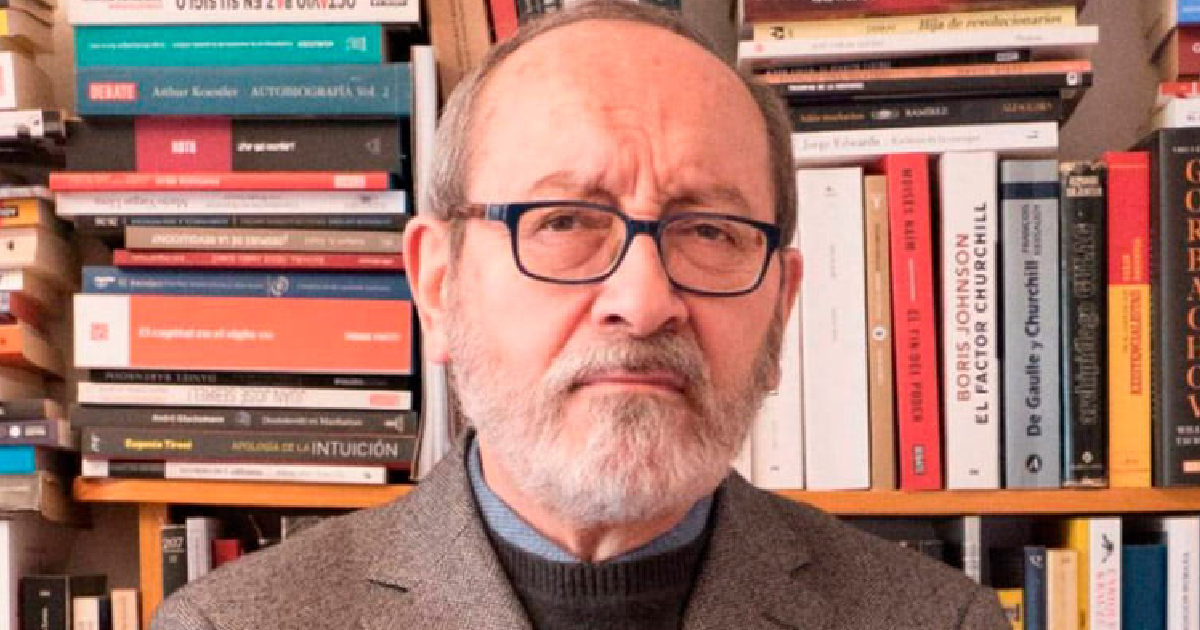
The legacy of Fidel Castro is a impoverished society, unequal and marked by decades of political repression and massive exodus, stated the prominent writer, academic, and former communist militant from Chile, Sergio Muñoz Riveros.
Castro, who "ruled for 49 years as if the island were his estate," defended a socialist system that, in reality, turned into "a form of privatization of power," he argued in an article published on February 21 in the Chilean newspaper El Mercurio.
In the text titled "The Legacy of Fidel Castro," Muñoz Riveros noted that the Cuban population has drastically declined, reportedly down to around eight million people according to independent studies. He pointed out that in this context of limited prospects, poverty affects between 40 and 45% of the population.
"Cuba is today a horrifically unequal society: the majority […] survives on the bare minimum while the ruling oligarchy, led by the Communist Party, enjoys all the advantages of absolute power," asserted the essayist.
The political process that began in 1959 has turned into a complete failure and a “historical scam,” he warned. After 67 years, the argument that the island is a “fortress besieged by the U.S.” can no longer justify inefficiency, arbitrariness, or corruption.
Muñoz Riveros also recalled that, despite the fuel shortages and various deprivations faced by the citizens, there are no shortages of resources for the vehicles of State Security, the immense apparatus of repression of the regime.
The Chilean intellectual described Castro's leadership as that of a ruler with unlimited power, who adopted methods inspired by the Soviet model. Slogans like “Homeland or Death” -he argued- were expressions of a system that silenced dissent and sent thousands of people to prison, into exile, or to armed conflicts abroad.
The text also addresses the international projection of Cuban revolutionary power, noting that in the 1960s, 1970s, and 1980s, it financed and trained guerrilla groups in Latin America. “The human cost of that delusion was devastating,” he declared.
In that context, the columnist recalled Castro's visit to Chile in 1971, invited by then-president Salvador Allende, and argued that his 24-day stay—an unusual demand imposed by the dictator on the Chilean leader—contributed to the political polarization that led to the institutional crisis in the South American country.
Muñoz Riveros stated that social discontent is widespread in Cuba today and concluded his article with questions about the political future of the Caribbean nation.
He dismissed a U.S. military intervention as a solution and warned that any resolution must acknowledge the Cuban people's right to self-govern. Additionally, the release of political prisoners from the dictatorship and the promotion of a climate of reconciliation would be fundamental steps, in the view of this writer.
Born in Santiago de Chile, Sergio Muñoz Riveros was a member of the Communist Party (PC) for over 30 years, leaving in 1986. He was a political prisoner and exiled following the coup d'état led by Augusto Pinochet in 1973. He is the author of the books Democracy Needs Defenders and Democracy Under Siege.
Filed under: