
Related videos:
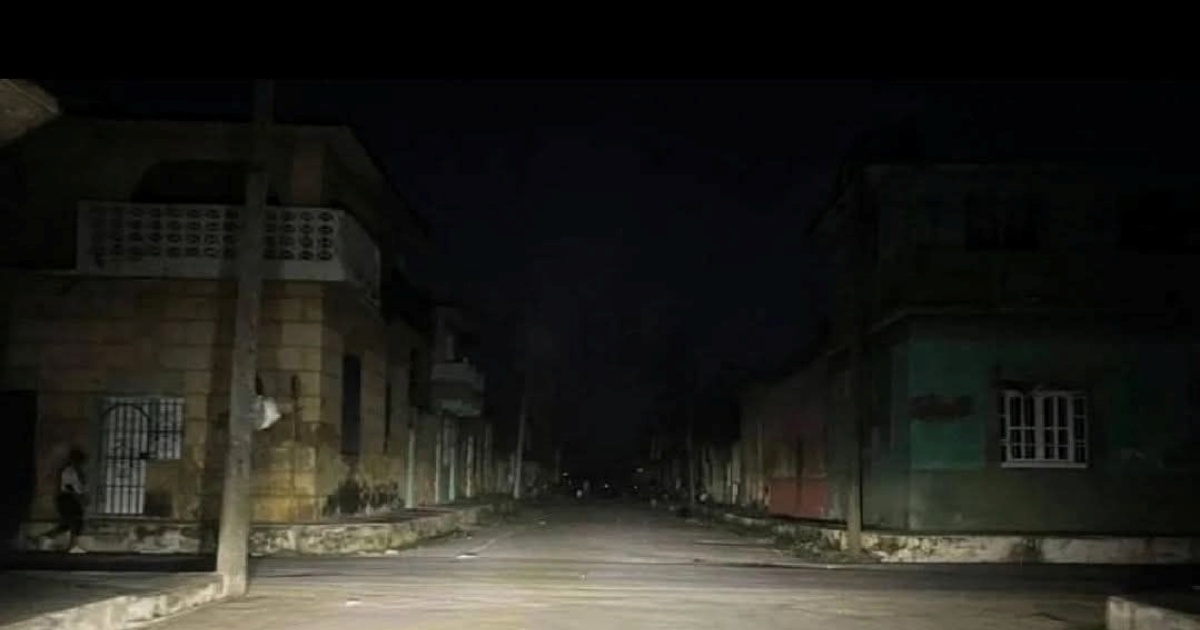
The Electric Company of Havana (EELH) reported early Thursday morning on the progress in restoring electrical service in the capital following the massive blackout caused by the unexpected shutdown of the Antonio Guiteras thermoelectric plant, the largest in the country.
According to the issued by the entity, at 5:28 a.m., 20 substations and 98 distribution circuits had been restored, allowing the supply to be returned to 296,467 customers in the city.
According to the company, this recovery represents 146 MW served, equivalent to 34% of total users in Havana.
The company also stated that essential services have been prioritized during the reconnection process.
Among them, 37 hospitals and five water supply services already had electricity at the time of the report.
“The restoration will be carried out gradually as the conditions of the SEN allow”, concluded the Electric Company of Havana, which assured that it will continue to inform the public through its official channels and the telephone service 18888.
Partial reconnection of the national electric system
Authorities in the electricity sector reported that the process of restoring the National Electroenergetic System (SEN) is progressing.
According to the latest official update, the system has successfully interconnected from Guantánamo to Matanzas, while another microsystem operates from Mayabeque to Pinar del Río.
According to the report from the Electric Union (UNE) and the Electric Company of Matanzas, conditions are currently being created to gradually increase the available power as new generation units are brought online.
In the province of Matanzas, authorities reported that several vital circuits have already been restored, including the one that supplies electricity to the Pediatric Hospital.
Circuits that supply several communities and strategic services have also been energized, including 4073, which serves areas such as Batey Luisa, Peralta, San Carlos, and the town of San José de Marcos.
The MI1452 circuit was also restored, which supplies electricity to the Epidemiology Laboratory, Telecentro, and the Los Mangos area, as well as the MI1456 circuit, which covers areas from the San Luis Causeway to Maceo Park and La Jaiba.
The authorities indicated that they are also working on the gradual reconnection of the remaining circuits connected to the Cocal 110 kV substation.
However, they warned that while the process of consolidating the electrical microsystems continues, the service may experience temporary instability.
"While the process of consolidating the microsystems is underway, it may be unstable, which is why the current can come and go for those circuits that have already been provided with electrical service," the official report stated.
The electric companies assured that they continue to work to progressively restore service in the affected areas.
The malfunction that triggered the blackout
The blackout occurred on Wednesday due to a malfunction at the Antonio Guiteras thermoelectric plant, located in Matanzas. According to the Electric Union, the plant unexpectedly went offline at 12:41 p.m. because of "a leak in the boiler," which led to the disconnection of much of the country.
"A disconnection of the National Electroenergetic System occurred from Camagüey to Pinar del Río," the entity noted in its initial report.
Subsequently, the general director of Electricity at the Ministry of Energy and Mines, Lázaro Guerra Hernández, explained that the power interruption affected the electrical service from the western zone of Las Tunas to Pinar del Río, while the system remained connected from the eastern part of Las Tunas to Guantánamo.
The official also indicated that the outage caused temporary interruptions in radio and television signals in several areas of the country.
An electrical system in crisis
The National Electric System has been facing a structural crisis for years, characterized by frequent breakdowns in thermoelectric plants, fuel shortages, and lengthy maintenance periods, factors that have led to daily blackouts in much of the country.
In previous episodes, technical incidents at key plants have also caused prolonged massive blackouts, instability in the system, and impacts on strategic sectors of the economy.
"Like a chain of dominoes."
The energy expert Jorge Piñón, a researcher at the Texas Energy Institute, explained to CiberCuba that these types of massive blackouts typically occur due to a chain reaction within the electrical system.
"The electrical system works like a chain of dominoes: when one falls, they all fall," he noted.
Piñón dismissed the idea that the blackout is due to the country reaching the so-called "zero option," a scenario that would imply a complete shutdown due to a lack of fuel.
"In other situations like this, it was a technical failure (Guiteras) that caused the system to crash, like a chain of dominoes... One falls, and they all fall. It's not a lack of fuel," he stated.
The specialist also explained that Cuban thermal power plants face an additional problem stemming from the fuel used.
According to their analysis, the use of domestically produced heavy crude oil, with high sulfur content and metals such as vanadium, causes accelerated corrosion in the components of the plants.
"The use of domestic crude oil is a vicious cycle: they repair the damaged component and a few months later it gets damaged again," he warned.
In his opinion, the structural problem of the Cuban electrical system cannot be resolved with temporary solutions.
"The challenge for thermal power plants is money and time; only a long-term solution will suffice, no more 'patch' solutions," he concluded.
Filed under: