
Related videos:
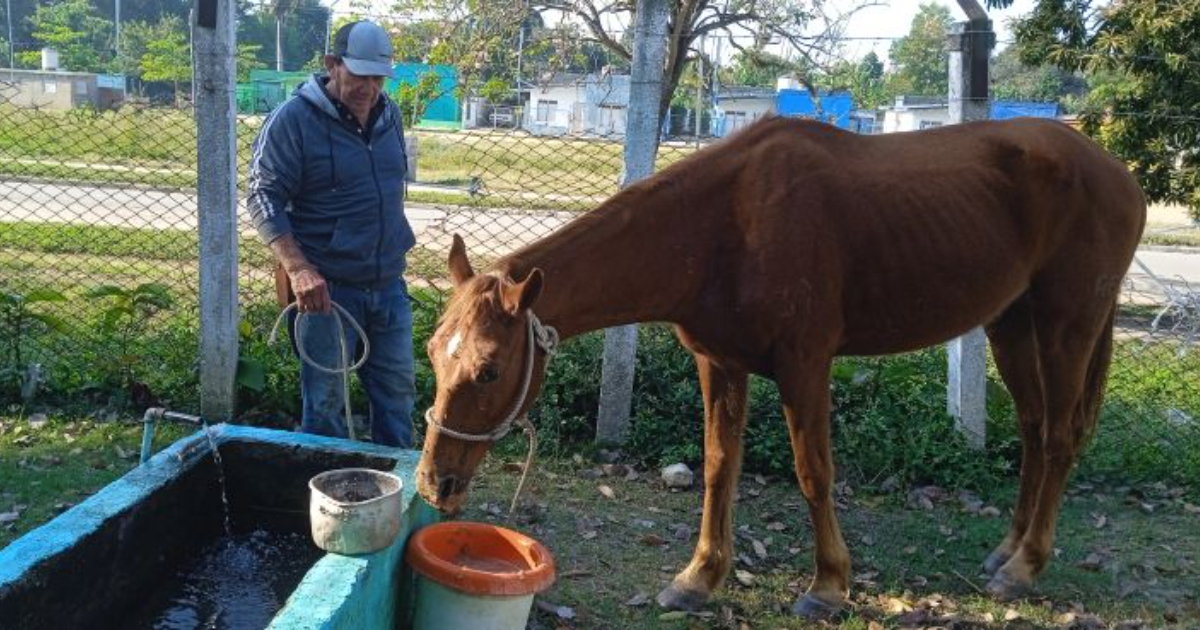
The limited food provided to the horse used in the equine therapy program at the Provincial Center of Sancti Spíritus is one of the main deficiencies impacting the operation of this rehabilitation service for children with various developmental disorders.
According to specialist in Defectology Yenys Calderín Ibáñez, as explained in a report published by the newspaper Escambray, the lack of suitable food for the animal leads to weight loss and makes it difficult to maintain the necessary conditions to carry out therapies.
"For example, the inadequate diet that the horse receives, which must maintain the established body weight in order to exercise with the children, results in weight loss due to the lack of feed, hay, or grass to ensure its diet."
This situation is compounded by other difficulties mentioned by the center's staff, including the lack of drinking water for cleaning the facility and for the handwashing of both workers and patients.
According to the report, the horse's caretaker must take the animal to its home, located several blocks from the center, so it can drink water.
Issues with the flooring in the area where activities are held have also been reported, as it is affected by tree roots, creating architectural barriers within the facility.
Despite these limitations, the center has been running a rehabilitation program since 2005 that serves children with impairments in their physical, psychological, cognitive, or social development.
The service operates in a ranchón located within the Delio Luna Echemendía Fair in the city of Sancti Spíritus and accommodates 26 patients who have been previously evaluated and referred for treatment.
The therapies combine rehabilitation exercises with sessions on the back of Muñeco, the only horse at the center, as part of a collaborative effort involving specialists from Education, Health, and the National Institute of Sports, Physical Education, and Recreation (Inder).
According to equine therapist Elena Cepeda Cruz, contact with the animal is an essential part of the therapeutic process and allows for the observation of progress in many patients.
"What I enjoy the most," Elena clarifies, "is being able to witness the progress in the physical and mental health of each child. It's undoubtedly very rewarding, as after a few months, many of those who arrived unable to walk or speak start to experience that benefit. This is also achieved when parents collaborate and continue to emphasize rehabilitation in their own homes."
Therapeutic work also includes physical exercises and speech therapy, especially for patients with diagnoses such as cerebral palsy or other central nervous system injuries.
Mairí Martínez Rodríguez, a health rehabilitation specialist with over 12 years of experience in this program, emphasized the impact that treatment can have on the lives of children and their families.
"I have seen it all here, from kids who arrive in wheelchairs and leave walking, to parents who come with their dreams shattered and manage to find answers for their children."
Despite the material shortages, the center continues to welcome children from various municipalities in the province, including Cabaiguán, Taguasco, and Jatibonico, whose families seek the benefits of equine therapy as part of their rehabilitation process.
Filed under: