
Related videos:
Ecuador and the United States have signed a memorandum of understanding to establish the first permanent FBI office in Quito, located within the U.S. Embassy in the Andean country, with the aim of supporting the National Police in the fight against transnational organized crime.
The agreement was signed by the Ecuadorian Minister of the Interior, John Reimberg, the regional director of the FBI, Allen Pack, and the chargé d'affaires of the U.S. Embassy, Lawrence Petroni. The Ecuadorian Vice President, María José Pinto, was present at the signing ceremony.
So far, the FBI's collaboration with Ecuador was managed on an ad-hoc basis from Bogotá. With this agreement, a special FBI agent will be permanently assigned in Quito, working continuously alongside a specialized unit of the National Police created specifically for this cooperation. The office began operating immediately.
Among the objectives of the new office are the fight against drug trafficking, money laundering, international organized crime, arms smuggling, and terrorism financing. Reimberg emphasized that the agreement does not violate Ecuadorian sovereignty and highlighted that crime in the country has decreased by 34% since January 2026.
The agreement is the latest link in an intense chain of security agreements signed in just two weeks between Washington and Quito. On March 3, both countries carried out the first joint anti-drug military operation in Latin American territory against terrorist organizations, led by Southern Command. On March 5, Ecuador signed, along with the U.S. and 19 countries in the region, an agreement against narcoterrorism in Doral, Florida.
On March 8, President Daniel Noboa participated in the summit of the Shield of the Americas in Miami, a coalition led by Donald Trump with 12 Latin American nations.
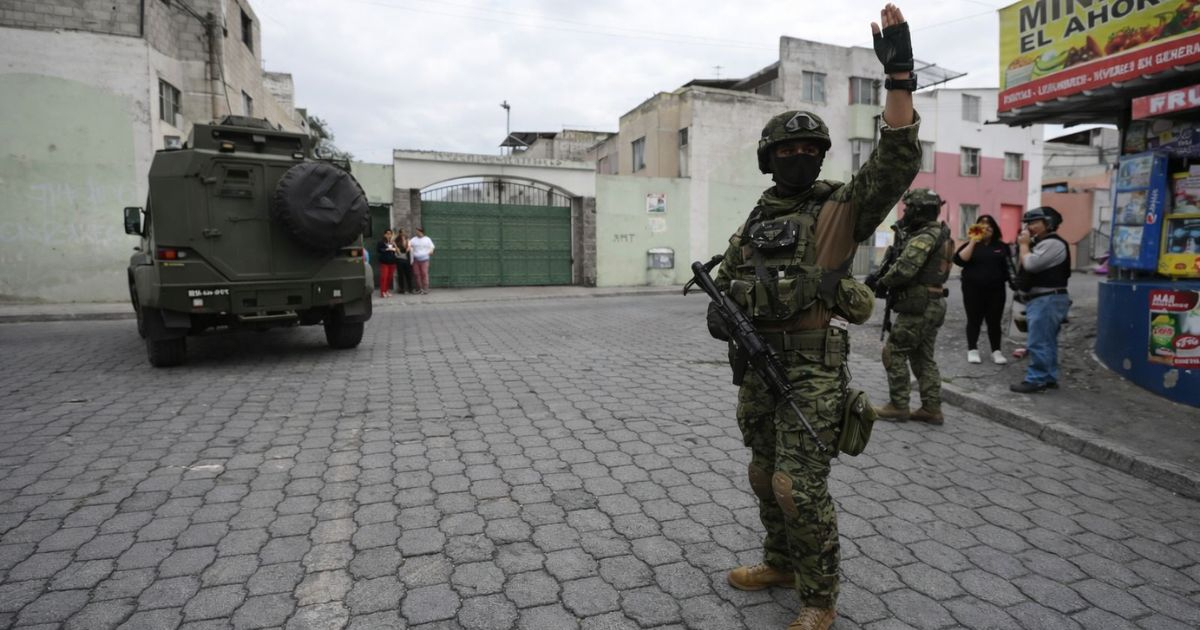
This escalation of cooperation responds to the serious security crisis that Ecuador has been facing since 2024, when Noboa declared an "internal armed conflict" in light of the advance of criminal gangs linked to international drug trafficking. In 2025, homicides increased by 40% by September, with an estimated 8,847 to 9,300 violent deaths for the year, placing the country among the most violent in Latin America.
The opening of the FBI office in Quito comes at a time of significant diplomatic reconfiguration in Ecuador. Just days before, the government of President Daniel Noboa declared the Cuban ambassador, Basilio Antonio Gutiérrez, persona non grata and ordered the departure of all personnel from the island's diplomatic mission within 48 hours, leading to the closure of the Cuban embassy in the country.
The measure marked one of the most tense episodes in relations between Quito and Havana in recent years. Following the announcement, images circulated of personnel from the Cuban legation burning documents inside the diplomatic building before leaving the country.
In this context, the establishment of a permanent FBI office also symbolizes the new direction of Ecuador's security policy: while ties with traditional allies of the Cuban regime are cooling, Quito is strengthening its cooperation with Washington in the fight against drug trafficking, organized crime, and the financing of terrorism.
In September 2025, Washington had already announced $20 million in additional aid for Ecuadorian security equipment and operations, as part of a bilateral relationship that has tightened significantly under the governments of Noboa and Trump. The opening of the FBI office solidifies Ecuador as one of the main strategic allies of the United States in the region regarding security.
Filed under: