
Related videos:
The Electric Union (UNE) forecasts a shortfall of 1,905 MW during the peak nighttime hours this Thursday, the highest level recorded this week, with an availability of only 1,185 MW compared to an estimated maximum demand of 3,060 MW.
At 06:00 hours this Thursday, the National Electric System (SEN) reported 1,205 MW affected, with a demand of 2,380 MW that doubles the available capacity. "A peak availability of 1,185 MW is expected, with a maximum demand of 3,060 MW, resulting in a deficit of 1,875 MW," warned the UNE in its information note.
On Wednesday, the situation was equally devastating: the maximum impact reached 1,840 MW at 8:30 PM and service was interrupted for 24 hours across the entire country. In Havana, the capital electric company (EELH) reported a maximum impact of 333 MW at 8:00 PM, with an additional 61 MW cut due to emergencies and 4 blocks —138 MW— still without service at the time of the report.
Among the causes of the deficit are breakdowns in Unit 5 of the CTE Mariel, Unit 2 of CTE Santa Cruz, Unit 2 of CTE Felton, and Units 3 and 6 of CTE Antonio Maceo, which total 432 MW of thermal generation out of service. The 51 photovoltaic solar parks contributed 3,809 MWh on Wednesday, with a maximum output of 610 MW during daylight hours, but this generation does not offset the nighttime deficit.
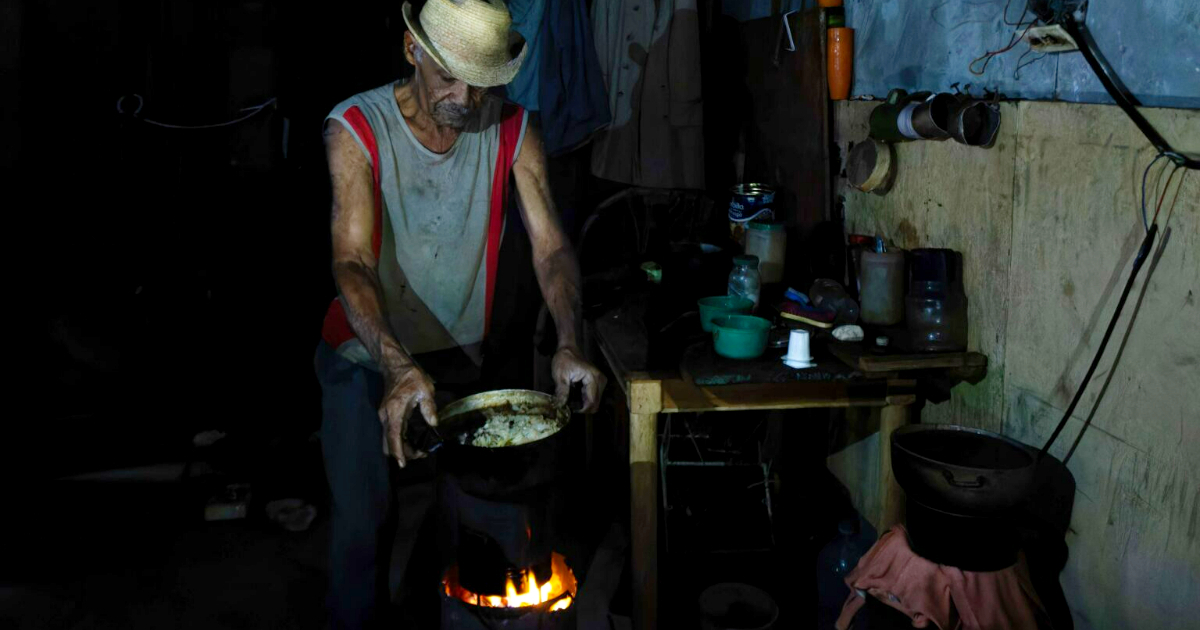
The crisis intensified on March 4, when the unexpected shutdown of the Antonio Guiteras power plant —the largest in the country— left between 6 and 7 million Cubans without electricity from Camagüey to Pinar del Río. Since then, prolonged blackouts have triggered nightly protests with pots and pans in Havana that this Thursday mark their sixth consecutive night, with slogans such as "Down with the Revolution!" in neighborhoods like Santos Suárez, Jesús María, La Lisa, and El Cerro.
According to the expert Jorge Piñón from the Energy Institute at the University of Texas, recovering the Cuban electrical system would require between 8,000 and 10,000 million dollars and between three to five years, a perspective that contrasts with the regime's inability to guarantee even a few hours of electricity per day.
Filed under: