
Related videos:
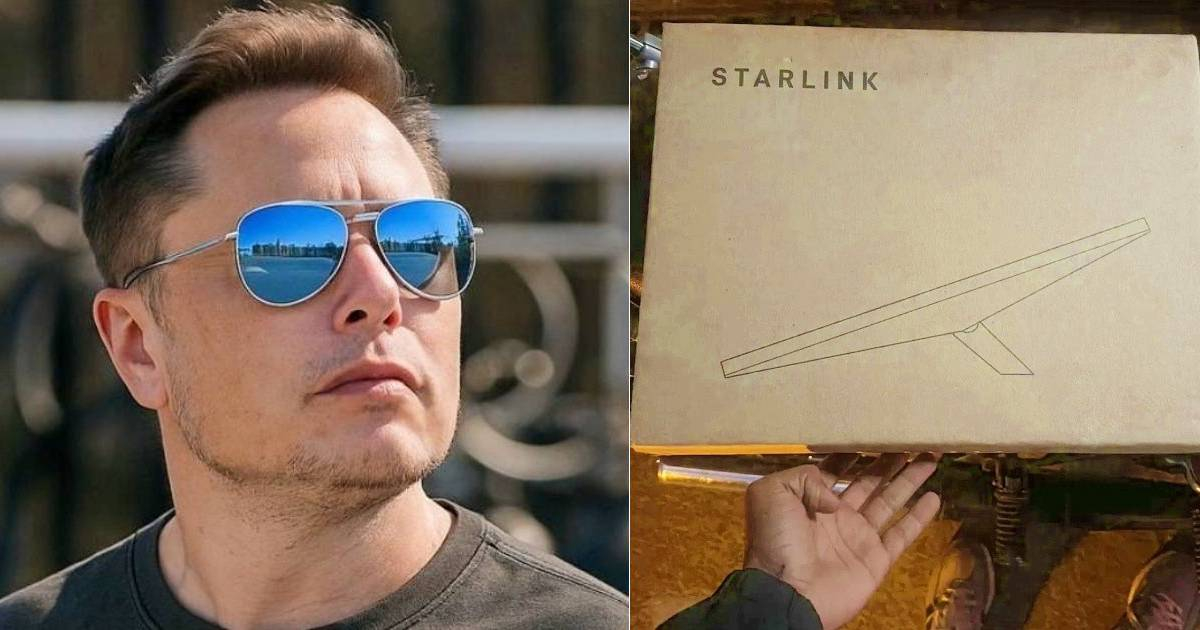
Businessman Elon Musk stated that the Starlink satellite internet service operates in Cuba, although he clarified that it cannot be officially marketed within the country.
“Works in Cuba, just can’t be sold there”, Musk wrote on the social media platform X in response to a user who inquired about the availability of the service.
The message from the founder of SpaceX suggests that the Starlink signal reaches Cuban territory, but there are restrictions that prevent its sale or official distribution in the country.
Starlink is a high-speed internet system that operates through thousands of satellites in low orbit, allowing connectivity even in places where traditional telecommunications infrastructure does not exist. For many Cubans, especially those on the island, it represents a possible means to access the internet without relying on the state-controlled network dominated by ETECSA, which has been widely criticized for its slow speeds, high prices, and censorship.
In April 2025, the Cuban government warned that the use of Starlink without state authorization is illegal and may be sanctioned. In a note published by the Budgetary Unit for Radioelectric Spectrum Control (UPTCER), an organization affiliated with the Ministry of Communications, the authorities indicated that the service violates both national legislation and international regulations by operating without a license or official coordination.
According to that organization, any satellite system must have authorization from the State to utilize the country's radio spectrum. In the absence of such permission, the use of Starlink terminals on the island is considered illegal.
The authorities also reminded that Resolution 272/2015 from the Ministry of Communications prohibits the import and use of telecommunications equipment without state permission, which includes Starlink antennas. Possible consequences for those who utilize these devices include fines, confiscation of equipment, and even technical interference with frequencies.
In May of that same year, official spokesmen went so far as to label the introduction of these antennas as part of a supposed "digital aggression" by the United States, claiming it would be part of a strategy to destabilize the country.
Despite these restrictions, independent reports and advertisements on platforms like Revolico have shown that some Starlink equipment is already circulating in the informal Cuban market, where prices can reach between 1,300 and 1,800 dollars, in addition to installation costs.
For many Cubans, however, the interest in this technology is not politically motivated but rather practical: the ability to connect with the world without relying on the state telecommunications monopoly.
Musk's brief statement does not clarify whether there is any plan to officially enable the service on the island in the future, but it does confirm something that has circulated among users and tech rumors for months: the Starlink signal can reach Cuba, even though its sale remains prohibited.
Filed under: