
Related videos:
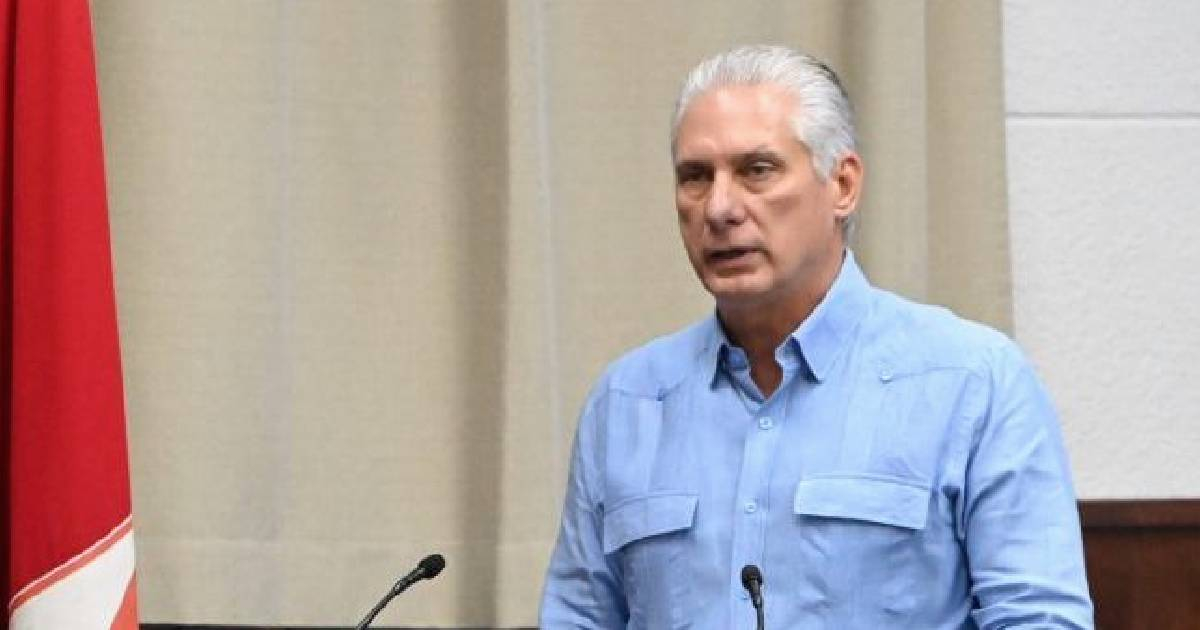
The Cuban leader Miguel Díaz-Canel on Tuesday held the United States responsible for the weakened economy of the island, in response to an escalation of statements from President Donald Trump and Secretary of State Marco Rubio regarding the situation in Cuba.
In a on social media, Díaz-Canel accused Washington of threatening "almost daily" to overthrow Cuba's constitutional order and of using the economic crisis as justification.
“U.S. publicly threatens Cuba (...) and uses an outrageous excuse: the harsh constraints of the weakened economy that they have attacked and sought to isolate for over sixty years,” he stated.
The leader also asserted that the United States aims to "take over the country, its resources, and its economy," and described the embargo as a "fierce economic war" applied as collective punishment against the population.
Díaz-Canel's statements come after several high-level pronouncements from Washington, and after The New York Times reported that Washington may be negotiating his departure from power on the island.
President Donald Trump recently stated that Cuba is a "failed nation" and went on to suggest that the United States could "do whatever it wants" with the island if a political change occurs.
For his part, Secretary of State Marco Rubio stated that the Cuban economy "does not work" and that the system has historically depended on external subsidies, first from the Soviet Union and later from Venezuela.
Rubio also emphasized the need for profound changes in the country's leadership in order to overcome the crisis.
The exchange of statements takes place amid a severe energy crisis in Cuba, characterized by prolonged blackouts throughout the country, including a recent collapse of the electrical system that left millions of people without service.
The situation has worsened following the interruption of Venezuelan oil supply, which for years was crucial for maintaining electricity generation on the island.
In parallel, contacts are being developed between both governments, in what Díaz-Canel has described as a "first phase" of bilateral discussions, while political pressure from the United States is increasing.
In this context, the Cuban leader insisted that the country will withstand any adverse scenario, stating, “In the worst-case scenario, Cuba has a certainty: any external aggressor will encounter an impenetrable resistance,” he concluded.
This Tuesday, most of the country remains without electricity, and protests involving pots and pans against the regime have been reported in various areas of the capital and Santiago de Cuba.
Filed under: