
Related videos:
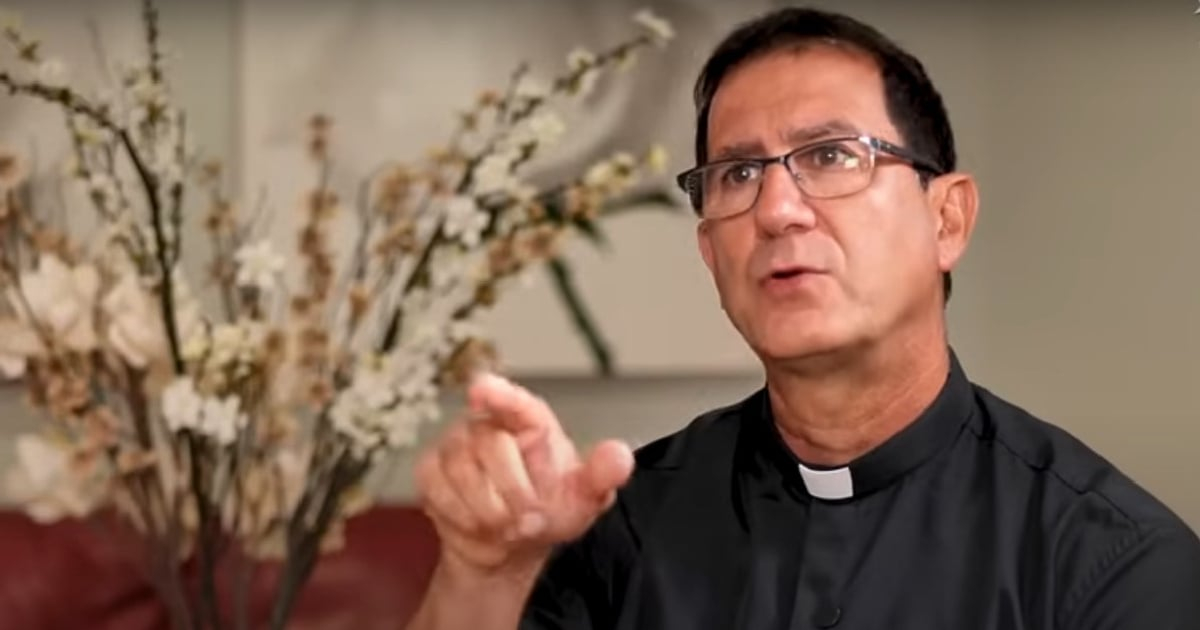
The Cuban priest Alberto Reyes, one of the most critical voices on the Island, has starkly described the situation the country is facing: a rising social tension characterized by widespread discontent, persistent fear, and an economic and energy crisis that is increasingly hitting the population harder each day.
From the Diocese of Camagüey, the religious figure describes a scenario where uncertainty has become a part of daily life.
According to the Spanish newspaper El Mundo, there is a shared feeling that something is about to happen, although that change has yet to materialize.
"Uncertainty strikes the Cuban... something has to happen, but it just isn't happening," he states, describing an agonizing wait that is intertwined with frustration.
In parallel, protests, particularly those at night, have been on the rise, reflecting an increase in internal pressure.
However, this tension does not translate into visible changes, while outside there is speculation about possible diplomatic moves that, for the moment, are not materializing.
In that context, the priest summarizes the social climate with a powerful phrase: "Cuba is a pot that could explode at any moment."
The State, far from alleviating the situation, has chosen to reinforce control. Reyes reports a notable increase in police and special forces presence on the streets, accompanied by what he describes as a "super-aggressive" attitude.
Any attempt at protest or complaint is swiftly repressed, exacerbating the sense of despair. "People are increasingly tired, fed up, and eager for change," he insists.
One of the most striking elements of the current moment is the change in perception among those who historically supported the system. The parish priest claims that even former supporters of the government are now expressing their disappointment.
In his opinion, there is an explosive combination of a massive desire for transformation and the fear of the consequences of expressing oneself.
That fear is not unfounded. After each protest, he explains, arrests and judicial proceedings occur that can lead to sentences of up to 10 or 15 years in prison.
“If the Police accuse you, you have no defense,” he claims, alluding to a judicial system that he asserts responds solely to political power.
In that context, the population is deeply unprotected, lacking real legal guarantees.
Despite this, fear begins to erode little by little, fueled by desperation. The question that lingers among citizens is persistent: when will this situation end?
"People are desperate for change," emphasizes Reyes, reflecting a widely shared sentiment.
The material crisis further intensifies the discomfort. The fuel shortage has paralyzed much of the country and has spurred a black market with prices that are unaffordable for most.
The priest himself recounts that he has been waiting for weeks without success for an official gasoline allocation, while in the informal market, prices have reached very high levels.
This is compounded by the deterioration of the electrical system. Blackouts are becoming increasingly frequent and prolonged, leaving entire communities without power for days.
The consequences are devastating: food spoils, basic products cannot be preserved, and there is total isolation when communications also fail.
"We remained completely isolated," he explains, recalling whole days without Internet, mobile, or landline service.
This situation has driven many Cubans to leave the country in recent years in search of opportunities and stability.
Reyes, a direct witness to this reality in his community, describes how neighbors and acquaintances have been leaving since the protests on July 11, 2021, in an exodus that reflects the lack of prospects within the Island.
Voices like that of the Father provide an insider's perspective on Cuban reality. His testimony not only describes the material difficulties but also the emotional state of a society that fluctuates between fear and the hope for change.
Together, it paints a society on the edge, where accumulated weariness, repression, and material shortages coexist with a growing desire for change.
A tension that, as the priest himself warns, could erupt at any moment.
Filed under: