
Related videos:
A Cuban has put into words what millions within the island feel, but few manage to express so starkly: Cuba not only suffers from blackouts, but also lives through an emotional dimming.
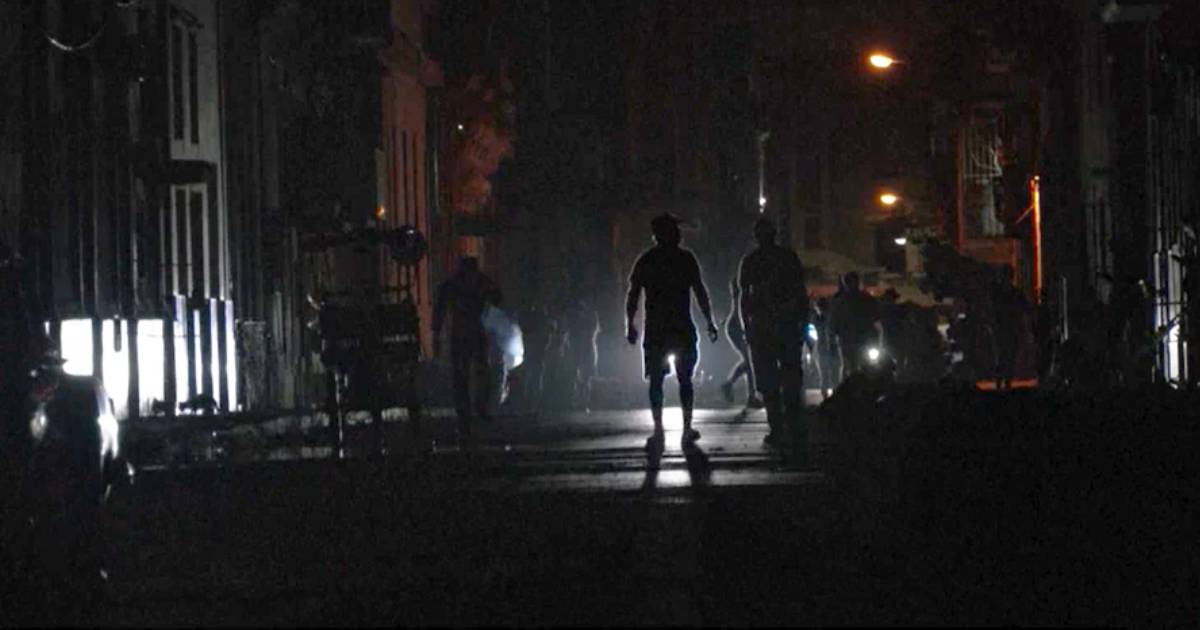
The testimony, shared by the Spanish media COPE, captures the voice of Arián Alejandro, a resident of Havana, who described the current atmosphere as a mix of exhaustion, sadness, and hopelessness. “One walks through the streets and there is a level of sadness, a level of tremendous desolation,” he stated on the program Tiempo de Juego.
His account comes amidst an energy crisis that shows no signs of letting up. The blackouts, as he explained, occur daily and can last between 8 and 12 hours in Havana, although the situation is even worse in other provinces. Additionally, there are what are called mass blackouts, which leave much of the country completely in the dark for more than a day.
That situation is not isolated. This weekend, Cuba experienced another total collapse of the National Electric System (SEN), the second in less than a week, leaving more than 90% of Havana without electricity and large areas of the country relying on small microsystems for basic services.
The crisis, acknowledged by the authorities themselves, has been exacerbated by a lack of fuel for months, the deterioration of thermoelectric plants, and cascading failures within the electrical system. According to the government, this is the most challenging moment the sector has faced in decades.
But beyond the technical data, what hurts is everyday life.
Arián puts it bluntly: the shortage is not just of electricity. There is also a lack of food, water, and cooking gas. Although some products are available, their prices make them inaccessible for many, especially retirees and vulnerable people. “Denying it wouldn’t make sense,” he said, referring to hunger.
Without electricity, there is also no water in many homes because the pumps do not work. Schools are operating at half capacity, taking breaks is nearly impossible, and even work loses its meaning. "Sometimes we feel like we are working for practically no one," he admitted.
In that context, the resilient nature of the Cuban seems to be faltering. "I feel that the Cuban has dimmed," he lamented.
Still, amidst resignation and outbursts of protest, a fragile hope persists. For many, the possibility of relief hinges on potential negotiations with the United States that would allow for the lifting of restrictions on fuel arriving on the island.
Meanwhile, the reality is quite different: a country living with prolonged blackouts, collapsing services, and a population that gradually feels as if they are losing their inner light as well.
Filed under: