
Related videos:
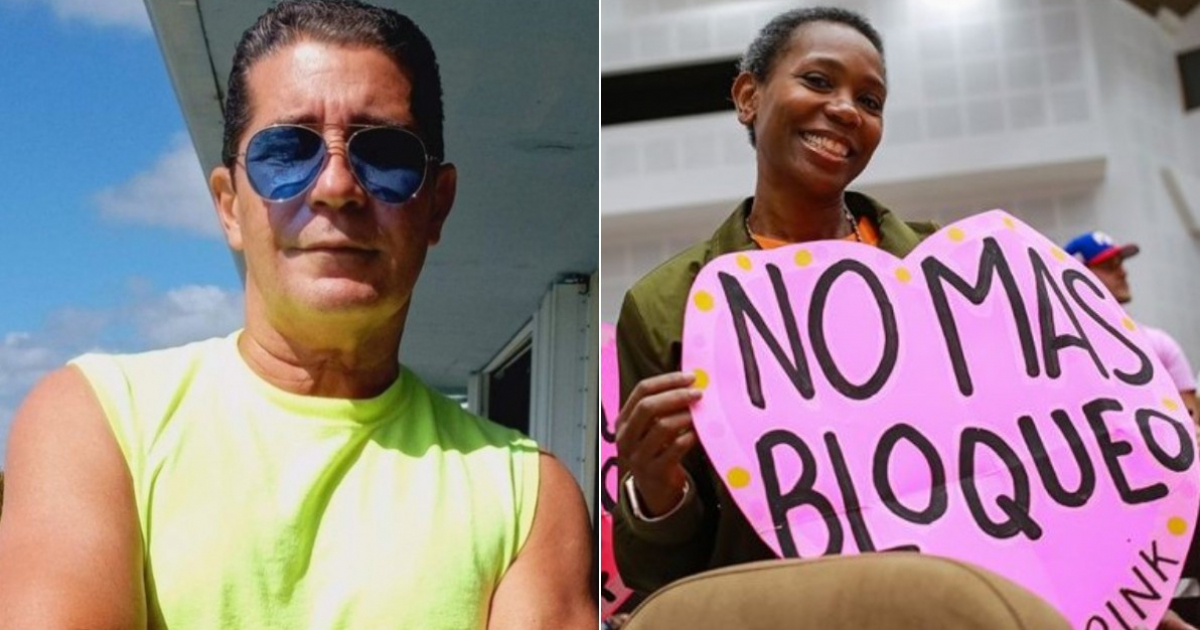
The Cuban actor Erdwin Fernández Collado made a strong criticism of the members of the so-called Convoy Nuestra América to Cuba and, in general, against foreigners who visit the Island with an idealized view of the system, without confronting the real conditions that the population faces.
In a message posted on Facebook, the artist mocked this type of organized visits, claiming that the guests tour a carefully curated version of the country, far removed from the daily life of Cubans.
"I 'love' these visits from foreigners completely oblivious to the Cuban reality on the Island," he wrote, making it clear from the outset the sarcastic tone of his comment.
Fernández Collado does not fully hold the visitors responsible, but he does question the image they receive. He denounces that these groups are transported under privileged conditions, away from any scenario that reflects the deterioration and shortages.
"They are picked up in air-conditioned buses or outdoors and taken to meet and support 'that' in a climate-controlled, tidy location," it describes, referring to official meetings and organized tours.
These itineraries, he explains, are designed to obscure the country's most evident problems: "They take them through those 'designated' places on the finest streets and avenues (...) where the trash in the streets, long lines, and buildings dirty and deteriorated by time and neglect are not visible."
The actor goes further and reiterates an idea expressed by his friend, the actress María Teresa Pina Cabrera, who defined Cuba as "a zoo."
Erdwin claims to fully understand that metaphor and elaborates on it candidly: "Many foreigners come to Cuba to see that destruction, that neglect, the old cars and ruined buildings... and they enjoy it (not all)."
In their opinion, many visitors consume that reality as an exotic experience and wouldn't want it to change. "To them, we are 'their Zoo', the time machine, but in reverse, and it’s sad but true."
As a counterpoint to that view, the actor suggests—also in an ironic tone—a way to show the real Cuba to those visitors. "How beautiful those 'enthusiastic and supportive' foreigners would look in the neighborhoods with two buckets trying to fill them with water," he writes, depicting everyday scenes for millions of Cubans.
In that same vein, he mentions other daily difficulties that are entirely overlooked by foreigners who support the regime but should be aware of: "Endless blackouts, shopping with national currency, and dealing with ETECSA."
It even takes the idea to the extreme to emphasize the contrast: "I will give them three days without nerve-soothing medication, without sleep, with affectionate mosquitoes caressing their fair skin on nights without a fan."
With these examples, Erdwin aims to highlight the gap between the discourse of international solidarity that many of these groups advocate and the authenticity of the country. "The reality of Cuba and its people is different; it's not what they have in their heads, nor what 'those' export," he states.
The message concludes with a warning about the limits of that narrative: "I believe that lies and mockery have their limits, and those limits are about to be reached."
The actor's statements add to other critical voices both inside and outside the Island that question these organized visits, noting that, far from reflecting the actual situation, they contribute to reinforcing a distorted image of the country, while a large portion of the population faces increasing difficulties in their daily lives.
Filed under: