
Related videos:
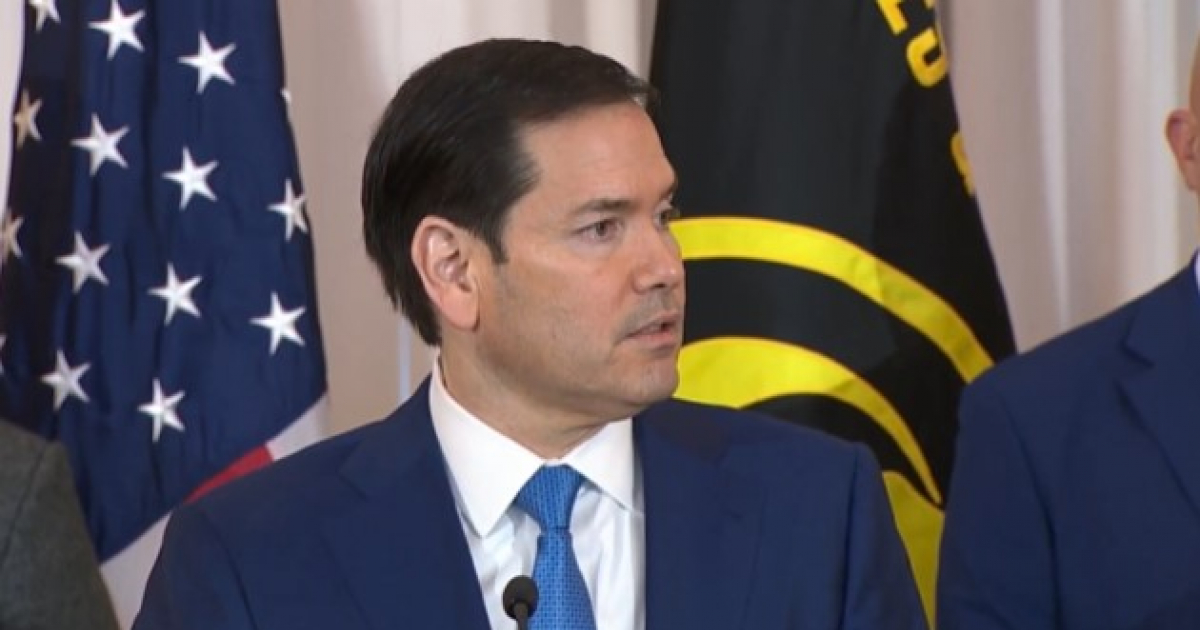
The U.S. Secretary of State, Marco Rubio, appeared this Tuesday before a federal court in Miami to testify in the trial against former Republican Congressman David Rivera, a former political ally and personal friend accused of acting as a foreign agent on behalf of the Nicolás Maduro regime.
During nearly three hours of interrogation, Rubio provided a version that aimed to distance himself from the actions currently under investigation by the Prosecutor's Office.
He assured that he was completely unaware of Rivera's ties to Venezuelan interests and that, had he known, he would not have participated in any related initiative.
“Had I known about the agreement, I would not have taken any further action,” stated the head of U.S. diplomacy before the jury, referring to a contract of up to 50 million dollars that -according to the prosecution- Rivera allegedly secured in 2017 through CITGO, the U.S. subsidiary of the Venezuelan state oil company PDVSA.
A long-time friend under suspicion
The case centers around a personal and political relationship that dates back decades.
Rubio and Rivera agreed on Florida's state politics and even shared a residence in Tallahassee.
That closeness was emphasized by the defense during the trial, which attempted to demonstrate that the bond between the two transcended the professional and had a "close and even familial" nature, something that Rubio himself confirmed.
Rivera, who was a congressman from 2011 to 2013, faces federal charges for allegedly attempting to influence the U.S. administration—during Trump's first term—to soften sanctions against chavismo.
Alongside him, Esther Nuhfer is also accused, as revealed by the U.S. press.
The Prosecutor's Office maintains that both were involved in an illegal lobby scheme linked to the Venezuelan regime, with millions of dollars in payments involved.
Rivera, however, has denied committing any crimes and stated that he is confident he did not violate the law.
Meetings, promises, and skepticism
One of the central points of Rubio's testimony revolved around two meetings he had with Rivera in July 2017, during a peak of tensions between Washington and Caracas.
According to his account, his then-friend proposed a supposed plan driven by factions of chavismo to facilitate a democratic transition in Venezuela.
The initiative included the potential delivery of a letter from Nicolás Maduro to then-President Donald Trump.
Rubio stated that he received that information with doubts from the outset.
He recalled that Rivera assured him that “influential people in Venezuela had convinced Maduro to step down from power,” but he admitted that he was skeptical of that account.
In one of the meetings held in Washington, Venezuelan businessman Raúl Gorrín participated, identified as an intermediary.
However, the meeting ended without any concrete results.
Rubio himself described that meeting as a "waste of time," as the supposed letter of commitment that was to be delivered to Trump did not materialize.
Million-dollar accounts and unresolved doubts
During his testimony, Rubio also revealed that Rivera showed him on a computer information about an account with "million-dollar transactions" allegedly linked to Gorrín.
That element, which the Prosecutor's Office considers relevant within the investigated framework, was not elaborated upon by the current Secretary of State.
Rubio stated that he did not know to whom the account belonged and that he did not ask any further questions about it, an omission that strengthens his argument that he was not aware of any possible illegal activities.
Speeches, contacts, and warnings
The then-senator also acknowledged that -in that context- he delivered two speeches related to Venezuela, one in the Senate and another broadcast in Spanish by the channel Globovisión.
He explained that in those messages he used "key words" suggested by Rivera, which made it clear that there would be no "revenge" against the regime if a genuine democratic transition were to begin.
Even after one of the meetings, Rubio claimed to have directly informed Trump that “something might be happening in Venezuela,” although he insisted that he always had reservations about the truthfulness of the proposal.
Threats and enhanced security
The testimony also included a sensitive element: Rubio stated that shortly after those contacts, he received information from U.S. authorities about a threat to his life attributed to Diosdado Cabello, one of the most influential figures in chavismo.
According to his account, his security was reinforced for several months, and he even asked Rivera to investigate the extent of that threat.
Nonetheless, he maintained that his initial interest in exploring contacts was driven by the possibility – albeit remote – of a democratic opening in Venezuela.
A key testimony, without direct accusations
Despite the magnitude of the case and the political significance of the witness, the prosecutors have made it clear that Rubio is not charged with any irregularities.
The political analyst Alex Penelas emphasized that “absolutely nothing has been alleged against Marco Rubio,” although he pointed out the unusual nature of his appearance: “the fact that he is now presenting himself as a witness here in a court in Miami is truly extraordinary.”
The trial, overseen by federal judge Melissa Damian, examines charges such as money laundering and violations of the Foreign Agents Registration Act.
Beyond the judicial outcome, the process scrutinizes the political, personal, and business connections surrounding one of the most sensitive episodes in the relationship between the United States and Nicolás Maduro's regime.
Filed under: