
Related videos:
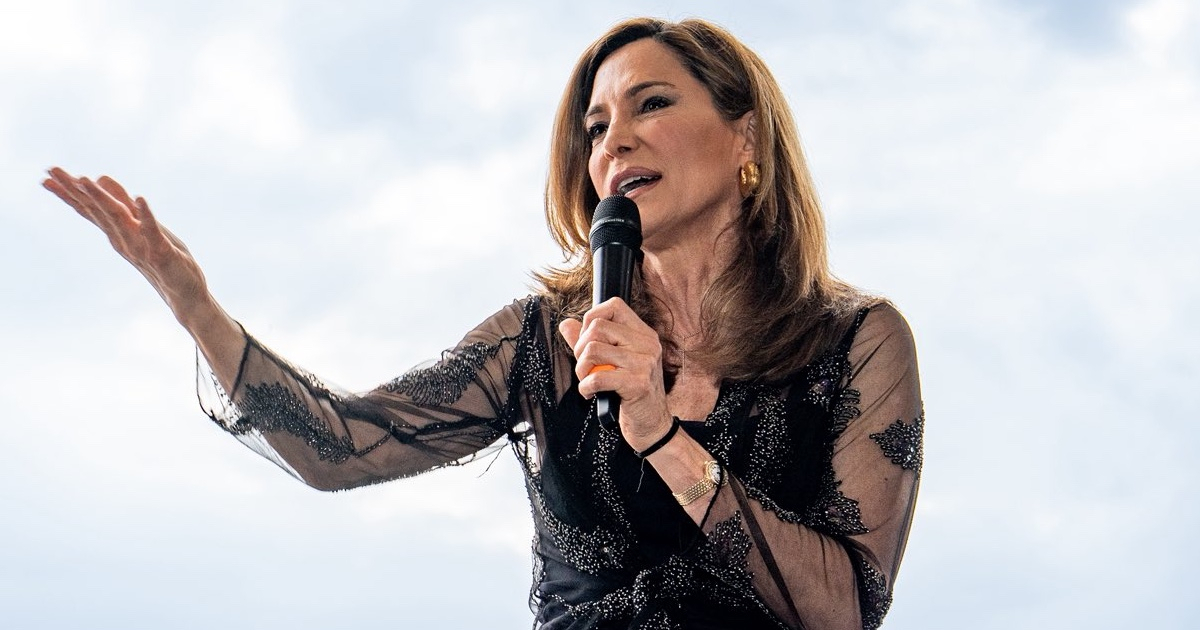
The Republican representative from Florida María Elvira Salazar signed on Wednesday a discharge petition to extend Venezuelan TPS put forward by Democrat Darren Soto to compel a vote in the full House on H.R. 3310, known as the Venezuela TPS Act of 2025, a bipartisan legislation that would extend Temporary Protected Status for Venezuelans in the United States for an additional 18 months.
Salazar acknowledged that there are signs of progress in Venezuela —referring to the capture of Nicolás Maduro in January 2026 and the release of political prisoners— but emphasized that the country is still not safe for return. "While we are encouraged by the signs of progress in Venezuela, there is still much work to be done, and the country is not yet safe for return," declared the Cuban-American congresswoman on the social media platform X.
"That's why I signed a discharge petition to advance the Venezuela TPS Act, which would extend protections for Venezuelans in the U.S. for an additional 18 months so they can remain and work legally while conditions continue to evolve. It's about doing the right thing, standing with those who fled repression, and ensuring that Congress takes action," Salazar added in his official public statement.
The Venezuela TPS Act of 2025 was originally introduced in May 2025 by Salazar, Soto, and Representative Debbie Wasserman Schultz, and became stalled in the House Judiciary Committee and the Budget Committee without reaching a vote. A discharge petition is a parliamentary mechanism that, by gathering 218 signatures from members of the House, allows a bill to be taken out of committee and brought directly to the floor, bypassing the majority's control over the legislative agenda.
Salazar's signature —a Republican— on a petition led by a Democrat underscores the bipartisan nature of the initiative and the political pressure exerted by the Venezuelan community in South Florida, where more than 40,000 Venezuelans reside in his district.
The legal context of Venezuelan TPS is one of deep uncertainty. The Trump administration began dismantling the program in February 2025, when Homeland Security Secretary Kristi Noem ended the 2023 designation. In September 2025, the termination of Venezuelan TPS from 2021 was announced.
The Supreme Court intervened in May 2025, allowing the cancellations to proceed, and in January 2026 the Department of Homeland Security officially declared the TPS over for more than 500,000 Venezuelans, arguing stability following Maduro's capture.
A appeals court declared the cancellation illegal that same month, but was unable to restore the program due to the previous rulings of the high court.
The legislation includes, according to its sponsors, strict criminal verification measures to ensure safety. Salazar has been consistent in his stance: "Until conditions improve significantly, we must uphold our commitment to those who received TPS, maintaining strict criminal vetos," he stated in a press release from his office. In April 2025, platform X flagged a tweet from Salazar regarding TPS for Venezuelans as misleading.
More than 700,000 Venezuelans with TPS in the United States are affected by the termination of the program. Many Venezuelans in the U.S. fear deportation following the capture of Maduro.
In January 2026, seventy Democratic legislators demanded the restoration of TPS, citing "profoundly unstable and dangerous" conditions in Venezuela, where chavismo remains in power under the interim presidency of Delcy Rodríguez, who took office on January 5 following Maduro's capture.
Filed under: