
Related videos:
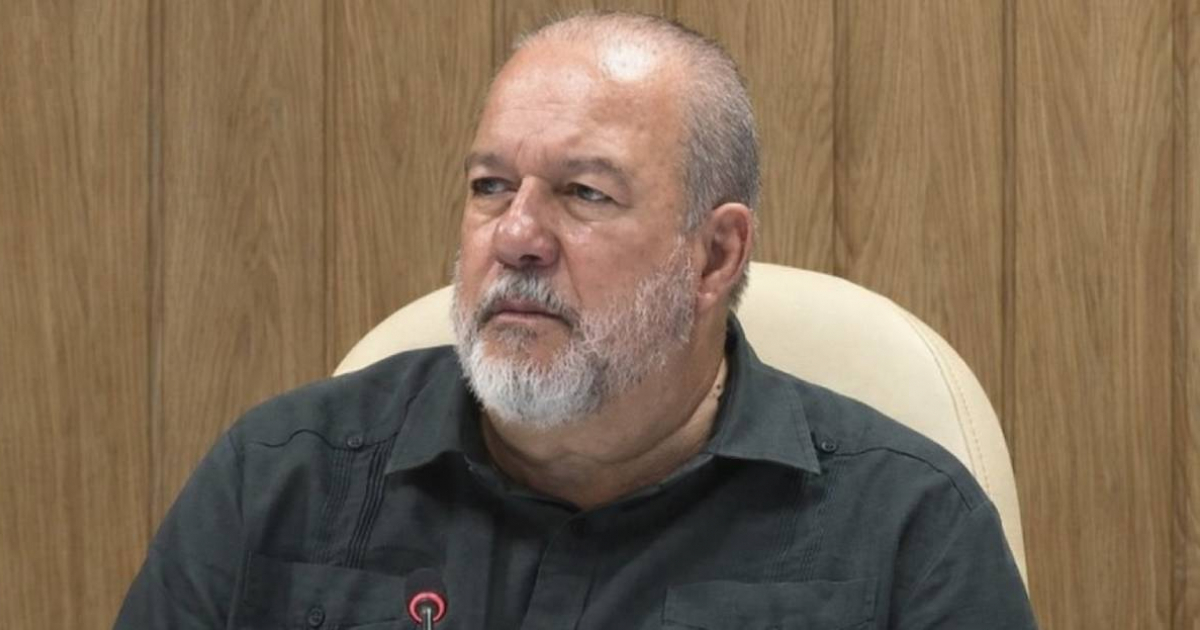
Cuban Prime Minister Manuel Marrero Cruz stated this Thursday that in the last month the fiscal deficit was more than 3 billion pesos lower than planned, and the current account remained in surplus, presenting these figures as progress of the Government's Economic and Social Program for 2026.
In his post on X, Marrero acknowledged that the implementation of the program is taking place "even with severe limitations due to the energy blockade," referring to the fuel crisis that is crippling the island.
The Cuban state budget for 2026 projects a maximum fiscal deficit of 74.5 billion Cuban pesos (CUP), with gross revenues of 484.121 billion and total expenditures of 550.590 billion.
That the monthly deficit was more than 3 billion lower than planned represents – assuming the data is accurate – a positive outcome within that context, although the figure is modest compared to the projected annual deficit.
The Minister of Finance, Vladimir Regueiro Ale, had previously stated that by the end of January 2026, "the current account balance is positive and exceeds projections."
The Government Program updated last February was approved by the Council of Ministers following public consultations.
It includes 10 general objectives, 111 specific objectives, 505 actions, and 309 indicators. Its priorities are business and municipal autonomy, local food production, energy matrix transformation, and the restructuring of the state apparatus.
The figures presented by the prime minister stand in stark contrast to an economic landscape that even the official data fails to conceal.
The Cuban GDP fell by 5% in 2025, accumulating a contraction of 23% since 2019, according to the Center for Cuban Economic Studies. Independent economists project an additional decline of 7.2% in 2026, far from the 1% growth estimated by the government.
The backdrop is an unprecedented energy crisis. Cuba has not received oil for over three months, is experiencing power outages of at least 15 hours a day, and has recorded seven total collapses of the National Electric System in a year and a half, including two in the week of March 17 and another on March 22.
The Trump administration has blocked oil sales to Cuba since January 2026, demanding the release of political prisoners and structural reforms.
To this scenario, it is added that GAESA, the military conglomerate that controls 40% of the GDP and 95% of the foreign currency transactions in the country, operates without tax obligations, which distorts any analysis of the official budget performance.
Cuba is also listed as the least free economy in America and the second worst in the world in 2026.
A report from the Cuba Study Group published this Wednesday estimates that revitalizing Cuba's electricity generation would require $6.612 billion, a figure that the regime is far from being able to mobilize.
Marrero recently admitted that the government apparatus "fears" implementing the program that he now defends as a sign of progress.
Filed under: