
Related videos:
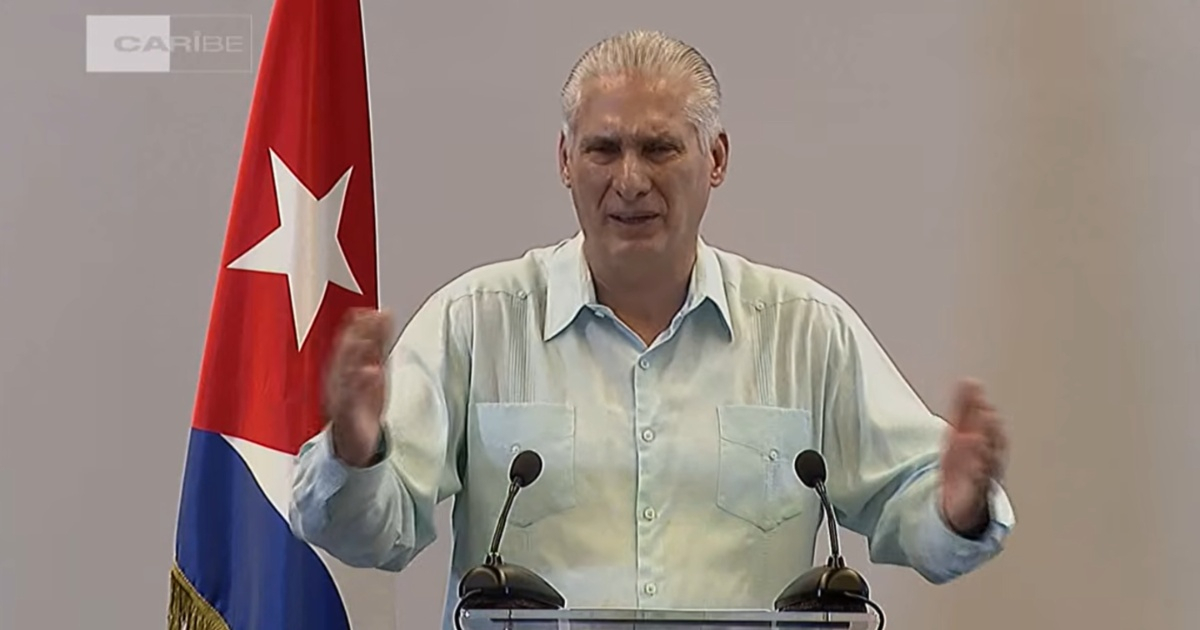
The leader Miguel Díaz-Canel acknowledged the deep discontent of the Cuban people regarding the energy and economic crisis, but he placed almost all the blame on the U.S. embargo and what he called "international media poisoning," avoiding any self-criticism of his administration.
"The situation is very tough," he said in an interview published by the Mexican newspaper La Jornada, which is aligned with the Castro regime.
Díaz-Canel stated that Cuba has gone "almost four months without receiving a drop of fuel" and that the country only produces 40% of the crude oil it needs.
"There are places where we have experienced power outages lasting 30 hours and even more than 40 hours. Today, people find themselves restricted in how they move around and how they transport themselves due to the lack of fuel," he explained.
"In the midst of that situation, of that complexity, there is dissatisfaction. No one can be happy living through all of that," he admitted.
He outlined four courses of action in response to the crisis: transitioning to renewable energy, increasing national crude oil production, forging energy cooperation alliances with allied countries, and denouncing the embargo in international organizations.
"The most failed act of the United States governments in these 67 years of revolution is not having been able to take control of Cuba. That causes anger," he stated to the Mexican newspaper.
Despite the seriousness of the situation, the leader ruled out fundamental structural reforms. He defended a "process of updating our economic and social model with Cuban peculiarities," while maintaining the direction of the Communist Party and what he referred to as a "strong State."
The leader referred to what he calls "international media intoxication," which he blames for the recent popular protests that have taken place in several cities.
"There is the media intoxication that accompanies this blockade and seeks to capitalize on what could be expressions of protest against the government. (...) There are others who, due to those same manipulations, because money is involved, express themselves in a vandalistic manner. And that has to do with other issues," he said.
The interview is part of a communication offensive by the regime aimed at leftist audiences in Latin America and Europe.
In this context, Díaz-Canel warmly thanked Mexico and President Claudia Sheinbaum, who has sent five ships with humanitarian aid from the port of Progreso.
The statements come at a time of extreme seriousness for Cuba. The country is experiencing blackouts of up to 20 hours a day in 64% of its territory, with a power generation deficit ranging from 1,266 to 2,046 megawatts.
This month, street protests with slogans against the dictatorship erupted, featuring loud banging of pots and pans in Havana, Morón, and other locations. The independent organization Cubalex reported at least 14 arrests since March 6.
The energy collapse worsened following the capture of Nicolás Maduro on January 3, which cut Venezuela's supply by between 26,000 and 35,000 barrels per day.
Mexico suspended its shipments on January 9 under pressure from Washington, and on January 30, Trump signed an executive order declaring Cuba a threat to national security, imposing tariffs on countries that sell it oil.
Cuba's GDP has experienced a decline of 23% since 2019, and the Economist Intelligence Unit forecasts an additional contraction of 7.2% by 2026.
It was precisely after the disturbances in Morón—where protesters caused damage to the headquarters of the Communist Party—that Díaz-Canel acknowledged that "the complaints are legitimate" on March 14, although he framed that admission within the same narrative of the embargo that the regime has maintained for decades.
Filed under: