
Related videos:
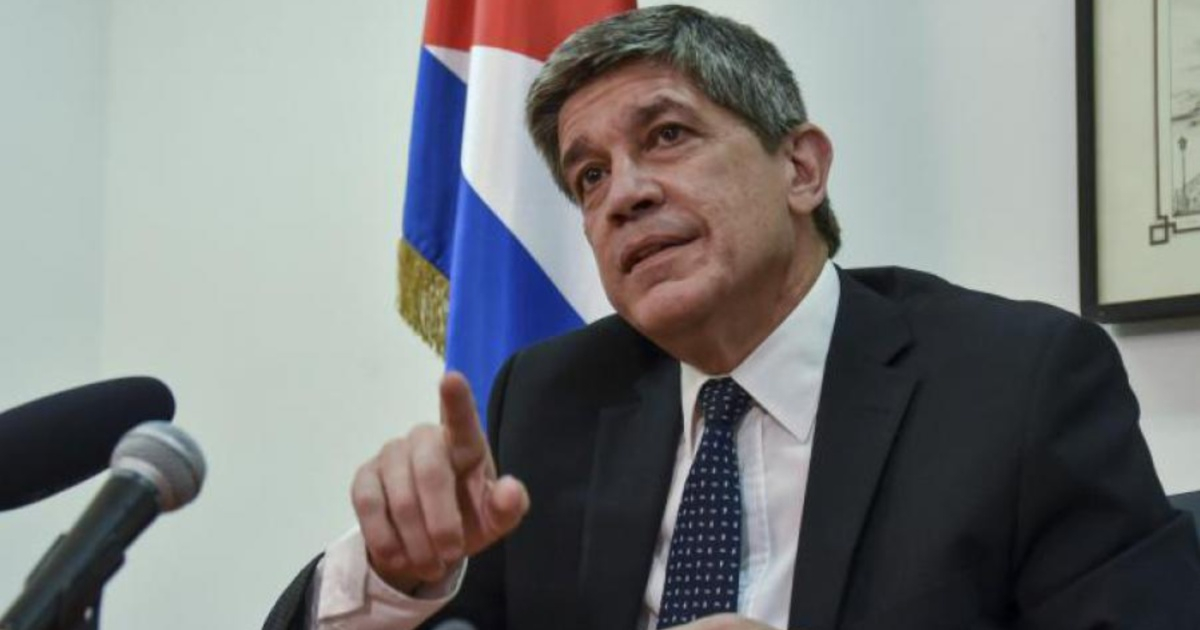
The Cuban Deputy Minister of Foreign Relations, Carlos Fernández de Cossío, issued a direct rhetorical challenge to the United States government on Friday through his account on X, questioning the reasoning behind the embargo that has been in place for nearly seven decades.
The message was an immediate response to the statements made by Secretary of State Marco Rubio, who on the same day, from Paris following a G7 meeting, described the Cuban government system as "incompetent" and "communist" and demanded a complete regime change, political system, and economic model.
"The U.S. government has yet to clarify why they have needed nearly seven decades of brutal economic warfare, which they now apply so ruthlessly in their effort to undermine a government they already consider incompetent and ineffective. 'Why not let it fail on its own?' Cossío wrote on his social media profile."
Rubio had stated that same day in Paris that the system of government in Cuba has to change and that the success of Cubans lies outside their country and that must change, dismissing any merely economic agreement without structural political transformation and demanding "new people in charge".
Cossío's tweet captures precisely the words of the Secretary of State —that the Cuban government is "incompetent"— and uses them as an argument: if Washington already takes the regime's failure as a given, the question is, what is the purpose of the embargo?
The context of tension
This exchange takes place at a time of high bilateral tension, with confirmed negotiations between both countries since mid-March.
On March 13, Díaz-Canel publicly acknowledged the existence of conversations with the Trump administration, led by Raúl Castro "at the highest level," after weeks of denial.
However, the regime has established non-negotiable red lines. In a press conference, Cossío himself stated categorically that the Cuban political system is not open to negotiation, nor of course the president or any government position, neither with the United States nor with any other country.
Last week, on NBC's Meet the Press, Cossío also stated that Cuba would not accept becoming a vassal state or a dependent state of any other country, and confirmed that the Cuban army is preparing for a possible U.S. military aggression.
In that same program, the deputy minister explicitly acknowledged for the first time the existence of political prisoners in Cuba, although he described them as a non-negotiable "internal matter."
The background context is the worst economic crisis in Cuba in decades: a 23% decline in GDP since 2019, blackouts lasting between twenty and twenty-five hours a day, and widespread shortages of food, medicine, and fuel.
The Trump administration has imposed more than 240 sanctions since 2025, including a decree from January 29, 2026, that implemented an extraterritorial boycott of Cuban oil, cutting off supplies from Venezuela and Iran.
Trump called Cuba a failed nation from the White House. Rubio, for his part, was blunt this Friday in stating that any report about Cuba that does not come from him or the president is a lie, making it clear that Washington will not recognize any agreement that does not involve total political change on the island.
Filed under: