
Related videos:
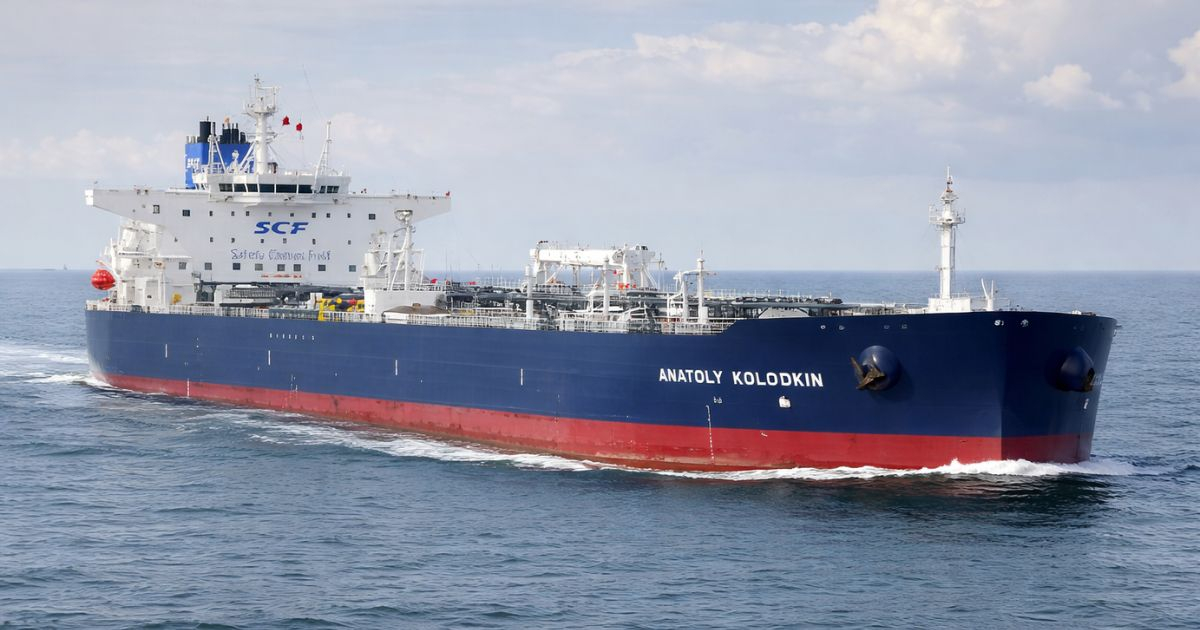
The Russian tanker Anatoly Kolodkin, sanctioned by the United States, the European Union, and the United Kingdom, continues its course to Matanzas, transporting between 700,000 and 730,000 barrels of Russian crude oil, with an expected arrival this Monday, marking the first major fuel supply to Cuba in over three months.
The vessel, owned by the Russian state shipping company Sovcomflot, departed from the port of Primorsk, Russia, on March 8, falsely declaring its destination as "Atlantis, USA." According to the maritime analytics platform Kpler, the cargo is roughly equivalent to a month's supply of fuel for the island.
The shipment occurs during a severe energy crisis in Cuba. The electricity deficit reached between 1,700 and 2,040 megawatts daily in March, with blackouts exceeding 30 hours. On March 16, there were only 1,140 MW available against a demand of 2,347 MW. The Cuban Deputy Minister Argelio Abad Vigoa described the situation as the "most complex" scenario for the National Electric System.
Satellite images show a 50% drop in electricity consumption, and since March 7, protests have been reported, including noise demonstrations and fires at Party headquarters in Morón. Experts have warned that Cuba is approaching zero hour due to fuel shortages.
Cuba had not received stable fuel supplies since January 9, when Mexico made its last delivery. Mexican shipments from Pemex were suspended in early 2026 due to threats of sanctions from Washington, leaving the island without its main supplier, which in 2025 accounted for 44% of Cuba's oil imports, valued at approximately 496 million dollars.
United States has responded with a stance of direct pressure. The Department of the Treasury, through OFAC, issued on March 12 a license that excludes Cuba from Russian oil, explicitly adding it to the list of countries prohibited from receiving it. Additionally, two Coast Guard cutters were positioned off the northeast coast of Cuba for potential interception.
The expert Jorge Piñón from the University of Texas at Austin was emphatic: "The U.S. has issued a directive to prevent the entry of oil into Cuba, and those assets are ready to act." The U.S. Southern Command acknowledged that it is tracking the Anatoly Kolodkin, although it downplayed its impact, estimating that the cargo would provide at most two weeks of supply for the island.
A second ship, the Sea Horse, which was carrying about 200,000 barrels of Russian diesel bound for Cuba, diverted to Trinidad and Tobago last Thursday, according to LSEG data cited by Reuters. The change of course is directly attributed to the new OFAC license.
This episode is part of a series of similar precedents, such as the tanker Ocean Mariner, which altered its course in February in the presence of the Coast Guard, and the Bella-1, seized in January. imposed by Washington on Cuba.
Russia issued a statement of "deep concern" and reaffirmed its commitment to Havana: "We provide and will continue to provide Cuba with the necessary support, including material support," stated the Russian Ministry of Foreign Affairs. For her part, Mexican President Claudia Sheinbaum indicated that her government is exploring alternatives to resume energy aid to Cuba, although without specifying timelines or concrete conditions.
Anatoly Kolodkin thus represents the most direct evidence to date of the energy blockade imposed by Washington and a potential source of diplomatic tension between the United States and Russia, the resolution of which could be determined in the coming hours off the Cuban coast.
Filed under: