
Related videos:
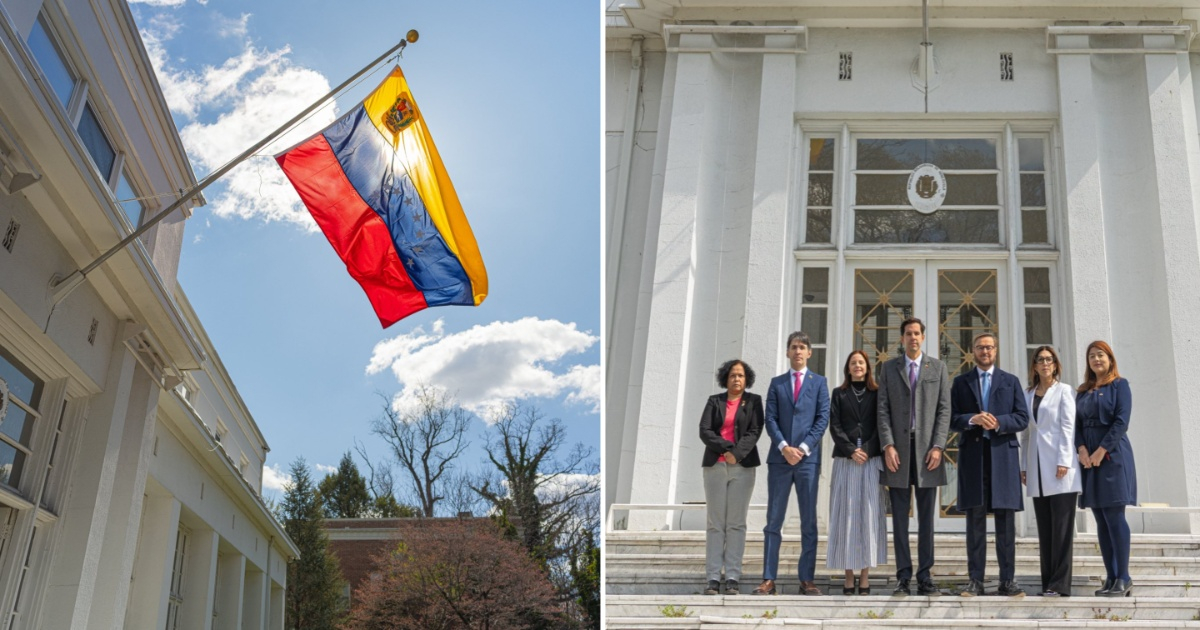
The Venezuelan Deputy Minister Oliver Blanco announced this Saturday that Venezuela has recovered the diplomatic missions of Venezuela in the U.S., following instructions from the acting president Delcy Rodríguez.
"Alongside Mission Head Félix Plasencia, we have recovered Venezuela's diplomatic offices in the U.S., which, by instruction of the acting president Delcy Rodríguez, will be rehabilitated to serve all Venezuelans," Blanco wrote on X.
"A firm step in strengthening our relationships and supporting our fellow citizens," he added.
The Venezuelan delegation had arrived in Washington on Friday, led by Félix Plasencia as Chargé d'Affaires and Blanco as Deputy Minister for Europe and North America.
Since its arrival, the mission held meetings with senior officials from the Department of State.
"We have had a schedule of meetings with Under Secretary of State Christopher Landau, Under Secretary Michael Kozak, and Under Secretary Caleb Orr from the Department of State to explore opportunities for strengthening the bilateral relationship for the benefit of our peoples," Blanco stated in a video.
The Deputy Minister Rander Peña confirmed that inspections were carried out at the embassy in Washington and the consulates, which require repairs due to years of neglect. The locations will be renovated to handle consular procedures for the Venezuelan community in the U.S.
The thaw between Venezuela and the U.S.
This announcement is the result of an accelerated normalization process that began after the capture of Nicolás Maduro on January 3, 2026 in the so-called "Operation Absolute Resolution," executed by the U.S. Delta Force with support from the CIA.
Maduro and his wife Cilia Flores were transferred to New York, where they are facing federal charges of narco-terrorism and drug trafficking.
Delcy Rodríguez assumed the role of acting president and began a transition process that included the closure of El Helicoide, an amnesty law for political prisoners, the elimination of seven chavista missions, and the on March 18.
The diplomatic thaw progressed rapidly. On March 5, Venezuela and the U.S. formally agreed to restore their diplomatic and consular relations, which had been severed since 2019.
That same week, the Trump administration formally recognized Rodríguez's interim government and subsequently the U.S. raised its flag at the Caracas embassy for the first time in seven years.
On March 24, the Department of the Treasury issued a license that eased sanctions to facilitate the operation of Venezuelan missions in the U.S., allowing payments for goods and services and banking operations, although it maintained the prohibition on buying or selling real estate.
On the same day, Rodríguez announced the dispatch of the delegation: "This week, the delegation of diplomats that will take on the beginning of this new stage of relations and diplomatic, political dialogue between our governments will be departing for Washington."
Oliver Blanco, appointed vice minister on February 23 with an opposition profile —he is a member of Acción Democrática—, represents the political opening gesture of the interim government in its foreign policy.
Rodríguez herself emphasized this by mentioning: "He has had opposition party activism and maintains a strong commitment to the country."
The diplomatic rift between Venezuela and the U.S. dates back to 2019, when Maduro expelled U.S. diplomats following Washington's recognition of Juan Guaidó.
The resumption of the venues this Saturday marks the visible culmination of more than two months of accelerated normalization between the two countries.
Filed under: