
Related videos:
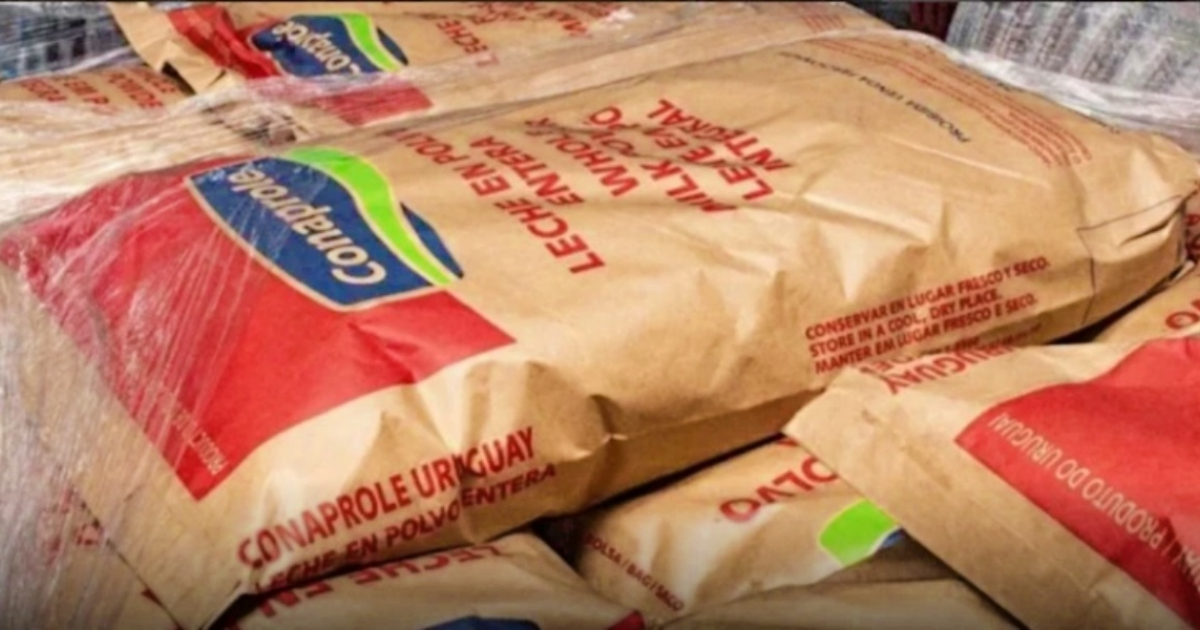
The Uruguayan government under President Yamandú Orsi confirmed the shipment of 20 tons of powdered milk to Cuba, in an operation coordinated with Mexican President Claudia Sheinbaum, with the cargo set to depart from Mexican waters in the coming weeks.
Sources from the Uruguayan Executive Power confirmed the operation to several local media outlets this Monday, specifying that the ship will depart from Mexico and that the logistics were coordinated together with Sheinbaum's government.
The initiative was announced in February by Foreign Minister Mario Lubetkin, who then described as "symbolic" and acknowledged that the quantities and logistics were still not defined.
The final shipment consisted only of powdered milk, without the rice that had also been mentioned at that time.
The shipment is part of the chain of humanitarian deliveries that Mexico has been coordinating since February, which has amassed over 3,125 tons of food, medicine, solar panels, and fuel.
Last Saturday, two sailboats arrived in Cuba with over 50 tons of medical supplies, food, water and solar panels, after being relocated following a loss of contact with the Mexican Navy.
The crisis prompting the shipment is of unprecedented severity in decades.
However, the actual fate of international aid raises serious doubts. An investigation by TV Azteca reported that food sent from Mexico ended up in state-run stores in Cuba for sale, instead of being distributed for free.
In Güira de Melena, despite the regime's promises, only minimal packages were delivered. The government of Díaz-Canel distributes aid through the Ministry of Domestic Trade and the supply booklet, but the effective coverage is widely questioned.
The shipment occurs within a tense internal political context in Uruguay.
The Frente Amplio unilaterally approved a motion in the Senate on March 5, rejecting the United States' fuel sanctions against Cuba, with the opposition leaving the chamber.
Senator Sebastián Da Silva of the National Party then launched the phrase "just go to Cuba already".
Days later, between March 18 and 21, a delegation from the Frente Amplio led by its president Fernando Pereira traveled to Cuba as part of the "Convoy Nuestra América", being received by Díaz-Canel.
The Cuban-born deputy Leydis Aguilera, from the National Party and the first Cuban legislator in the Uruguayan Parliament, described the trip as "dictatorship tourism" and denounced that the delegates stayed in a five-star hotel while the Cuban people suffer from power outages, hunger, and water scarcity.
International humanitarian aid temporarily alleviates shortages, but it does not address the structural causes: a centralized economy unable to produce enough to feed its population, and a regime that blames the U.S. embargo while omitting 67 years of its own management failures.
Filed under: