
Related videos:
The president Donald Trump declared on Monday that the Cuban regime's days are numbered, regardless of any temporary energy relief. "Cuba is finished. They have bad leadership, very bad and corrupt, and whether or not an oil tanker arrives, it won’t matter," he stated aboard Air Force One.
In response to journalists, Trump was even more direct: "Cuba is going to be next. It's a disaster, a failed country. It will fail very soon and we will be there to help, to assist our great Cuban-Americans," adding that many of them saw their relatives mutilated and murdered by Castro.
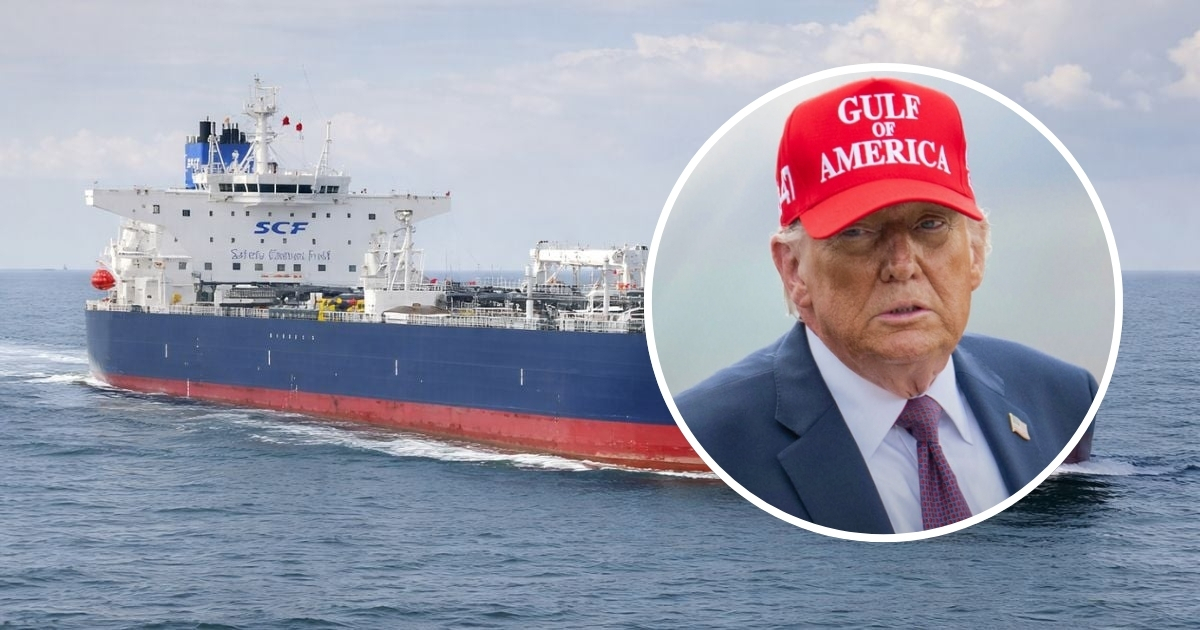
The statements come as the Russian tanker Anatoly Kolodkin, sanctioned by the United States, the European Union, and the United Kingdom, docked at the port of Matanzas with about 730,000 barrels of crude oil, the first major fuel shipment to Cuba in over three months.
Trump allowed the docking as a "humanitarian exception," declaring: "If a country wants to send some oil to Cuba, I have no problem with that, whether it’s Russia or anyone else." The contradiction of the Díaz-Canel regime is glaring: while blaming the American "blockade" for all its ills, it relies on a sanctioned Russian vessel to keep a fraction of the country running.
Relief, in any case, will be fleeting. Experts estimate that the shipment covers only one or two weeks of supply and does not address decades of disinvestment in infrastructure. Cuba produces only 40,000 barrels per day when it needs 110,000, and its reserves were only at 15 to 20 days in February and March.
The energy crisis that the Cuban people are experiencing is the most severe in decades. The electricity generation deficit reached 2,040 megawatts on March 14, with a demand of 3,180 megawatts compared to an availability of only 1,185. The blackouts affect 64% of the country, with outages in some areas exceeding 30 hours daily. On March 16, a nationwide blackout occurred, the cause of which the government admitted it did not know.
The collapse has structural roots that the Castro regime has been ignoring for decades. The Cuban thermoelectric plants, built in the fifties and sixties, were never modernized. The dependence on subsidized Venezuelan oil—about $63.8 billion between 1999 and January 2026—allowed the dictatorship to indefinitely postpone the necessary reforms. When the capture of Nicolás Maduro on January 3 cut that supply of between 25,000 and 35,000 barrels per day, the system collapsed.
The Secretary of State Marco Rubio was blunt last Thursday from Paris: Cuba has no oil or fuel because the regime wants it for free, not because of Washington's sanctions. "Cuba's economy must change, and it will not do so unless its system of government changes. It's that simple," he stated.
Amid the humanitarian collapse, the UN launched a emergency plan of 94.1 million dollars last Thursday to ensure fuel exclusively for critical services: health, water, food, and education. So far, only 26 million of the requested 94.1 million has been secured. Francisco Pichón, UN Resident Coordinator in Cuba, warned: .
Meanwhile, since March 6 massive protests with pots and pans are shaking neighborhoods in Havana —including outside the Central Committee of the Communist Party— and provinces such as Santiago de Cuba and Ciego de Ávila, with shouts of "down with the dictatorship." The economy has experienced a decline of 23% since 2019, and The Economist Intelligence Unit projects a contraction of 7.2% for 2026.
Even with the Russian tanker already in Matanzas, Trump insisted that the regime's fate is sealed: "Cuba is going to be next," he reiterated this Monday, making it clear that no shipment of crude will alter the verdict.
Filed under: