
Related videos:
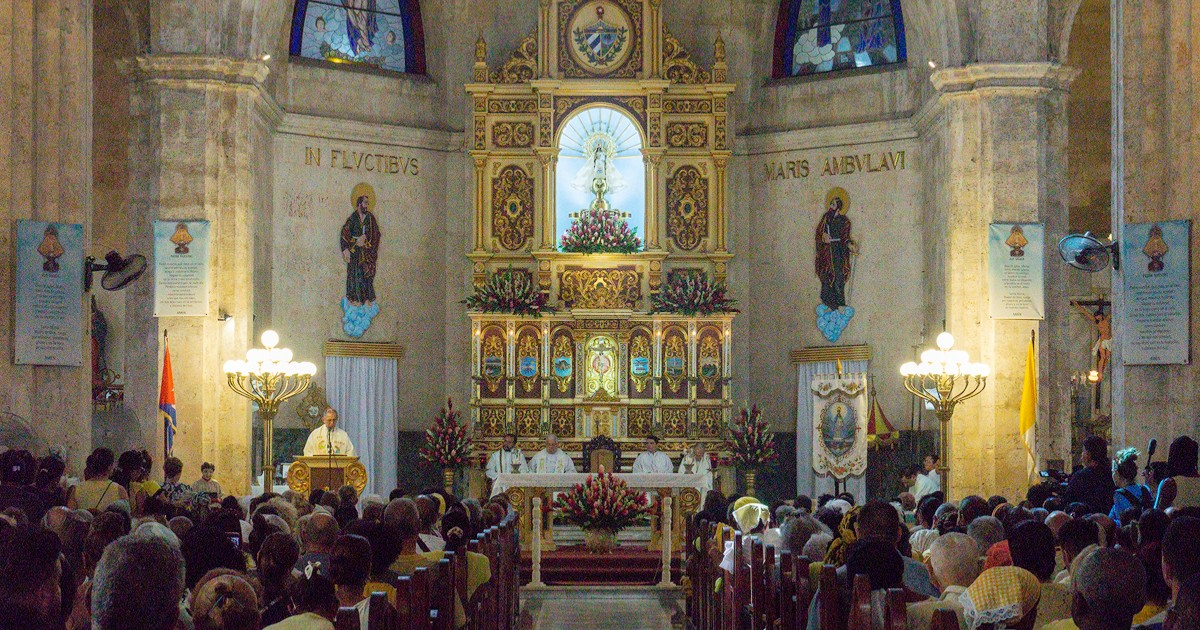
The Cuban government announced today the suspension of work activities in the country this Friday, April 3, a day when Catholics around the world will celebrate Good Friday.
The Ministry of Labor and Social Security of Cuba implemented the measure to comply with Article 100 of Law 116 "Labor Code", enacted on December 20, 2013, which permanently incorporated Good Friday into the calendar of annual paid work breaks.
According to the official statement, the applicable salary treatment for workers required to work on that day is governed by Resolution 9 of April 18, 2025, issued by the ministry itself.
Exempt from the recess are activities related to the sugar harvest, other urgent agricultural work, continuous production industries, unavoidable loading and unloading; transportation services, hospitals, and assistance; pharmacies; fuel outlets; funeral homes, gardens, and cemeteries; lodging, tourist centers; communications, radio and television broadcasts; basic public services, and fishing, among others authorized by law.
The Cuban regime acknowledged the observance of Good Friday after decades of banning that religious celebration. The official decision to designate this day as a work holiday originates from the process of religious openness that followed the visit of Pope John Paul II in January 1998, which led to the reinstatement of Christmas as an official holiday.
In 2012, the visit of Pope Benedict XVI prompted the first exceptional declaration of Good Friday as a holiday, and since 2014, with the approval of the Labor Code, it has been permanently established.
However, the state's recognition of the break contrasts with the restrictions that the regime imposes on public displays of faith during Holy Week.
In 2025, the government prohibited for the second consecutive year the Solemn Stations of the Cross on Palm Sunday in El Vedado, Havana, organized by the Vicarage of the Archdiocese of Havana.
The parish priest Lester Rafael Zayas Díaz reported the suspension on Facebook: "The Solemn Stations of the Cross announced and prepared by the Vicarage for tomorrow, Palm Sunday at 6:00 p.m. from Línea to Letrán has been suspended because the authorities have not approved it".
That same year, the authorities also prohibited the procession of Christ of Humility and Patience in Trinidad, Sancti Spíritus, a tradition with over 100 years of history, claiming it "was not customary" and that the request was made too late.
The priest Zayas, who was then in charge of the Parochial Church of the Holy Trinity, refuted those arguments by asserting that the request was submitted 58 days in advance, surpassing the legal requirement of 30 days, and described the prohibition as an "irresponsible abuse."
On the day of the banned procession in Trinidad, the park in front of the church was taken over by State Security agents dressed in civilian clothes and riding unmarked motorcycles.
Despite the prohibitions, some processions were indeed authorized during Good Friday in 2025: the Parish of the Sacred Heart of Jesus, located on Línea Street in Vedado, received permission to proceed into the streets; and in Baracoa, Guantánamo, a procession was also held that culminated in the Cathedral of Our Lady of the Assumption.
The duality between the official labor recess recognized by the state and the selective restrictions on public expressions of faith marked the context in which Cubans celebrated Good Friday in 2025.
Cuba is listed among the countries where freedom of religion or belief faces serious and systematic violations, according to the annual report of the United States Commission on International Religious Freedom (USCIRF), released last March.
The document, presented in Washington and focusing on the situation recorded in 2025, recommends that the U.S. government redesignate Cuba as a "Country of Particular Concern," the most severe category outlined in U.S. legislation on international religious freedom.
Filed under: