
Related videos:
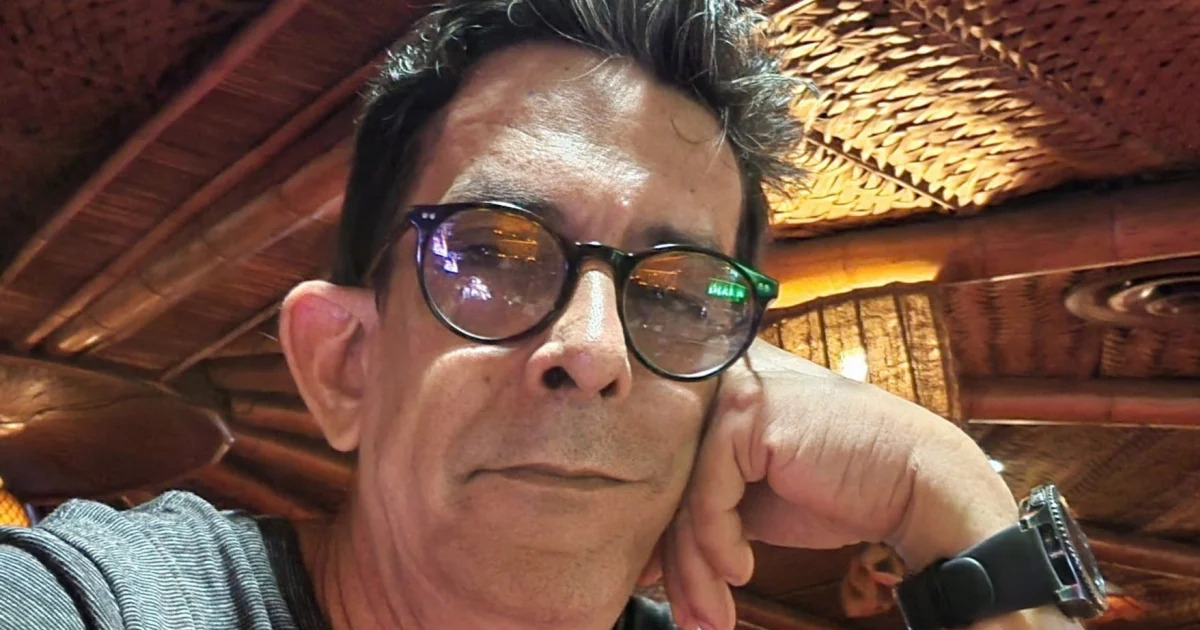
The Cuban comedian and actor Ulises Toirac has sparked debate on social media again after posting a lengthy reflection on the country's economic crisis, in which he questions the structural foundations of the model and dismisses the notion that current problems are solely due to external factors.
In his Facebook profile, under the title "Neither a bell nor who puts it. Only the cat is here”, the engineer also analyzed the economic decline accumulated over decades and noted that the root of the problem lies in sustained internal decisions over time.
"The populist measures and international propaganda (...) became a reality at the expense of a significant economic distortion," Toirac wrote, explaining that these social indicators were achieved without a solid productive base to support them.
According to their analysis, this distortion not only persisted but worsened over the years, increasingly diminishing the chances of recovery. “The process of economic distortion is cumulative,” they warned, while describing how the lack of resources limits any attempt at takeoff.
The artist also listed decisions that, in his opinion, contributed to the structural deterioration, such as the non-payment of debts, the dismantling of sugar mills, errors in agricultural policy, and the so-called "energy revolution." He added to this the prioritization of non-productive sectors: "Instead of assigning them to productive areas that would advance the economy, they were allocated to unproductive areas," he stated.
Toirac insisted that, although external sanctions impose limitations, they are not the main cause of the collapse. “Do the blockade/embargo/measures operate by making maneuvering difficult? Obviously. They impose restrictions. But these restrictions are additional; they are not the chicken in the rice with chicken,” he stated.
In the final part of his reflection, Toirac questioned the tendency to blame external factors and rely on aid as a way out of the crisis. “I don't believe that pointing fingers at others and waiting for donations to support the narrative (or not) will get us out of the situation we are in,” he stated.
The comedian warned that, although these aids can alleviate specific situations, they do not address the underlying problem or the "national economic drama." In his opinion, the current scenario is characterized by a lack of resources, workforce, and political capital, in a context where —as he argues— the absence of structural changes continues.
The publication was accompanied by an image depicting a map of the Caribbean, showing multiple flows between Cuba and other countries, alluding to economic dynamics and exchanges in the region.
The message generated a widespread reaction on social media, with numerous supportive comments highlighting the clarity of the analysis. Some users pointed out that it is a "very real" and "accurate" explanation, while others stated that "someone had to say it."
There were also those who agreed that the problem is structural and accumulated, and that the decisions made over decades explain the country's current situation. Other comments pointed to additional factors, such as spending on international conflicts or the burden of bureaucratic structures.
Critical voices were not absent. Some users questioned the comedian's approach and defended the role of external factors, while others challenged parts of his analysis or his stance.
The reflection is part of a sustained line of public analysis by Toirac regarding the Cuban reality. In recent weeks, he has emphasized that the energy crisis is due to “30 years of discrepancies due to poor investment policies (and not because of the blockade)”, and he has pointed out that “The decisions of this government are what set the economy on fire”.
At another time, referring to the social crisis, he stated that “There are poor people in this country. There are rich and there are poor people”, while questioning the use of euphemisms to describe poverty.
His interventions have sparked a growing debate on social media, in a context marked by blackouts, scarcity, and a decline in living conditions on the island.
Filed under: