
Related videos:
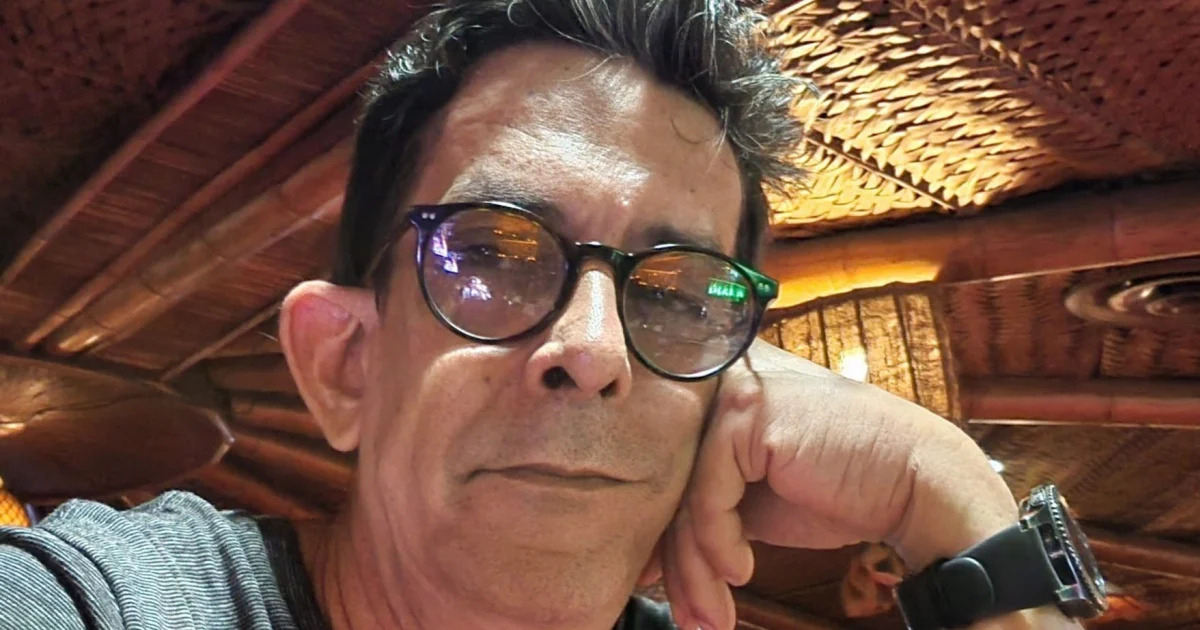
The Cuban comedian and actor Ulises Toirac sparked debate once again on social media after posting a message questioning the use of the term “vulnerable” to refer to people in a situation of poverty in Cuba and denouncing the existence of marked social differences on the Island.
In his Facebook profile, Toirac wrote: “There are poor people in this country. There are rich and there are poor. There are social classes, which I was always told would never exist in a revolution 'of the humble, by the humble, and for the humble'. POOR, not 'vulnerable'. Poor. Some more than poor. Don't embellish reality for me anymore. Whoever does not want to see it is a jerk.”
In the same message, he made a direct appeal for individual assistance in light of the growing hardships that, as he claims, many Cubans are experiencing: “Those people today, in this cold, are struggling immensely. Without food, without proper clothing, without medicine. Any little help you can offer, no matter how small, even if you're also going through tough times, is still assistance. Every tiny bit counts, my friend. Don’t look the other way. Contribute your little piece or your share. Lend a hand.”
The post generated hundreds of reactions and comments. Many users supported her words and agreed that the term "vulnerable" softens a harsher reality. "Vulnerable is a word that glosses over the truth," wrote one netizen. Another commented, "They are not vulnerable; as you rightly say, they are very poor." There were also phrases like: "There are more poor people than rich ones; there is a lot of poverty," and "There is no poverty here; this is human misery."
Others expressed gratitude for the call to direct assistance. "Helping our neighbors always nourishes the soul," noted one comment. Another stated, "A plate of food, rice and beans is something that sustains you, and if it's hot, it brings immense comfort."
The debate also included criticisms and opposing viewpoints. Some questioned individual responsibility in contrast to state responsibility. “The government is the one that needs to address all of that, and it doesn’t,” expressed one user. Another wrote, “What we need is a change now.”
The message comes days after Toirac himself criticized the government's inaction in the face of the economic and energy crisis, stating that “Problems are not solved with slogans” and denouncing what he described as the “voidness” of the government in the face of the country's structural decline.
Social media is flooded with testimonies about the increasing number of people living on the streets and asking for help to eat. In one of these messages, shared along with images of individuals sleeping in doorways and on sidewalks, it was stated: “They are not ‘vulnerable individuals’ (according to the euphemism used by the rulers and their spokespersons), they are hungry people, sick and in extreme poverty” and “The Revolution has indeed abandoned many of its children.”
The circulating images show people lying in parks and uninhabitable buildings, with makeshift cardboard or blankets next to their few belongings, a scene that is increasingly provoking anger on social media and calls for solidarity.
Toirac's message, focused on the need to call things by their name and the importance of direct assistance among citizens, brings the discussion of poverty, inequality, and state responsibility in Cuba back to the forefront of public debate, amidst a prolonged economic crisis and a noticeable decline in living conditions.
Filed under: