
Related videos:
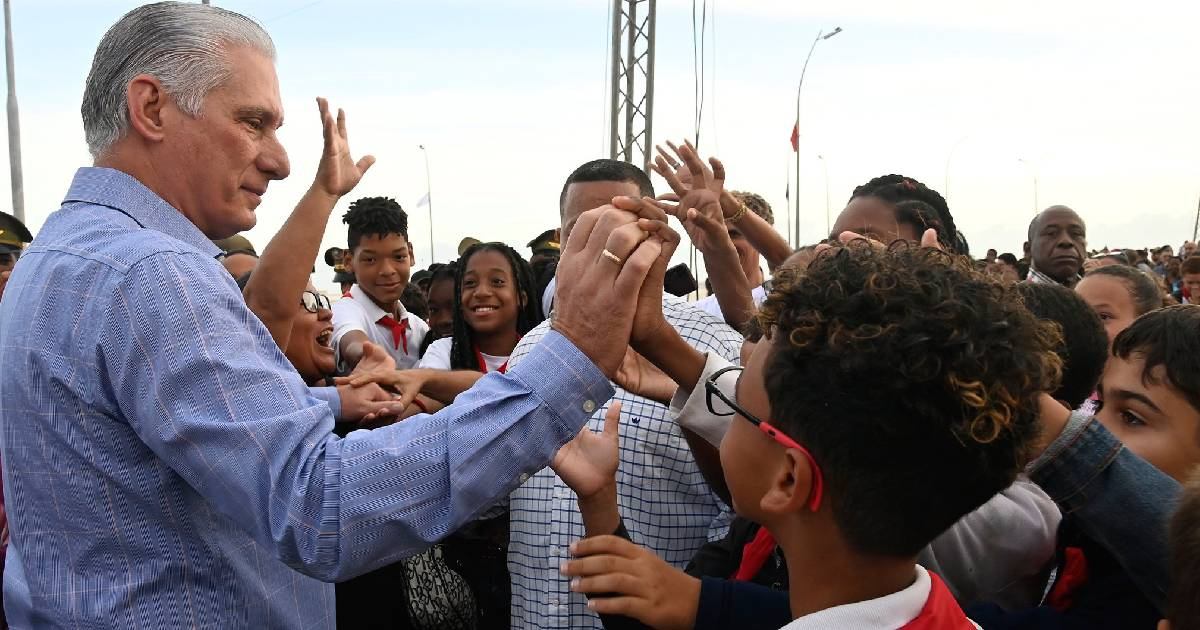
The leader Miguel Díaz-Canel stated this Friday that Cuba “will always stand on the side of human dignity” while celebrating on social media a youth mobilization organized the day before in Havana, in honor of the anniversary of the Young Communists Union (UJC) and the José Martí Pioneer Organization (OPJM).
In a message posted on his X account, Díaz-Canel reflected on his past as a youth leader and stated that new generations of Cubans “took to the streets and plazas” to denounce the U.S. embargo and declare “their love for life.”
In the same message, he stated that the participants proclaimed “the option of Cuba” and concluded: “we are and will always be on the side of human dignity.”
The event consisted of a caravan that traveled along the Havana waterfront from G Street to La Punta, in the Plaza de la Revolución municipality.
According to the report from the official newspaper Juventud Rebelde, around 100 young people took part in the event using bicycles, skates, scooters, and electric tricycles, while carrying political slogans and shirts commemorating the centenary of the birth of the dictator Fidel Castro, scheduled for August 13, 2026.
The central words of the event were given by Meyvis Estévez Echevarría, first secretary of the UJC, who stated that Cuban youth see themselves as "owners of a country that we build and defend every day."
However, the mobilization occurs in a context characterized by a deep economic and social crisis on the island.
According to estimates from The Economist Intelligence Unit, Cuba's Gross Domestic Product will contract by 7.2% in 2026, accumulating a decline of 23% since 2019, while blackouts reach between 20 and 25 hours daily in many regions of the country.
The energy crisis worsened in early 2026 following the cut in Venezuelan oil supplies, and on March 16, the national electrical system experienced its sixth total blackout in just a year and a half.
The contrast between the official discourse about a mobilized youth and the migratory reality is also evident.
Since 2021, around two million Cubans have left the island, mostly young people between the ages of 20 and 40, precisely the demographic that the regime presents as the backbone of its political project.
The reactions to Díaz-Canel's message on social media reflected that contrast. Numerous users questioned the ruler's narrative and denounced the lack of freedoms and the serious economic situation facing the country.
“While there is no freedom of thought or choice, there can be no human dignity,” wrote a user in response to the presidential message, while others criticized the use of minors and students in political acts and denounced the indoctrination of youth.
The event is part of a broader political mobilization campaign led by the regime in connection with the centenary of Castro's birth and the 64th anniversary of the UJC and the 65th anniversary of the OPJM, which are commemorated this Saturday, April 4th.
In the days leading up to this, political activities were also reported in schools, including symbolic tribunals against the United States organized with students and slogans chanted by children under the supervision of teachers, in what critics consider a systematic pattern of political indoctrination from a young age.
Filed under: