
Related videos:
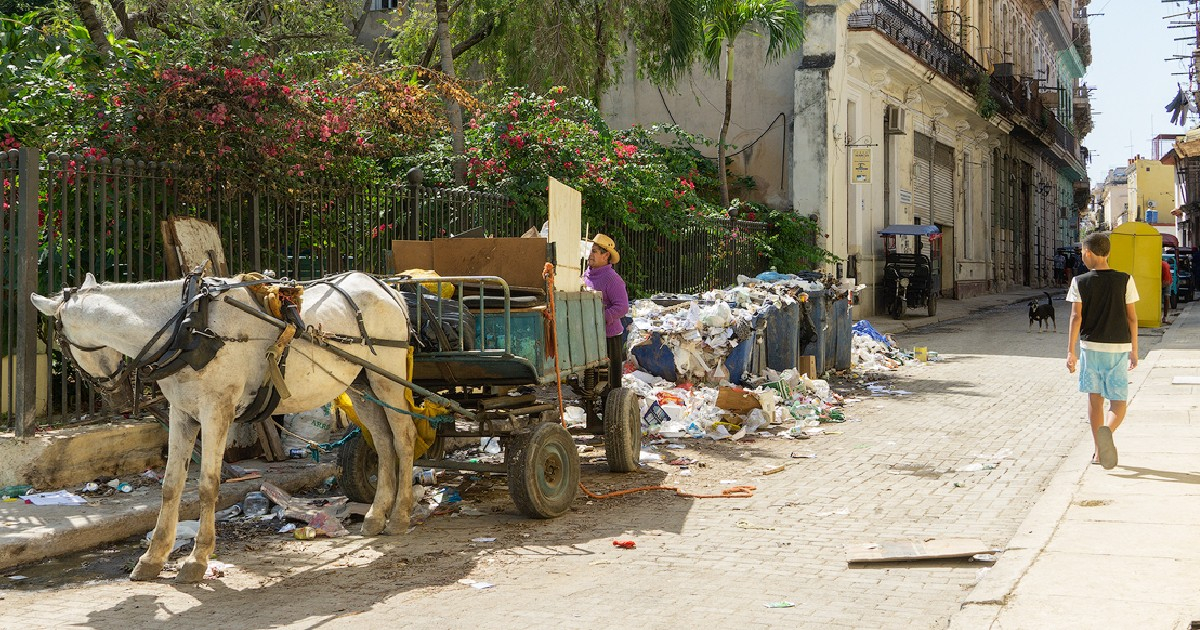
Cuban workers in the state sector, especially in tourism, express their outrage at the regime's proposal to reassign them to tasks such as garbage collection or agricultural production,
According to a report from the independent outlet 14 y Medio, the measure presented by the Government as an alternative to the "work interruption" during the severe energy crisis that is paralyzing the island's economy.
"That you tell me that after five years of university I have to throw away garbage is unbelievable," says Miguel, one of those affected, in statements to the independent media, whose words encapsulate the widespread sentiment of thousands of employees who have been left jobless after the collapse of tourism.
Just two weeks after the Minister of Labor and Social Security, Jesús Otamendiz Campos, stated in the Round Table discussion that the number one priority is workforce relocation, not layoffs, complaints have surged and dismissals in the tourism sector have been widespread.
The immediate trigger was the suspension of most international flights on February 11, when the lack of kerosene forced the closure of routes and caused the collapse of the tourist hubs of Cayo Coco, Cayo Guillermo, and Varadero, among others.
Ángel, formerly a bartender at a hotel in Holguín, describes to 14 y Medio the situation starkly: "From working surrounded by people, preparing cocktails until two or three in the morning, to spending time watching reels on my phone, because everything here, in Cayo Coco and Cayo Guillermo, is shut down."
Iván, another worker, questions the real feasibility of the relocations: "How are we going to relocate when most of our companies are affected by the lack of fuel, electricity, and transportation?"
According to Iván, the majority of the available positions are for security guards and custodians, with low salaries and high risks, and "nobody wants them."
The current labor legislation places workers in a dilemma: the interrupted employee receives 100% of their salary in the first month and 60% starting from the second month, but if they unjustifiably decline a relocation offer, they risk losing their job.
"If he does not accept, the State is fine, and the worker has to find a way to survive," summarizes Lisandra, whose husband was declared interrupted "verbally, because there was no documentation," after 42 years of work and just four months before retirement.
Arlenis, mother of a young woman who was doing social service in tourism, claims that the management applies the rules "as they please": "They haven't even called my daughter from the hotel to find out what she can do."
The official press tries to present the situation with optimism: the state media Escambray reports that in Sancti Spíritus more than 11,000 workers have taken on new forms of employment, although most correspond to remote work and telecommuting modalities, and only 460 were reassigned to other tasks within their own entity.
Yudith, a worker from Melilla in Holguín, warns 14 y Medio that the relocation "is not for all territories," especially in communities that rely almost exclusively on tourism.
Alfredo, a veteran in the field, draws a parallel with the pandemic: "I've seen this movie before. That's what they said when COVID-19 hit, and companies and organizations did whatever they wanted. They left half the town unemployed. Get ready for the second season."
The crisis is not limited to the state sector: 96.4% of small and medium-sized private enterprises report "severe to catastrophic" impacts due to a lack of fuel, and cultural spaces like the Fábrica de Arte Cubano have reduced their hours to just Fridays and Saturdays.
Filed under: