
Related videos:
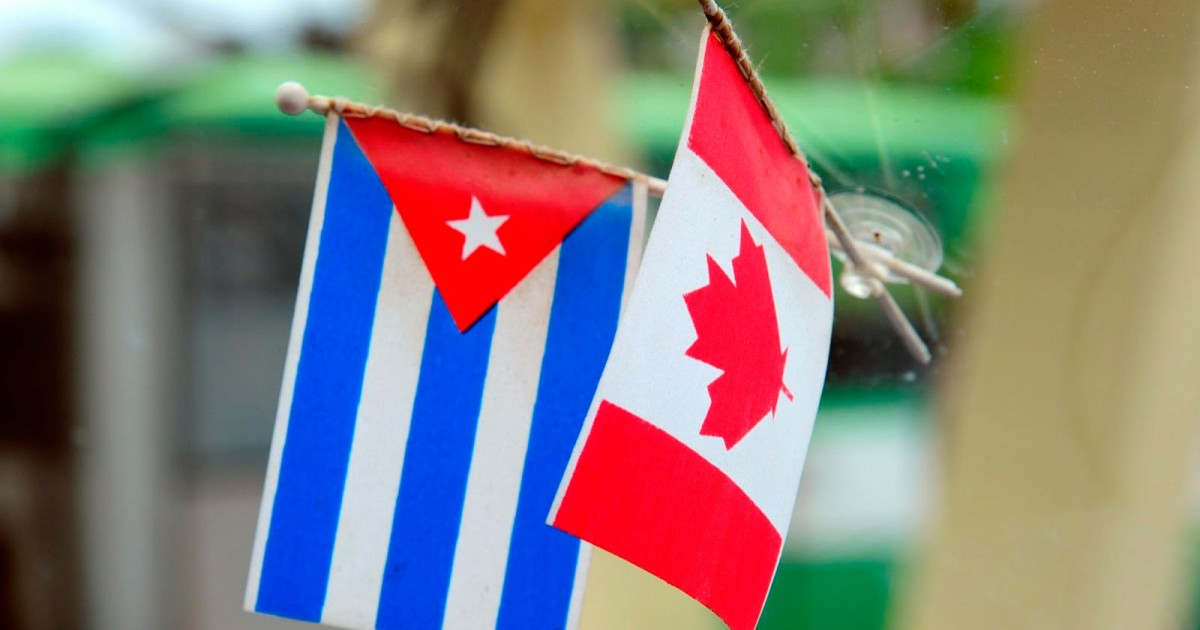
A report prepared by the NGO Consorcio Justicia and published on March 30 through Prisoners Defenders condemns how the government and companies of Canada have politically and financially supported the totalitarian regime in Cuba for decades, in clear contradiction to Ottawa's official discourse on democracy and human rights.
The document, titled "Canada's Ongoing Support for the Totalitarian Regime in Cuba", has been translated into six languages and is based on over 53 validated statements from Cuban workers collected between April and August 2025, along with more than 60 additional interviews.
Canada has maintained uninterrupted diplomatic relations with Cuba since 1945, being one of only two countries in the hemisphere — along with Mexico — that did not sever ties after the Revolution of 1959. This continuity has made Ottawa a strategic player for the regime’s survival, particularly as a counterbalance to the U.S. embargo and as a substitute for the Venezuelan support that has been eroding.
The Canadian federal government itself acknowledges that Canada is the second largest source of direct investment in Cuba, with significant Canadian investments in mining, energy, oil and gas, along with some investments in renewable energy, agriculture/heavy machinery, and tourism.
Canadian federal funding for projects in Cuba amounts to 60,956,283.81 Canadian dollars in recent years, including 4.5 million just in 2025. On February 25, Ottawa also announced an additional humanitarian aid of eight million Canadian dollars for Cuba, channeled through the World Food Program and UNICEF, although the report warns that the rest of the support for the regime remains intact.
Canada is also the main source of tourists to the island, with over 750,000 visitors in 2025, although travel bookings plummeted by 86% in March 2026 compared to the same month the previous year.
Forced labor and modern slavery
One of the most serious aspects documented in the report is the system of forced labor that the regime imposes on Cuban workers hired by Canadian companies: they can earn up to 100,000 Canadian dollars annually, but they are required to hand over between 80% and 90% of their earnings to the Cuban government under the threat of repatriation and criminal penalties.
The UN has classified this system as modern slavery on three occasions; the European Parliament has done so on four.
The report also documents the production of cigars using prison labor: at least seven Cuban prisons manufacture cigars for export. In the maximum-security prison of Quivicán, 40 inmates are forced to produce 60 cigars daily each, under coercion, violence, and wages of 7.32 dollars a month.
It is estimated that over 11 million cigars annually come from prison labor, tripling Canadian imports by 2024, and Habanos S.A. and Tabacuba publicly admitted in October 2025 the use of inmates in their production.
Canadian development cooperation also includes direct institutional support to the General Comptroller of the Republic of Cuba and the Federation of Cuban Women, entities within the regime's own apparatus. Although Ottawa claims to support a future for Cuba that fully embraces the fundamental values of freedom, democracy, human rights, and the rule of law, the report concludes that Canada has in fact normalized the status quo on the island.
Economic crisis and diplomatic pressure
The Canadian company Sherritt International has accumulated a debt of at least 344 million dollars owed by the Cuban government and temporarily suspended operations on February 17 due to a lack of fuel.
At the end of 2025, the regime froze the foreign currency bank accounts of the 334 companies with foreign direct investment in the island, and the Canadian Commercial Corporation closed its business support program in Cuba at the beginning of 2026, citing the "increasing financial risk and the deterioration of economic conditions."
In light of this situation, the Cuban-Canadian Coalition formally requested on March 22 that the government of Mark Carney and Minister Anita Anand close the Cuban embassy in Ottawa and reduce the Canadian diplomatic presence in Havana.
The report "Canada's Friendly Dictatorship Problem," published on February 26 by the Macdonald-Laurier Institute, Democratic Spaces, and Human Rights Action Group, urges selective sanctions against Cuban officials and notes that Canada has sanctioned 124 Venezuelans and officials from Russia, Nicaragua, and China, but has not implemented similar measures against any Cuban leaders.
Consorcio Justicia concludes that Canada, with its enormous influence—especially after the collapse of Venezuelan aid—has the ability to pressure the regime more effectively than any other country, but chooses to normalize the status quo, making its support an indispensable pillar for the continuity of the dictatorship.
Filed under: