
Related videos:
The Cuban regime once again projected an image of humanitarian commitment to the international community, this time in Geneva, while the migratory reality within the island continues to drive thousands of citizens to leave each year.
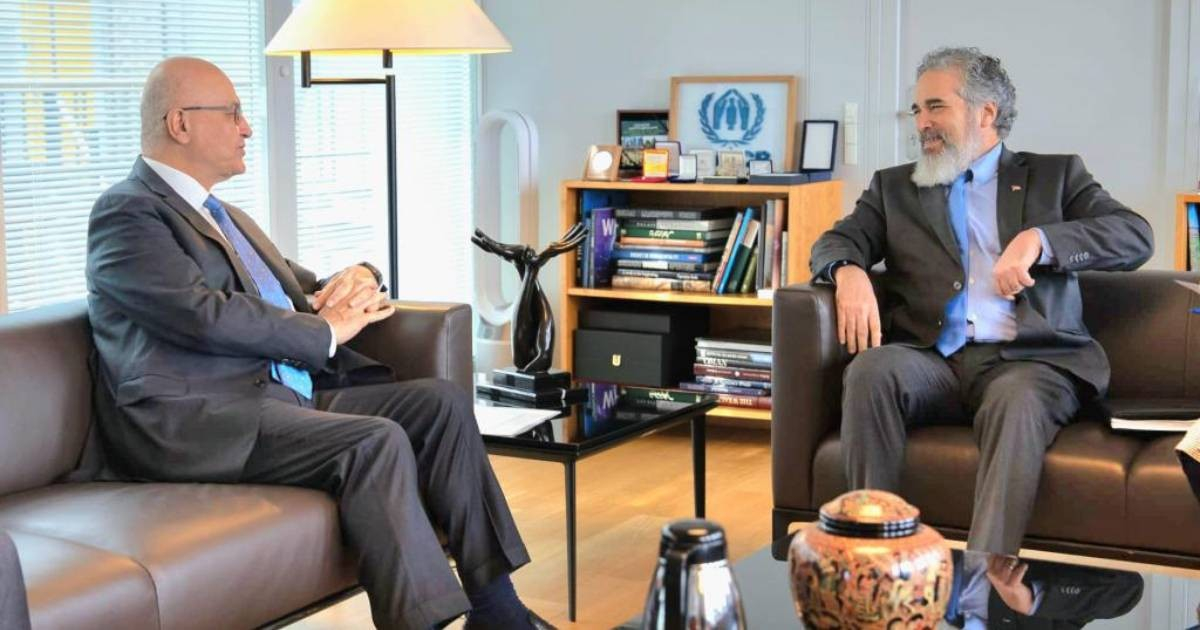
During an official meeting at the headquarters of the United Nations High Commissioner for Refugees (UNHCR), Cuba's ambassador to international organizations in Geneva, Rodolfo Benítez Verson, met with the new High Commissioner, the Iraqi Barham Salih. In the meeting, both parties agreed that the world is experiencing a phase marked by mass displacements and humanitarian crises, which—as they highlighted—underscores the importance of the role of this international organization, reported the Cuban Foreign Ministry.
Salih praised the "constant collaboration" of the Cuban government and its supposed dedication to the protection and inclusion of refugees and stateless persons. According to the official, this commitment would be reflected in measures such as free access to health services, academic opportunities, and the recent approval of a new Immigration Law on the island.
However, this rhetoric contrasts with the internal situation in Cuba, where the wave of migration has not ceased. In recent years, hundreds of thousands of Cubans have left the country, driven by the economic crisis, scarcity, lack of freedoms, and the deterioration of living conditions.
During the meeting, the Cuban representative once again held the United States government responsible for the country's difficulties, stating that the embargo—described as "criminal"—directly impacts the living conditions of the population and, as a result, influences migration decisions.
Nonetheless, Benítez assured that Cuba will maintain its "strong commitment" to the protection of refugees on its territory and defended the new Migration Law as a tool that enhances guarantees for foreigners, simplifies procedures, and promotes a "humanistic and orderly" approach.
The government also highlighted its cooperation with UNHCR, including technical assistance to address extreme weather phenomena, and reiterated its willingness to continue collaborating with international organizations on migration issues.
While in diplomatic settings Havana insists on showcasing an inclusive and supportive migration policy, the everyday reality for thousands of Cubans remains marked by uncertainty and the need to seek opportunities outside the island that they cannot find in their own country.
According to data, more than 300,000 Cubans sought international protection in 2023 alone, an unprecedented figure that reflects the collapse of living conditions on the island.
The Cuban diaspora continues to grow. Demographic numbers indicate that the migration crisis has been reducing the population from 11.3 million in 2020 to significantly lower figures in subsequent years. In this context, Cuba led the asylum requests in Mexico during 2025, while Brazil received 30,731 asylum requests from Cubans, establishing itself as one of the main destinations for Cuban emigration.
The regime, in the meantime, has tried to polish its immigration policy with the new Immigration Law approved in July 2024, presented as a step forward in terms of rights, even though Cubans continue to flee in record numbers.
The causes of the exodus are numerous and well-documented. According to closing data for 2025, 89% of the Cuban population lives in extreme poverty. Furthermore, 93% of those who remain on the island say they would leave the country if they could, according to a recent survey.
The humanitarian crisis manifests itself in all areas of daily life. The Cuban government often attributes the deterioration to what it calls criminal energy embargo against the island, but the reality is that internal management has worsened the collapse of basic services.
The Cuban leader Miguel Díaz-Canel himself has acknowledged that life is very tough for Cubans, although he does not take responsibility for the system he governs. This same reality is what drives hundreds of thousands of Cubans to become refugees abroad, while their diplomatic representatives receive praise in Geneva for their supposed solidarity with the displaced around the world.
Filed under: