
Related videos:
The Cuban regime continues to secure external financial assistance while the energy crisis, healthcare collapse, and lack of internal investments continue to impact the country.
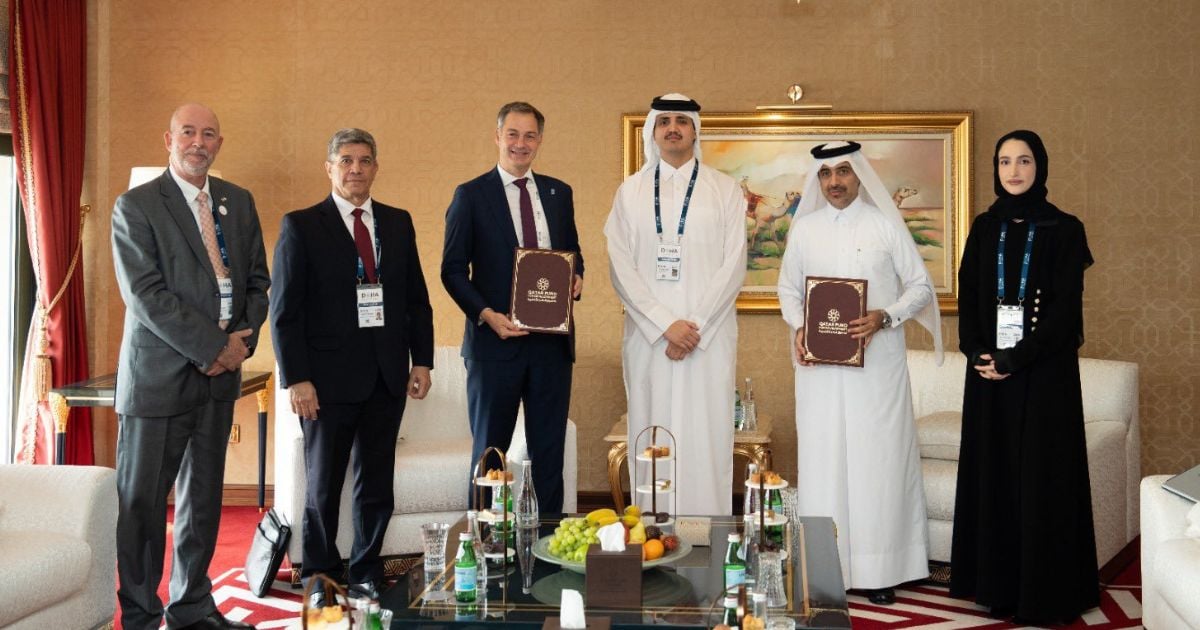
The Qatar Fund for Development (QFFD) announced on Saturday the provision of a $4.5 million grant to the United Nations Development Programme (UNDP) aimed at rehabilitating access to energy in the provinces of Havana, Artemisa, and Mayabeque.
The agreement, signed at the Doha Forum 2025, is presented as part of a humanitarian initiative to restore essential public services such as hospitals, schools, and food production systems in areas affected by a hurricane in the western part of the island.
However, these types of aid ultimately become a source of political and economic oxygen for the regime, without translating into sustained improvement for the population.
Qatar Fund for Development reported on the social platform X that the project will benefit over 2.2 million people.
The ceremony was attended by Sheikh Thani bin Hamad Al Thani, president of the QFFD council, Fahad Hamad Al-Sulaiti, its general director, and Alexander De Croo, administrator of the UNDP.
For its part, the UNDP office in Cuba expressed gratitude on X for the support from Qatar and stated that the cooperation will "facilitate access to energy for basic activities of the population affected by hurricanes."
Nevertheless, the agreement once again highlights the Cuban regime's dependence on multilateral financing mechanisms, which, despite being managed by the United Nations, ultimately support inefficient state infrastructures controlled by the Communist Party.
International aid —whether from Qatar, China, or Russia— has in recent years helped to keep the structures of power in Cuba afloat, while the lack of real economic reforms, corruption, and repression continue to deepen the internal crisis.
The new funding from QFFD adds to other projects facilitated by UNDP and cooperation agencies that, although they operate under humanitarian frameworks, ultimately reinforce the official narrative of a state that survives thanks to “international solidarity,” while the population faces power outages, under-resourced hospitals, and an electrical system on the verge of collapse.
Amid the precariousness and decline, the regime continues to find ways to access external funds and mask its structural failure under the guise of "resilience and sustainable development" projects.
The Cuban regime has taken advantage of the impact of hurricanes to secure a steady flow of international humanitarian aid that, although justified under criteria of urgency and social assistance, ultimately serves as a political crutch for an inefficient system.
The recent grant of $4.5 million from Qatar to restore the energy infrastructure in Havana, Artemisa, and Mayabeque is complemented by other similar actions that reinforce this dynamic.
The World Food Program recently delivered a batch of ready-to-eat rations intended for over 900,000 people affected by cyclones, prioritizing children, pregnant women, and the elderly.
However, the distribution of these resources is carried out under state control, without independent oversight mechanisms.
In parallel, the International Red Cross also sent humanitarian aid to the eastern part of the country, including mattresses, kitchen utensils, and hygiene kits for over 500 affected families.
These urgent deliveries have not been accompanied by structural reforms to prevent the recurrence of social collapse after each climatic event.
From Europe, Spain sent 36 tons of humanitarian aid to Santiago de Cuba, Holguín, Granma, and Las Tunas, including food, hygiene products, cooking materials, and school supplies.
This donation was channeled through state institutions, which has raised concerns about its final destination and transparency in its usage.
Also from Asia, a donation campaign coordinated by Vietnam managed to raise over 170 thousand dollars in cash and goods for the Cuban authorities, thus consolidating a trend where governments aligned with the regime reinforce their legitimacy without demanding conditions for reform or accountability.
Filed under: