
Related videos:
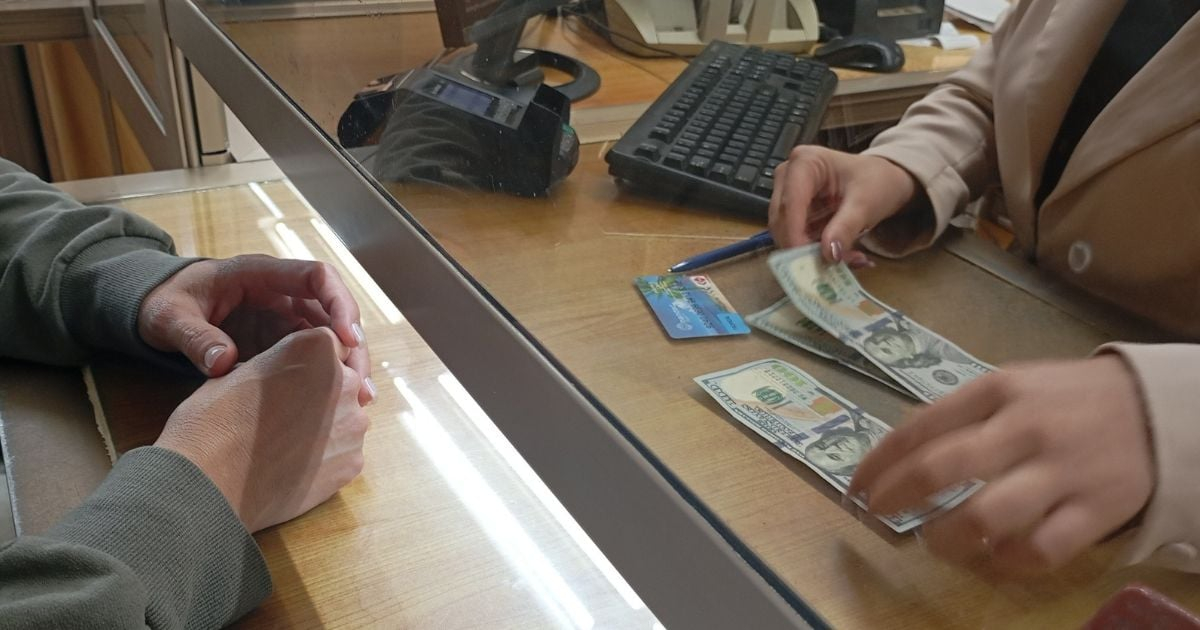
The Financial CIMEX S.A. (Fincimex) published the complete list of Casa de Cambio (CADECA) offices enabled across the country to cash remittances in U.S. dollars, two days after announcing that this service would be available nationwide from abroad "in minutes."
Fincimex released the list via its profile on Facebook, stating that the beneficiary must present their identification document and a code indicated in the payment notification from abroad to collect the payment.
The authorized collection points cover the 15 provinces of the country, from Pinar del Río to Guantánamo, with branches and shopping centers in each territory.
Pinar del Río has branches in the provincial capital, Viñales, Consolación del Sur, and Sandino, as well as in the shopping centers Calle Martí and Cortés
Artemisa has offices in Artemisa, Bauta, and San Antonio, next to the Las Terrazas shopping center
Mayabeque has branches in San José de las Lajas, Güines, and Santa Cruz del Norte
Havana has several key locations, including 23 and J, Airport Terminal 2, and shopping centers like Palco, 3rd and 70, 21 and 42 in Playa, Belascoaín, Neptuno, Alamar, and Santa Catalina
Matanzas includes offices in the capital city, Cárdenas, and Jagüey Grande, as well as shopping centers in Varadero, Kawama, Playa Girón, and Playa Larga
Villa Clara includes branches in Santa Clara, Caibarién, Remedios, Camajuaní, and Sagua la Grande, along with locations such as Ciencias Médicas, La Campana, and Isabela de Sagua
Cienfuegos operates with its main branch and the Punta Gorda shopping center
Sancti Spíritus has offices in the provincial capital, Cabaiguán, and Trinidad
Ciego de Ávila has branches in Ciego de Ávila and Morón
Camagüey is present in the main city, Florida, and Esmeralda
Las Tunas includes offices in Las Tunas and Puerto Padre
Holguín has branches in the provincial capital, Guardalavaca, and Plaza Pesquero, as well as shopping centers such as Aeropuerto, Frexes, and Antilla
Granma has offices in Bayamo and Manzanillo, next to the Saco shopping center
Santiago de Cuba has branches in Santiago, Palma Soriano, and the Ferreiro shopping center
Guantánamo has offices established in the main city, Baracoa, and the Guantánamo II shopping center
Fincimex clarified that if the remittance was sent to be paid in cash, it would only be paid in that manner, although it urged beneficiaries to consider total or partial deposits in the Clásica card, a financial product in dollars with discounts in the state commercial network.
The entity presented the measure as part of a strategy to facilitate access to foreign currency and promote savings through the Clásica card.
The announcement, however, has generated widespread skepticism among Cubans. "What’s needed is for the cash to be available when it’s time to collect the money, and not the excuse that there isn't any," wrote a user on Fincimex's post.
Another asked directly, "Will that cash be available when I want to withdraw it?" while a third summarized the accumulated distrust: "Between the long lines, the power outages, and the failures of the CADECA computer systems, the headache... is immense."
The new service arrives amidst a severe contraction of formal remittance channels.
Formal remittances have dropped by 70% compared to 2019, when they reached approximately 3.7 billion dollars.
After the sanctions imposed by the Trump administration against Orbit S.A. in January 2025, Western Union indefinitely suspended its transfers from the United States to Cuba in February of that year, and Cubamax followed suit in April. Over 95% of the flow migrated to informal channels.
Analysts also point out that Fincimex operates under the direct control of Grupo de Administración Empresarial S.A. (GAESA), the military conglomerate that the U.S. Department of the Treasury formally identified in 2020 as the controller of the entity.
It is estimated that 74.3% of every 100 dollars entering Cuba through remittances is withheld via taxes and markups in stores accepting freely convertible currency, which explains the skepticism of many Cubans towards the new official option.
As an internet user summarized in the comments on Fincimex: "Delayed actions, they should have done this a long time ago... regaining trust in Cuban banks is going to be costly."
Filed under: