
Related videos:
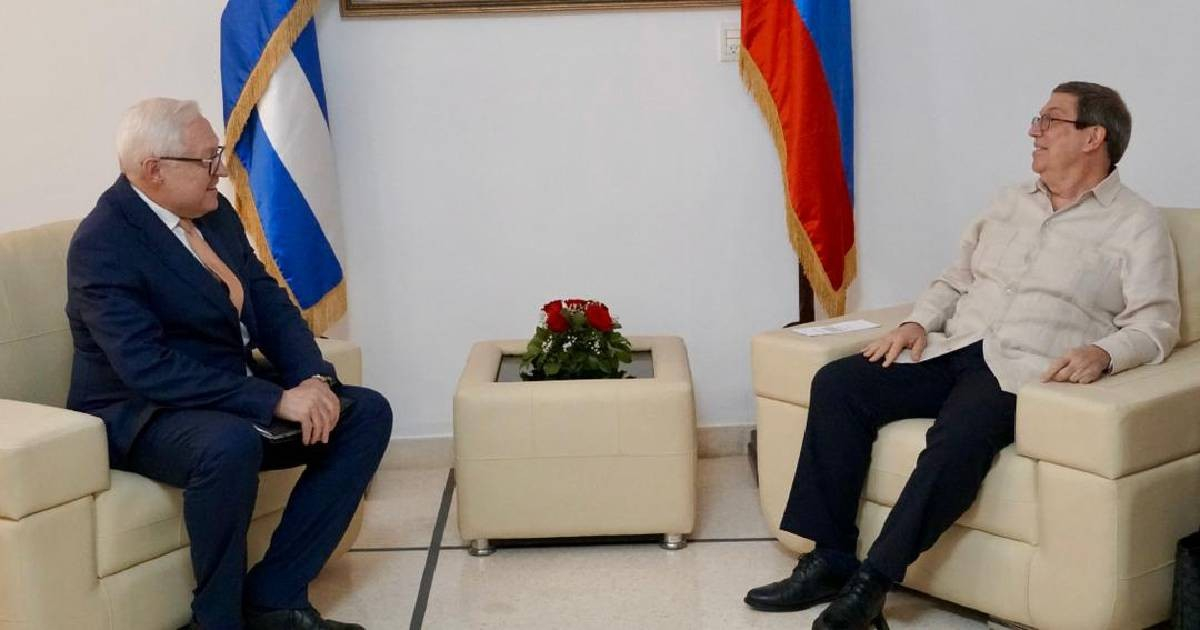
The Cuban Foreign Minister Bruno Rodríguez Parrilla held a meeting on Thursday with Serguéi Riabkov, the Deputy Foreign Minister of Russia, as part of the Inter-Ministerial Consultations held in Havana.
Rodríguez expressed gratitude for the recent shipment of oil to Cuba publicly to Moscow. "We emphasize the strong, historical, and strategic relations between both countries and I thanked for the recent shipment of oil to Cuba, in light of the energy blockade imposed by the US government," the chancellor wrote on his social media platform X account.
The Cuban diplomat also conveyed greetings to the Russian Foreign Minister: "I sent warm regards to my dear friend and Chancellor Serguéi Lavrov."
Riabkov, a veteran Russian diplomat who has held the position of Deputy Minister since 2008, chaired the bilateral consultations in Havana, which took place on April eighth and ninth.
The meeting takes place days after the tanker Anatoly Kolodkin docked at the port of Matanzas on March 30 with approximately 730,000 barrels of crude oil, the first Russian shipment of the year for Cuba.
The unloading took about 96 hours and the fuel was prioritized for electricity generation, although analysts indicate that the shipment only covers between seven and ten days of total Cuban consumption, failing to resolve the structural crisis.
The Russian Minister of Energy, Serguéi Tsivilev, confirmed on April 1 that a second ship is being prepared to not leave the Cubans abandoned.
The Cuban energy crisis worsened drastically since January 2026 following the interruption of Venezuelan supplies and the implementation of new U.S. sanctions. Cuba produces only 40% of the fuel it needs — about 40,000 barrels daily compared to a demand of between 90,000 and 110,000 — and experiences blackouts lasting up to 18 to 25 hours a day.
The Antonio Guiteras Thermoelectric Power Plant, the largest capacity facility in the country, collapsed on March 5 and failed again last Tuesday due to a boiler malfunction.
This intense diplomatic activity between Havana and Moscow began in February, when Rodríguez traveled to Russia and met with Putin and Lavrov in search of energy support. At that time, Putin described the U.S. sanctions against Cuba as unacceptable and promised support in "difficult times."
The president Donald Trump himself facilitated the passage of Anatoly Kolodkin by declaring on March 29 that he had "no problem" with Russia sending oil to Cuba, while the Kremlin confirmed that there had been prior discussions with Washington about the shipment.
The second Russian shipment announced by Tsivilev will be the next test of whether Moscow can maintain a more stable supply that relieves the crisis burdening the Cuban population.
Filed under: