
Related videos:
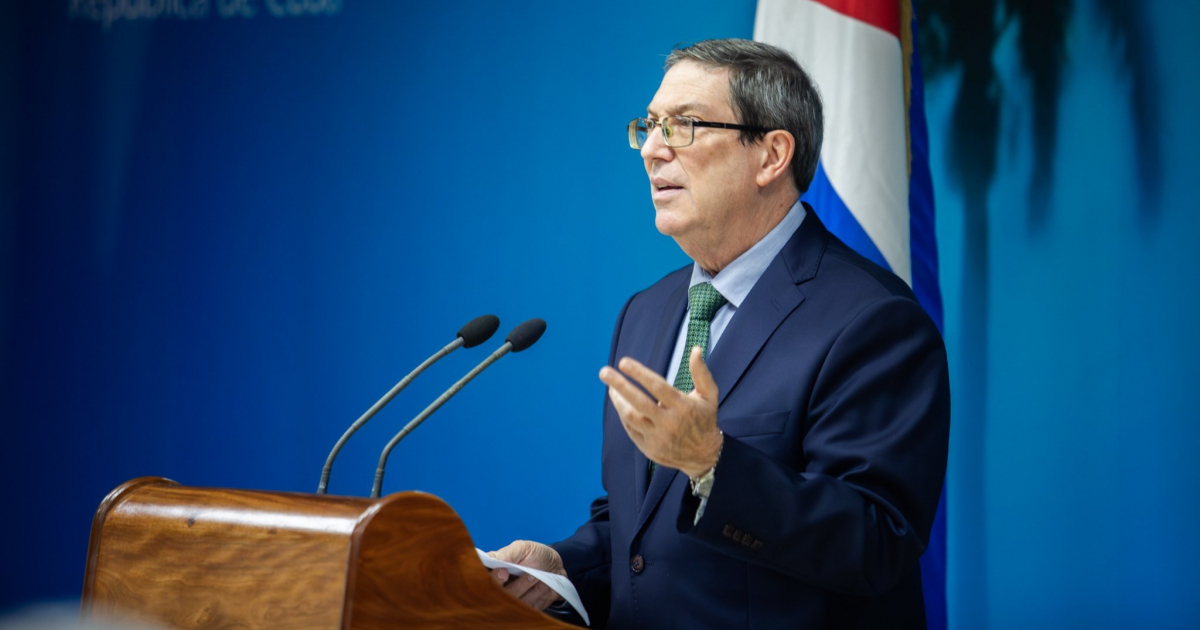
The Cuban chancellor Bruno Rodríguez Parrilla published a message this Thursday defending Cuban medical missions and accusing the U.S. government of pursuing, pressuring, and extorting other governments to end the presence of the island's medical brigades in their territories.
His post on X comes a day after the Inter-American Commission on Human Rights (IACHR) published a report recommending that American countries withdraw from the program, based on testimonies from 71 Cuban professionals in 109 countries documenting salary retention of between 70% and 90%, confiscation of documents, political surveillance, and threats to family members.
"The U.S. government is pursuing, pressuring, and extorting other governments to force them to end the presence of Cuba's Medical Brigades in several countries, resorting to false pretexts, as it usually does," wrote Rodríguez.
The chancellor stated that Cuban medical missions "carry out their fraternal work in remote places," support the development of health systems with highly qualified human resources, and that their personnel are hired voluntarily, legally, and sovereignly, always respecting international regulations.
Rodríguez also accused Washington of applying the same strategy for more than six decades against Cuban trade, investments, and bank transfers, stating that the aim of the U.S. diplomatic and media campaign is to "continue besieging the Cuban economy and cutting off legitimate sources of income to suffocate the Cuban people."
The chancellor's statements come amid a diplomatic offensive led by Secretary of State Marco Rubio, who since early 2025 has promoted sanctions, visa restrictions, and direct pressures on governments receiving Cuban medical brigades, describing the program as "forced labor".
At least ten countries have canceled or not renewed their agreements with Cuba since early 2026, including Jamaica —after more than fifty years of cooperation and with 277 Cuban professionals deployed—, Honduras, Guatemala, Guyana, Bahamas, and Antigua and Barbuda.
The Department of State estimates that Havana retains an average of 85% of the salaries of doctors sent abroad.
Mexico, which hosts 3,140 Cuban doctors and pays around 100 million dollars annually, confirmed in March 2026 the continuation of its agreement despite pressures from Washington, according to Politico.
The European Parliament approved an amendment in April 2025, describing Cuban medical missions as "modern slavery," while the U.S. classified Cuba at the lowest level in its annual report on human trafficking in September 2025, specifically pointing to the medical brigade program.
Filed under: