
Related videos:
The Cuban researcher and essayist Hilda Landrove published a brief yet powerful text in which she directly addresses the regime's leaders: What people are they referring to when they invoke the resistance of the citizenry against a supposed imperialist invasion and their willingness to "die for sovereignty and socialism?"
Landrove dismantles, with successive questions, the official narrative of "heroism" and "resistance" that President Miguel Díaz-Canel and other leaders have repeatedly stated in various settings, especially in recent weeks amid the escalating pressures from the United States government.
"Which people do these speeches refer to?" the essayist asks, who holds a PhD in Mesoamerican Studies from the National Autonomous University of Mexico (UNAM). "Is it the one that has lost more than 10% of its population in recent years? [...] Is it that majority who are buying charcoal to cook, taking advantage of two or three hours of light to do the bare minimum at home? Is it the one that ends up in prison when it dares to protest?" Landrove writes, listing the living conditions on the Island.
The reality described is not rhetorical. Cuba lost over a million inhabitants between 2020 and 2023, with a negative migration balance of more than a million departures during that period. By May 2025, the resident population was estimated at 9.7 million, compared to over 11 million in previous years. The profile of the emigrant is predominantly young and of working age, which exacerbates the aging of those who remain on the island. A 2023 survey revealed that 78% of residents in Cuba dream of leaving or are in the process of emigrating.
This demographic decline is compounded by a structural energy crisis: systematic failures of the National Electric System (SEN), constant blackouts in various parts of the country lasting over 20 to 30 hours; the limited food available spoils due to lack of refrigeration and means to cook it. To such an extent that 80% of Cubans consider the current situation worse than the Special Period of the 1990s, according to data from March 2026.
In front of that picture, Landrove is categorical: "To place that starving and repressed people as a front is criminal. The same government that does propaganda and boasts of heroism is the one that has brought things to this point, long before Naranja [Donald Trump] decided to delve deep into the pressure policies."
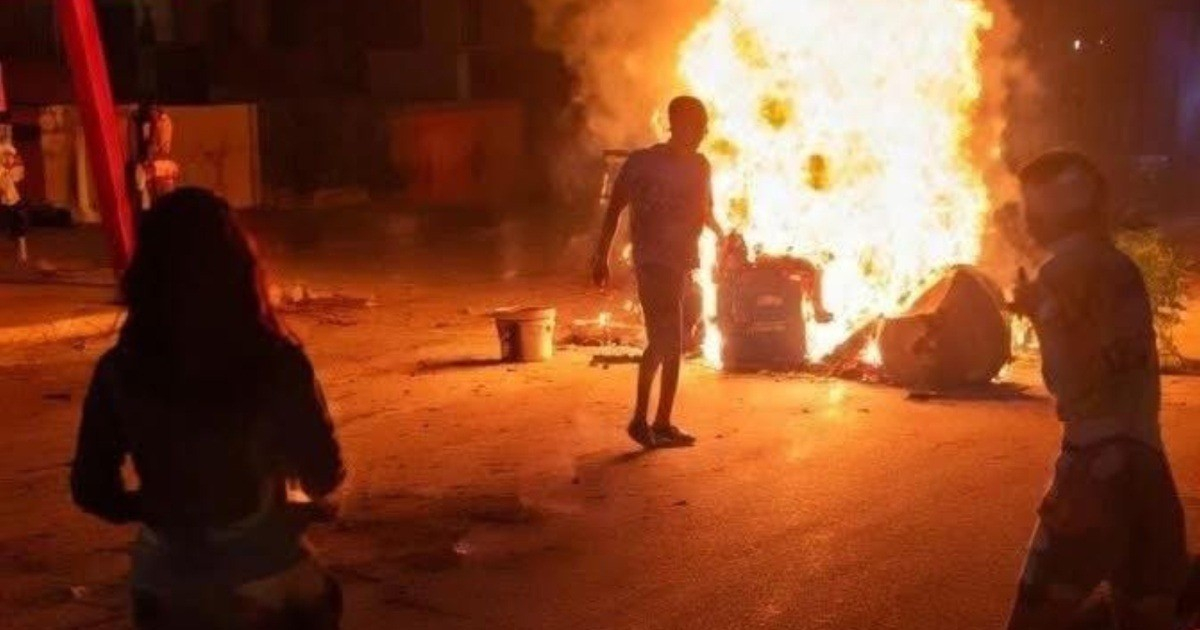
The researcher also rejects the official narrative that attributes popular demands to foreign interference. "A people that repeatedly states with each pot-banging protest that the demand for freedom and democracy is not a creation of the Trump administration nor a foreign agenda, but rather a genuine and self-driven desire," she writes, referencing the protests that have erupted across the country and against which the regime has intensified its repression and political imprisonments.
"That is neither resistance nor heroism; it is the final stage of the management of the immolation of an entire people," Landrove concludes, indicating that everything responds to a single logic: "To not yield any power, [...] to not give up privileges. All to continue to sustain themselves on the ruins they have created, while having their own escape routes complete with electricity, gas, water, and everything they need."
Filed under: