
Related videos:
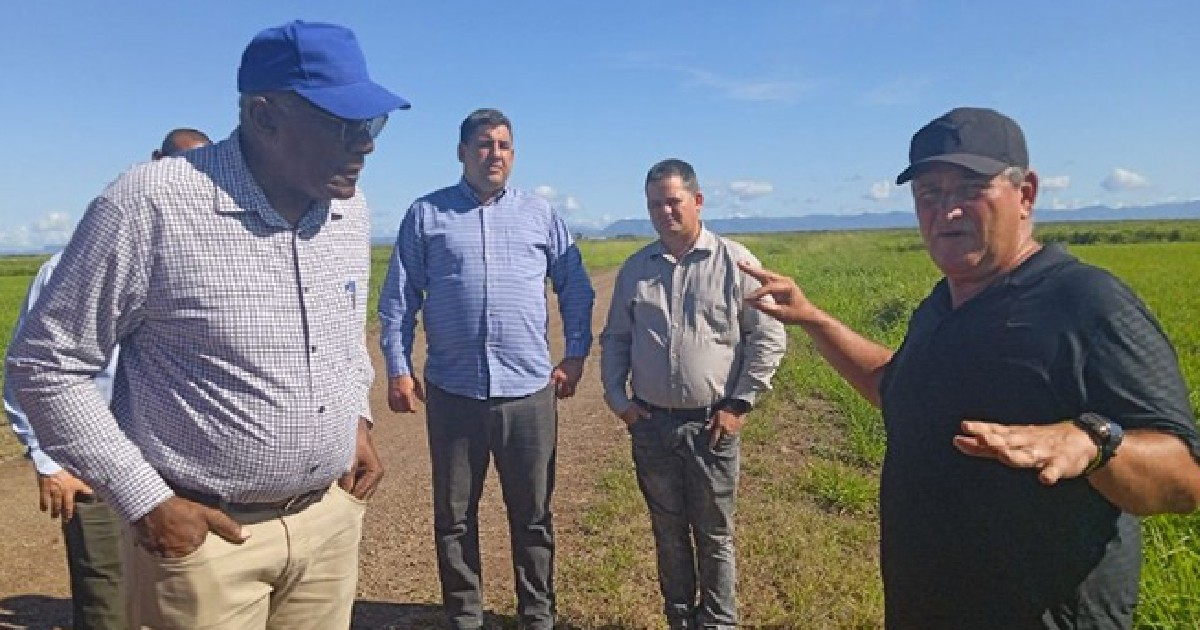
Salvador Valdés Mesa, Vice President of Cuba, visited the province of Pinar del Río this Thursday to oversee the grain production program, particularly the cultivation of rice, in a new episode of the long chain of inspections and official announcements that have not managed to reverse the country's food crisis.
According to the Cuban News Agency, the cold campaign for cereal in that territory closed at 95% of the forecast, with the planting of 8,690 hectares. For the 2026 season, the province estimates the cultivation of 32,361 hectares including popular rice, specialized rice, and a joint project with the Vietnamese company Agri VMA.
Michel Bayate, director of the Los Palacios Agroindustrial Grain Company, reported that the Asian entity has acquired tractors and seeders, which will ensure a substantial volume of rice production.
However, the official note itself acknowledges that grain production is facing "very difficult conditions due to the energy crisis in the country and the intense drought, primarily."
This admission, however, does not reflect the extent of the accumulated productive collapse. Cuba produced less than 6% of the rice it consumed in 2023 (the last year with published official figures). That year, the island harvested 27,326 tons of the grain while importing 484,222, at a cost of hundreds of millions of dollars annually. National yields per hectare have significantly decreased in recent times.
The Cuban food industry achieved only 54.4% of its plan in the milling sector in 2025. In Ciego de Ávila, for example, the rice sector recorded a 59.1% decrease in production despite repeated announcements of "food sovereignty."
The pattern has been repeating for decades. Among the guidelines of the VI Congress of the Communist Party of Cuba, approved in 2011, was "to ensure compliance with the production programs for rice, beans, corn, soy, and other grains"; however, this goal has continually been unmet.
The 80% of Cubans perceive the current crisis as worse than the Special Period of the 90s, according to a report from the Food Monitor Program (FMP) last March. 36% of the population suffers from food insecurity, with more than 70% of households reducing the quantity or quality of the food they consume.
In February 2025, the price of rice reached 300 Cuban pesos on the black market, a price that continued to rise throughout the year. In March 2026, a resident of Camagüey reported that the rice sold in state-owned stores was arriving in poor condition, with a bad smell and dirt.
Valdés Mesa himself has had to acknowledge the limits of the model. In December 2025, he recognized that the State lacks the resources to expand rice production and suggested that private producers should finance machinery and supplies. In March 2026, he was even more explicit: "we cannot achieve that in the short term".
Filed under: