
Related videos:
Colombian President Gustavo Petro announced this Wednesday that Colombia is preparing for the first delivery of solar panels to Cuba, in a message posted on his X account where he reshared a post from the Chinese ambassador to the island regarding the installation of photovoltaic systems in Cuban polyclinics.
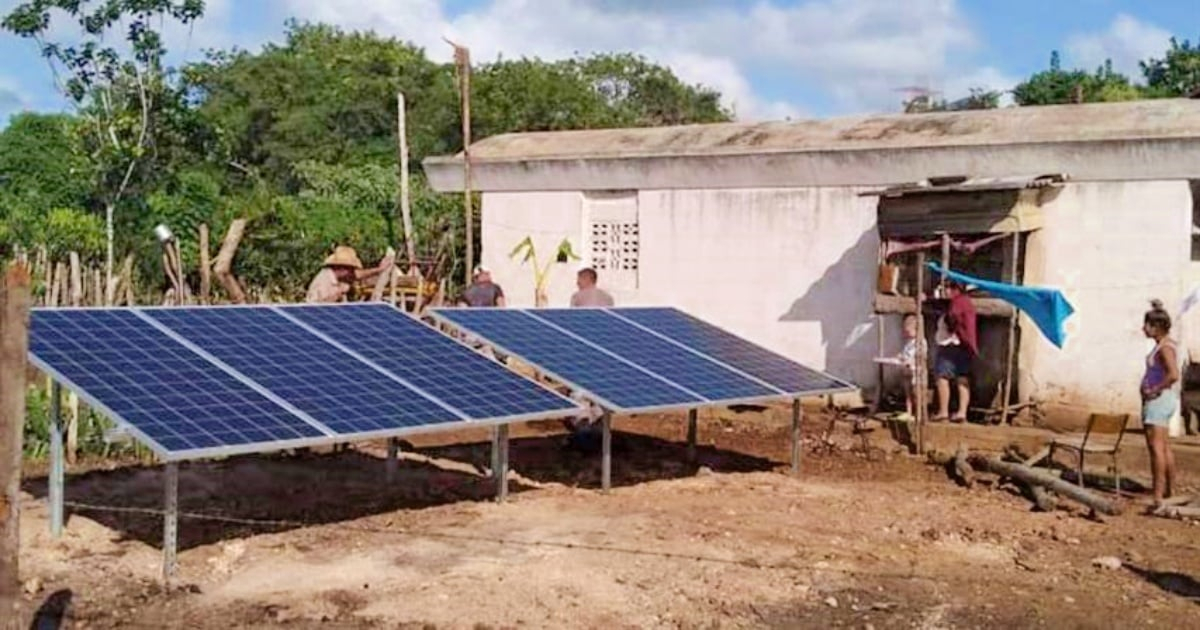
Petro quoted a tweet from Chinese diplomat Hua Xin, who last Monday shared images of photovoltaic systems donated by China that have been installed in health centers and other essential buildings in several Cuban provinces.
Ambassador Hua Xin had described the facility as a response to the energy blockade by the U.S. against Cuba, framing Chinese cooperation within a narrative of solidarity against U.S. sanctions, a narrative that Petro embraced when reposting the message.
According to Prensa Latina, last Tuesday, an aircraft departed from the Colombian Military Transport Command heading to Cuba, carrying a cargo that included solar panels, medicines, medical supplies, and food, collected by the Movement of Solidarity with Cuba, Colombian political and social organizations, labor unions, and the Colombian government itself.
The announcement comes amidst the worst energy crisis in recent Cuban history, when the National Electric System completely collapsed on March 22, when more than 90% of Havana was left without electricity.
The maximum generation deficit reached 1,945 MW on April first, equivalent to 55% of the national territory without electricity simultaneously, and last Tuesday the system availability was only 1,180 MW against a demand of 2,340 MW.
The crisis has roots in decades of neglect in the maintenance of thermoelectric plants, exacerbated by the interruption of oil shipments from Venezuela since December 2025, the fire at the Nico López refinery on February 13, and the reduction of supplies from Russia and Mexico.
Petro's gesture is not spontaneous: in February he had already publicly proposed a solar energy program for Cuba, inviting the United States to change its policy toward the island and arguing that Colombia could manufacture solar panels using its silica and copper resources.
China, for its part, is the main energy ally of the Cuban regime in this context: it donated five thousand photovoltaic systems formally delivered at the Mariel Container Terminal in November 2025, of which 2,671 are allocated to vital centers in the 168 municipalities of the country, including 556 clinics, 461 nursing homes, and 349 offices of the Electric Union, while the remaining 2,329 go to isolated rural homes.
Additionally, China has connected 49 solar parks with a total capacity of 120 MW, and in January 2026, approved an additional emergency aid of 80 million dollars for electrical equipment destined for the island.
While the allied governments of the regime are increasing their aid shipments, the UN is facing a funding deficit of 60 million of the 94 million dollars required to assist two million people in 63 Cuban municipalities affected by the crisis.
Filed under: