
Related videos:
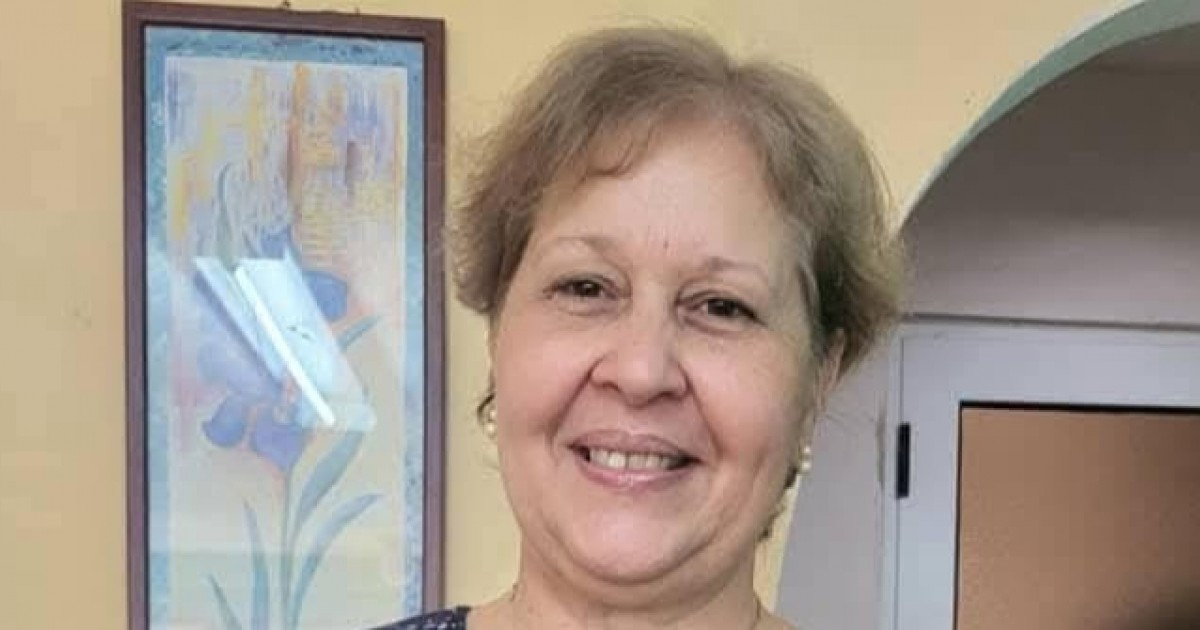
The Cuban academic Alina Bárbara López Hernández published a critical analysis in seven points regarding the pardon of 2,010 individuals announced by the regime, concluding that the measure aims to counteract the pro-amnesty campaign for political prisoners being carried out by the citizens.
"They will not succeed," he assured in a message shared on Facebook.
The government announced on Friday the pardon in the context of the Holy Week celebrations, presenting it as a "humanitarian and sovereign gesture."
However, the official note explicitly excluded those who committed "crimes against authority," a category that includes sedition, contempt, public disorder, disobedience, and assault, which are precisely the types of offenses under which the vast majority of Cuban political prisoners are incarcerated.
"The official note excludes those convicted of 'crimes against authority' from the list of pardoned individuals, and these constitute the majority of what are considered political crimes: disobedience, sedition, contempt, assault, public disorder, etc.," López stated in his post.
The academic also called for moderating enthusiasm regarding the number of pardoned individuals: "While the number of pardoned individuals is substantial, the penal population per capita in Cuba is the second highest in the world, estimated at around 90,000 inmates. Viewed this way, it's important to temper the enthusiasm."
López also pointed to the economic motivations behind the measure.
"A prison population this large is too costly for a bankrupt state," he wrote, recalling that less than a month ago there was a hunger protest at the Canaleta prison in the province of Ciego de Ávila.
That riot, which occurred on February 18 and 19, was triggered by extreme hunger and the mistreatment of inmates, resulting in at least seven deaths during its suppression by special forces.
The professor also warned about a possible strategic motivation from the dictatorship: "In light of the potential for a large-scale social upheaval as summer approaches, they may be preparing new spots in prisons to accommodate another massive influx of political prisoners."
Regarding the diplomatic context, López was direct: "The wink to the Vatican, to the world, and to the conversation table with the United States is evident; nothing new under the sun for a system that views its prisoners as assets in bilateral dialogues rather than as human beings."
Regarding the structural nature of the problem, the academic was unequivocal: "A regime based on political exclusion, like the Cuban one, is a potential and constant factory of new political prisoners. Without changes in this regard, this will be an endless story."
López Hernández is one of the most active critical intellectual voices in Cuba.
He has led monthly protests in the Freedom Park of Matanzas demanding amnesty for political prisoners and participates in the Forum Action for Amnesty 2026, an opposition alliance that proposes a law of amnesty and the decriminalization of dissent.
In February, she was detained for 12 hours for "disrespect" while on her way to a protest where she would deliver a letter regarding amnesty to the Municipal Assembly.
This government pardon announced is the fifth since 2011 and the second of the year, following the release of 51 individuals on March 18 after Vatican mediation.
Prisoners Defenders reported 1,214 political prisoners in Cuba last February, none of whom are among those benefiting from the most recent measure.
Filed under: