
Related videos:
The jurist and former university professor René Fidel González García posted a powerful message on Facebook this Sunday from Santiago de Cuba, stating that today there are more reasons than in 1953 for a new generation of Cubans to sweep away "this hellish plague of undesirable rulers and insatiable tyrants who have sunk Cuba into misery."
The phrase is not yours: it belongs to the Hymn of July 26, composed by Agustín Díaz Cartaya in 1953 as an expression of popular indignation against the dictatorship of Fulgencio Batista. González García now revives it and applies it, with a significant historical irony, to the regime that has used that very hymn as its own symbol for decades.
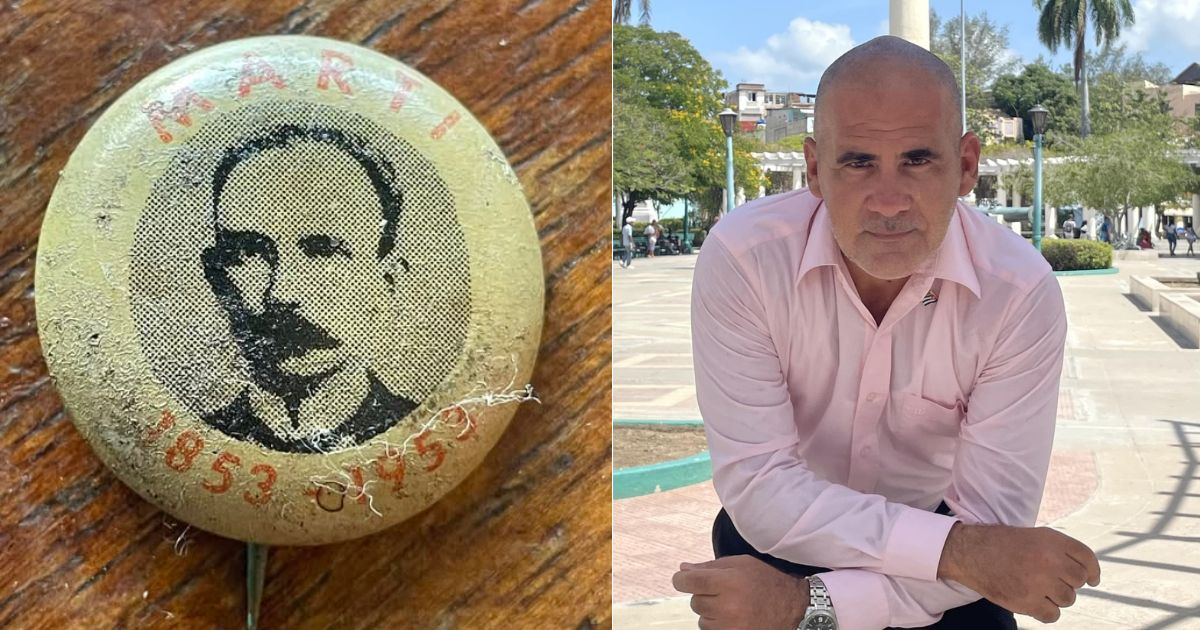
The trigger for the post is a postage stamp commemorating the centenary of the birth of José Martí, issued in Cuba in 1953. González García recounts that a couple of those stamps came into his possession years ago, and that he gave one of them to his mother, who treasured it "with that silent devotion so characteristic of Martí followers." After her passing, his father returned it "so that another generation could preserve it."
From that family memory, the jurist outlines a historical arc of 73 years: "Looking back, reading or listening to the speeches, articles, and arguments from that time, the ideals and hopes for democracy, justice, and prosperity that many upheld had to be our destiny; it is impossible not to calmly acknowledge that there are and continue to accumulate without resolution today in Cuba, even more causes and reasons—political, economic, and social—than at that moment."
In his view, it is urgent for another generation to carry "in their hearts the teachings of the Master" —as Fidel Castro stated in his argument History Will Absolve Me— and to uphold them before everyone and in all circumstances, in a complete exercise of integrity.
The post was published on the same day that Miguel Díaz-Canel presided over the central events for the 65th anniversary of Playa Girón and inaugurated the "My Signature for the Homeland" campaign, a mobilization organized by the Communist Party of Cuba to support the official declaration "Girón is today and always". Three days earlier, on April 16, Díaz-Canel had presided over an event in Havana's Vedado where he blamed the U.S. embargo for all the country's ills and called on Cubans to be ready to fight.
This propaganda display painfully contrasts with the reality faced by the population: power outages of up to more than 20 hours daily, the 89% of Cubans living in extreme poverty, critical shortages of food, fuel, and medications, and a projected GDP contraction of 7.2% for 2026, which already amounts to a 23% decline since 2019.
The energy crisis worsened following the fall of Nicolás Maduro in January 2026, which disrupted the shipment of Venezuelan crude to the Island, compounded by pressures from the U.S. government that also halted supplies from Mexico.
González García is not an anonymous critic. He is a Doctor of Legal Sciences, an essayist, and was a Tenured Professor at the University of Oriente in Santiago de Cuba until he was dismissed and professionally banned on November 11, 2016 for publishing critical articles in media outlets such as La Joven Cuba, Rebelión, and Cuba Posible.
Since then, he has been subjected to systematic harassment by State Security, threatened with criminal proceedings for "enemy propaganda", "disrespecting the president," and "disobedience." In October 2025, he filed a lawsuit against President Díaz-Canel and Attorney General Yamila Peña Ojeda in the Supreme Court for violating the Constitution, warning that he would go on a hunger strike if prosecuted. Despite everything, this Sunday he published his reflection emphasizing that he feels at peace.
The jurist concludes his post with a quote from José Martí from the nineteenth century, which serves as a warning about the authoritarian model of government, applicable both to Batista in 1953 and, implicitly, to the current regime: "A people cannot be founded, General, as one commands a camp."
Filed under: