
Related videos:
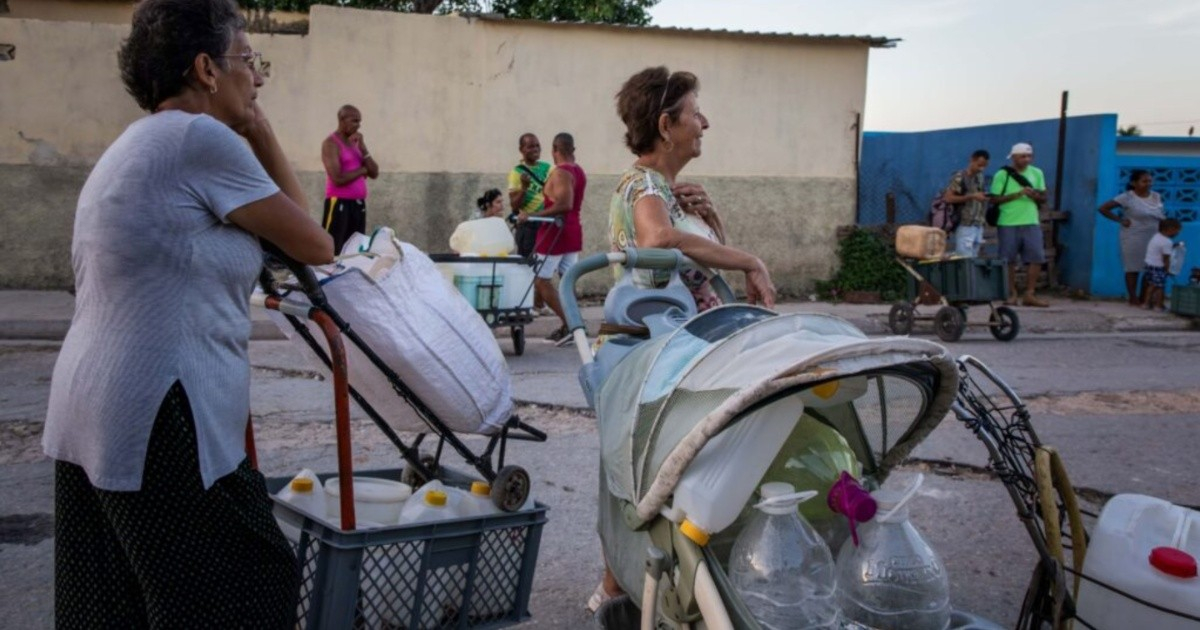
The NGO Food Monitor Program published a detailed report on the water crisis in Havana, summarized in one phrase: “Those who do not steal, do not have water.”
The report describes how the failure of the national electrical system destroyed the water pumping capacity in the Cuban capital.
Since the general blackout in October 2024, even historically well-supplied areas like Centro Habana and Old Havana can go weeks without receiving running water.
In the face of institutional abandonment, a structured black market has emerged around two illegal solutions: suction pumps known as "water thieves" and private water tank trucks.
The "thieves" are sold in the informal market for up to 36,000 CUP and work by sucking water directly from the common pipes. The effect is pernicious: the more neighbors use them, the lower the pressure for everyone else, which forces more people to acquire one so they don't end up with nothing.
"As more and more people use them, the pressure decreases... those who don’t steal, don’t have water," reports the testimony of a resident quoted by FMP.
A neighbor described the situation in her neighborhood: "All through February and March, the water has been problematic... the neighbors who manage to solve it are the ones who buy a water thief."
The alternative is private tankers, whose price ranges between 18,000 and 26,000 CUP for a load of between 8,000 and 10,000 liters, according to the NGO's documentation.
The black market for water in Cuba also includes employees of the Water and Sewage department who sell illegal connections for bribes and divert state water trucks.
Josefa, a resident of Centro Habana, told FMP about the situation in her building: "We have gone up to 15 days without water… there are many elderly residents… we use internal tanks to last up to a week, but if it doesn't arrive, we have to buy water trucks."
And he added, "That makes everything more expensive and makes it difficult to wash, clean, and live."
Receiving water every three or four days is already seen as "normal" among the residents of the capital.
The root of the problem is structural: 87% of the water supply system depends on the electrical grid, which makes it directly vulnerable to the chronic blackouts that Cuba has been experiencing since 2022.
The crisis is neither new nor exclusive to Havana. In Matanzas, water has reached a cost of one peso per liter in the black market, a scam that hit the people of Matanzas hard.
In Santiago de Cuba, residents have turned to contaminated water due to the state's inaction.
FMP described the system in terms that leave no room for interpretation: "The system is sustained by leakages and a logic of reciprocal favors to ensure supply."
The day after the report was published, Cuban authorities announced plans for the construction of a new well to alleviate the water situation in the capital, a measure that residents of Havana themselves deem insufficient given decades of accumulated deterioration.
Filed under: