
Related videos:
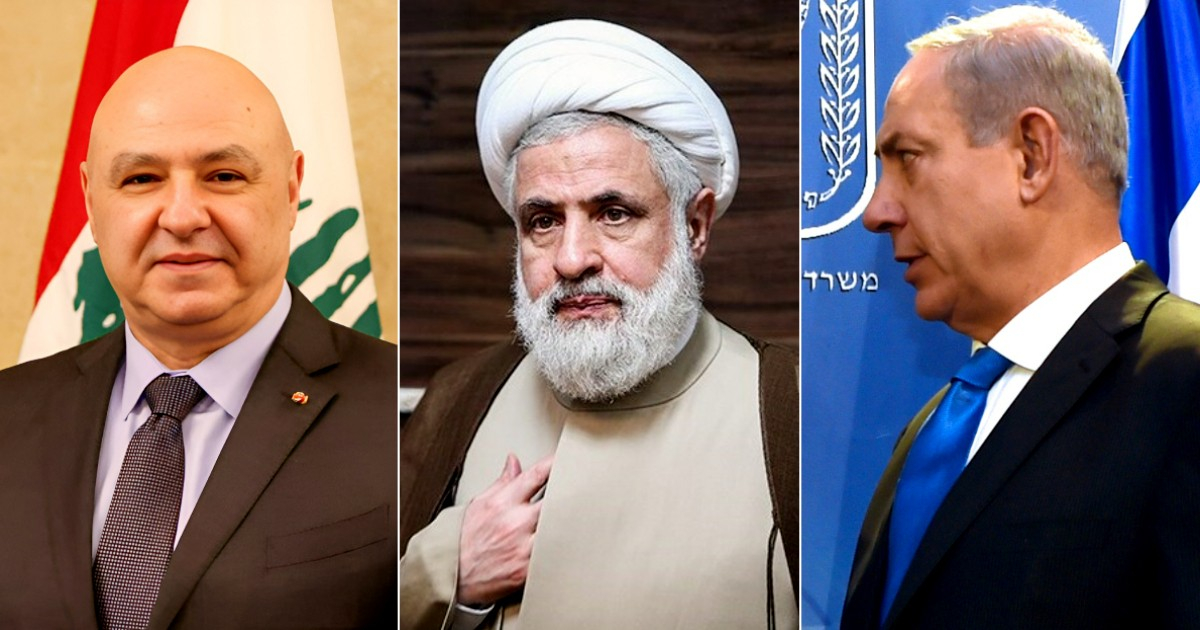
The leader of Hezbollah, Naim Qassem, declared this Monday that his organization does not recognize the direct negotiations between the Lebanese government and Israel nor their "results," and reiterated its outright refusal to lay down arms, the primary goal of Israel in the peace talks mediated by Washington.
"Let it be clear: for us, these direct negotiations and their outcomes are as if they never existed, and we do not care about them at all. We will continue our protective resistance in defense of Lebanon and its people," Qassem stated in a statement, according to EFE.
"We will not give up our weapons or our defense," he added, while the Lebanese government under President Joseph Aoun participates in a dialogue from which Hezbollah is explicitly excluded, despite being the main party in the conflict.
The conversations, the first direct negotiations between Lebanon and Israel in over 30 years, were driven by Secretary of State Marco Rubio on April 14 and are part of a process that included a historic ceasefire announced by Trump on April 16, which was later extended by three additional weeks following a second round in Washington.
The rejection by Hezbollah is not an isolated event: it has direct roots in Operation Epic Fury, the joint attack by the US and Israel launched on February 28, 2026, against Iran's nuclear and military facilities, which eliminated the Supreme Leader Ali Khamenei and destroyed over 11,000 Iranian targets in its first month.
Hezbollah entered the conflict on March 2, attacking Israel from southern Lebanon in solidarity with Tehran, which triggered an Israeli campaign that has resulted in over 2,290 deaths and more than one million displaced individuals in Lebanese territory.
The position of the Shiite group directly complicates the parallel negotiations between the U.S. and Iran regarding the Iranian nuclear program. Tehran has conditioned any agreement on a ceasefire that includes Lebanon and Hezbollah, explicitly linking both conflicts.
The first round of talks in Islamabad, mediated by Pakistan, ended in failure after 21 hours without an agreement. Last Sunday, Trump revealed that Iran submitted a new proposal which he described as "better but still insufficient," and clarified that he is in no hurry to reach an agreement.
This stagnation has direct consequences for Cuba. Trump has articulated on multiple occasions an explicit sequence of foreign policy: "First Iran, then Cuba". On March 7, in Miami, he declared that Cuba would be "next" on his agenda after resolving the Iranian conflict.
Congressman Carlos Giménez confirmed last Wednesday that Trump "talks more and more about Cuba" and mentions it "almost always" in his discussions about foreign policy.
The administration is meanwhile maintaining a strategy of maximum economic pressure on Havana: Executive Order 14380, signed on January 29, 2026, declared the Cuban regime an "unusual and extraordinary threat" and cut between 80% and 90% of oil imports to the island.
As long as Hezbollah challenges the peace process in Lebanon and negotiations with Iran remain stalled, Washington's full diplomatic attention is unlikely to shift towards Cuba. Rubio summed it up unambiguously on March 29: "Its system of government has to change".
Filed under: