
Related videos:
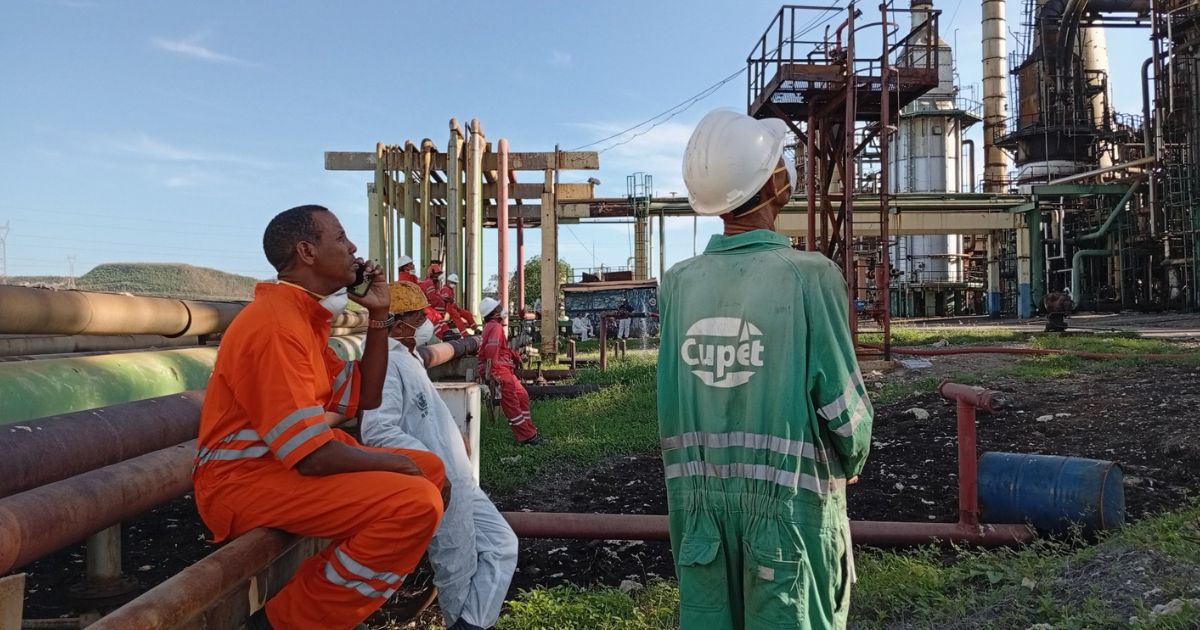
The reserves from the only shipment of oil received by Cuba in more than four months ran out at the end of April, as acknowledged by the government itself, leaving the country on the brink of a new energy paralysis with no confirmed shipments for May.
The Minister of Energy and Mines, Vicente de la O Levy, acknowledged on April 22 during the state television program "Mesa Redonda" that the fuel from the Russian shipment would only last until the end of this month, revealing the extent of the regime's energy dependency.
The only respite came on March 31, when the Russian tanker Anatoly Kolodkin docked at the port of Matanzas with 730,000 barrels (100,000 tons) of crude oil donated by Russia as "humanitarian aid." Distribution began on April 17 and revived approximately 1,200 MW of electricity generation, but the relief lasted only a few weeks.
De la O Levy himself acknowledged that Cuba needs eight fuel ships per month to meet its energy needs, but in four months, only one has been received.
The crisis began on January 9, 2026, when Cuba stopped receiving regular imported oil. Venezuela suspended its shipments —which accounted for 30% of Cuba's needs, around 32,000-35,000 barrels per day— following the capture of Nicolás Maduro. At the same time, Mexico, through Pemex, cut its exports due to debts exceeding 1.5 billion dollars.
The only shipment received in January was 84,900 barrels transported by the vessel Ocean Mariner, while Cuban reserves stood at just 360,000 barrels, equivalent to four or five days of consumption, according to the consulting firm Kpler.
Cuba produces approximately 40,000 barrels daily against a national demand of 90,000-110,000, which implies a structural deficit of 60,000 barrels per day that national production cannot meet under any circumstances.
The island consumes approximately 20,000 barrels of diesel per day, which means that without new deliveries, the country faces a halt in transportation, agriculture, and electricity generation. The minister acknowledged that Cuba distributed 800 tons of fuel oil daily, half of the 1,600 tons needed, operating at 50% capacity.
A second Russian ship, the Sea Horse Universal, was carrying around 200,000 barrels of diesel destined for Cuba, but it changed its course towards Trinidad and Tobago following the issuance of General License 134B by the U.S. Department of the Treasury on April 16, which permits transactions of already loaded Russian oil only until May 16, 2026. As of the conclusion of this analysis, there is no confirmation of its arrival on the island.
The deficit in electricity generation in Cuba surpassed 1,400 MW in April, with power outages lasting up to 30-40 consecutive hours affecting the entire population. The national electric system has accumulated years of deterioration due to a lack of maintenance and investment, exacerbating the impact of each interruption in the fuel supply.
The Russian Energy Minister, Serguéi Tsiviliov, announced on April 2 the preparation of a second shipment to Cuba, but without a specific arrival date. With the Kolodkin reserves depleted and General License 134B expiring on May 16, the window for the arrival of new Russian fuel without additional complications is closing in just a few days.
Filed under: