
Related videos:
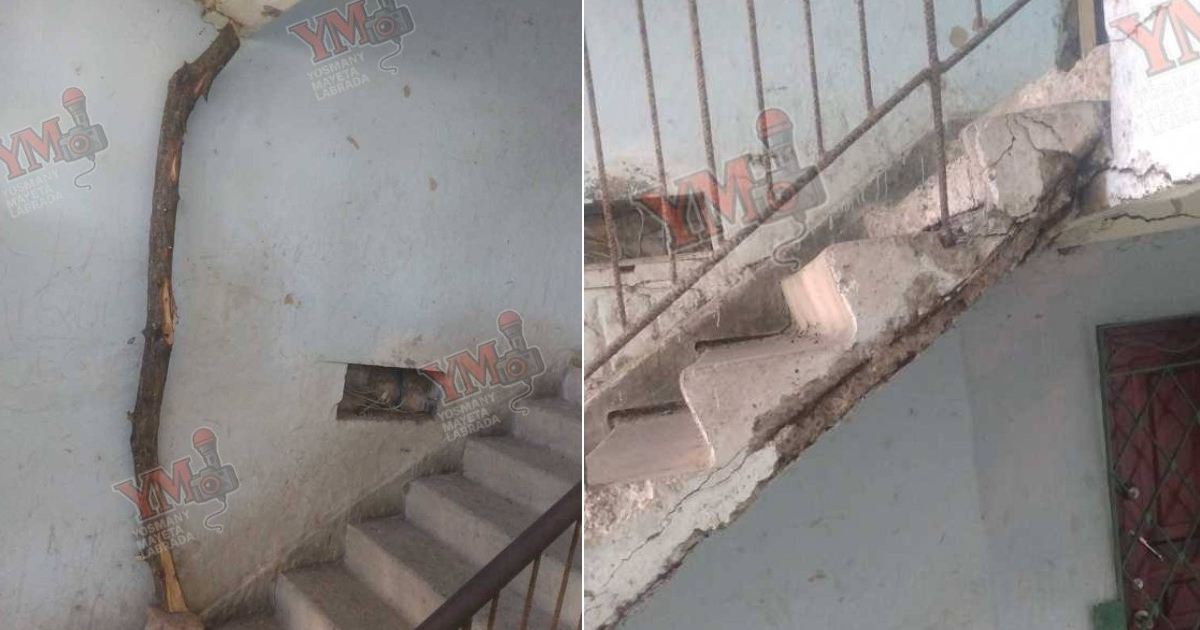
Residents of the El Salao area in Santiago de Cuba reported the severe deterioration of the stairs in their building, a situation that is extremely dangerous and has been reported multiple times without any solution being provided by the authorities.
According to testimonies and photos shared by independent journalist Yosmany Mayeta Labrada on Facebook, the structure shows visible signs of wear and possible damages that jeopardize the safety of those who pass through it daily.
In building 17, staircase D, in Micro 2, reside children, elderly individuals, and entire families who depend on those stairs as the only access to their homes.
Residents claim that they have repeatedly approached the Housing Directorate and other state institutions, but the problem persists.
The complaints, they explain, have been met with visits and inspections, but not with tangible repairs.
A neighbor recounted that she has been "fighting this tough battle with the institutions for several years," from which they have received "countless visits and many commitments, all theoretical and nothing practical."
According to their testimony, officials acknowledge the "imminent risk to life," but it all ends in astonishment and fails to translate into action.
The woman expressed her "great disappointment" at the lack of seriousness regarding a problem that directly affects human safety.
"There is no seriousness in the promises made, and even less so regarding the sacred right to preserve human life. I hope we do not have to mourn a loss of life due to such indifference, negligence, and abandonment," he lamented.
Although he maintains hope that someone in a position of authority will intervene, he acknowledges that until now they have knocked on doors without results.
Another resident confirmed that what has been raised is true. The building houses people of all ages, which heightens the concern. The demand is clear: there should be "actions, truthfulness, and measures taken, not just words and promises to fulfill."
From one of the upper floors, a third neighbor confessed that she fears for her life and that of her family.
"For years we have been reporting this, and there has been no action taken," she asserted, reflecting the emotional toll on those living under the constant threat of structural collapse.
The comments on the post reveal that the problem is not isolated.
Another user pointed out that it is not only in El Salao where there are buildings in critical conditions, but also in other areas of the District and even in schools, where severe structural damage can be seen. "They don't take measures until a disaster happens."
Some voices were more direct in stating that it seems they are "waiting for several fatalities" before taking action.
Others lamented that even when tragedies occur, many times "they don't even flinch," and no one takes responsibility.
"Oh God, that's on the floor already!" a young man exclaimed, summarizing the visual impact of the decay.
A Cuban in Spain mocked those who claimed that the buildings in the district are prepared to withstand an earthquake.
The complaint from the residents highlights a recurring issue across various provinces: aging buildings, lack of systematic maintenance, and a bureaucracy that delays urgent solutions.
Prolonged inaction in the face of clear signs of deterioration turns each day into a gamble against time. When prevention fails and responses come only after the collapse, the consequences are often irreversible.
In a context where building collapses have resulted in casualties in recent years, the situation in El Salao reflects a structural crisis that goes beyond a specific building.
The neighbors are not asking for privileges or luxury renovations; they demand an urgent technical assessment and immediate intervention to prevent a foreseen tragedy.
The question lingering among the cracked corridors and worn steps is how much more the structure must deteriorate—and how much public pressure will be required—before someone acts with the responsibility that the position demands.
Filed under: